Minor League Monday: Baby Pens Rolling, Pat Nagle’s Dominance, RiverKings Looking For Crown

AHL

22550028_10154821926531384_5151537046922125708_n

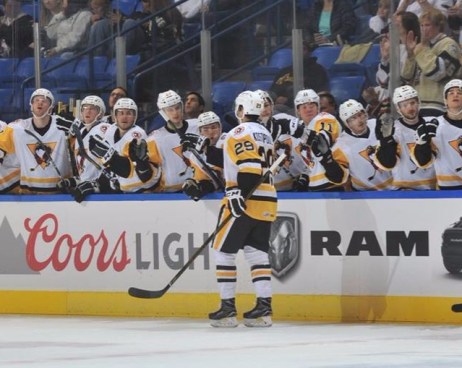
-It’s about time to talk about the Wilkes-Barre/Scranton Penguins. With only one shootout loss in their last 11 games, the Baby Pens are the class of the AHL so far this year. The interesting part is that there’s not one Penguin in the top-20 in scoring. That said, Daniel Sprong has been great this season with nine goals in 14 games. After major shoulder surgery kept him out most of last season, his first full pro campaign has been off to a good start. Casey DeSmith has also been a great find for the Penguins, going 8-0-1 this season and in the top-five in GAA and save percentage.

-The Chicago Wolves are feeling the expansion crunch. While they have some players still from the St. Louis Blues, the Wolves do have the majority of Vegas Golden Knights prospects– though they are not the top of prospects. Sure, it doesn’t help that both goalies were plucked from Chicago to get into Vegas and they had to scramble to get Kasimir Kaskisuo from Toronto to make sure they had someone to play. The play of quadruple-A player Teemu Pulkkinen has been one of the small bright spots, but unless Maxime Legace or Oscar Dansk come back soon– it could be a huge uphill climb from the basement for the Wolves.

ECHL

GS17Nagle2.jpg

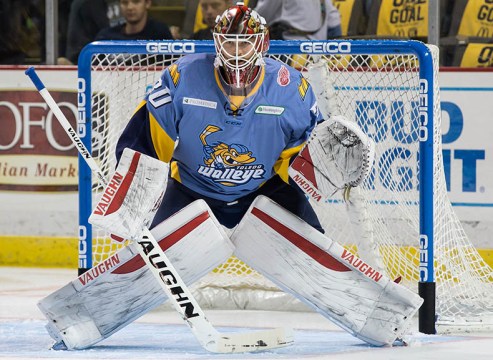
-Pat Nagle is continuing his solid play in the ECHL, but this time it’s with the Toledo Walleye. After signing with the Grand Rapids Griffins this summer, Nagle was assigned to Toledo and since then, hasn’t lost in regulation. With a 10-0-2 record to start the season, Nagle is filling the void that was left when Jake Paterson was not given a qualifying offer. It’s hard to say that Nagle hasn’t been the top ECHL goalie over the past four years, as he is 93-29-17-4 since the start of the 2014-15 season, which includes playoffs.

-In a very top-heavy South Division, the South Carolina Stingrays are possibly the underappreciated team of the top-four. With points in eight of their last 10, the Stingrays have gotten it done in every way possible. The return of Jeff Jakaitis hasn’t been as great as his record shows, while having him post a 5-1-1 record, his GAA and save percentage are among the worst in the league (3.13/.884). However, Steven Whitney and Nick Johnson has created the goals with six a piece, while Joe Devin and Kelly Zajac have provided the set-ups.

SPHL

22687789_10156146821963968_7675369525938335444_n

-Quietly, the Mississippi RiverKings are putting together a great start to their season. Tied for first in the league, the 7-2-0 RiverKings have gotten contribute from all-around, especially from the newcomer Donald Olivieri, who has three goals in his three games with Mississippi. Both Devin Mantha and Derek Sutliffe lead the team with four goals a piece, while Tyler Green is 5-1-0 and tied for wins in the league.

The Need for More Rivalry Trophies in Hockey

20161221-recap.jpg

Photo via Orlando Solar Bears

You want to really get people into a rivalry?? If you’re the NHL, you put those rivalries on Wednesday nights because that’s when people are watching hockey and that’s when every Wednesday game is a potential rivalry even when it’s not. Yet, shockingly, it can get stale and people will grow tired of it. So– how to do you spice up a rivalry??

Give it a trophy. Give it some meaning for teams meeting over and over again.

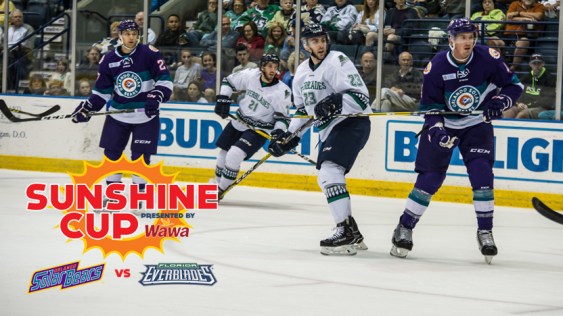
That’s why when I see something about the Wawa Sunshine Cup, I’m intrigued and wonder why more minor league teams don’t do that. The Wawa Sunshine Cup is a trophy that battled between the ECHL’s Orlando Solar Bears and Florida Everblades with the team who has the most standing points earned in head-to-head match-ups being the victor of it and maybe getting a sweet Built-To-Order hoagies with it. It gives some pride and meaning to playing a team around 14 times a season and make it worthwhile rather than stale. You have to wonder when they’ll include the Jacksonville IceMen to their party, but whatever.

The point is that, especially in minor league hockey where teams are facing off against each other a lot and with my whole plan of regional leagues under a big league umbrella, maybe to make things not get so dull– throw some kind of arbitrary trophy in there to make things a little more fresh in the world of hockey. I doubt this would work on the NHL level because that’s all too corporate; but the minor leagues are ripe for this stuff.

In the NCAA, hockey has plenty of rivalry trophies– like the North Star College Cup between the Minnesota D1 schools, the Holy War on Ice of Notre Dame and Boston College for the Smith-Kelley Memorial Trophy, the Battle for the Gold Pan between Denver and Colorado College, and the Beanpot, which combines the Boston colleges. Of course, college sports have a lot of tradition with gimmick trophies– as we’ve seen in the football side of things with their rivalry trophies.

(Shockingly, I’m a fan of the Crabpot Tournament because of my bias, but what can you do??)

Yet in this new era of minor league hockey where some people drone on and on about seeing the same teams over and again– why not do something like the Wawa Sunshine Cup?? Hell, the California teams in the AHL could do a lot more than not play the same amount of games as everyone else in the league and get some sponsorship for a trophy. The Texas AHL teams, all the teams cropping up in the Northeast in the ECHL could have something, the teams in the Midwest AHL or ECHL– the sky is the limit, so long as you can sell it to the sponsors.

Granted, the game today is really more about in-arena entertainment as it is the game itself, this could be a nice cross-section of branding for the company sponsoring the rivalry trophy and actually will get people into a match-up they’ve seen for the ninth time in the season. It doesn’t take much to make something like this happen, especially when it comes to bringing people into the hockey domain and really promote the brand they are trying to push. Sure, they may have the audience in the stands already– but it will also make them brand loyal when they have a choice of things. I’m sure people will hit up the Wawa more often than other convenience stores because it’s Wawa and it’s awesome, but more importantly– because they support Solar Bears or Everblades hockey. That’s the kind of advertising that’s easy and may have a lasting affect on people’s purchasing choices.

Minor League Monday: Checkers, Gladiators Streaking Upward, Bulls Not So Much

AHL

22365268_10155525613776013_1221436353259122413_n.jpg

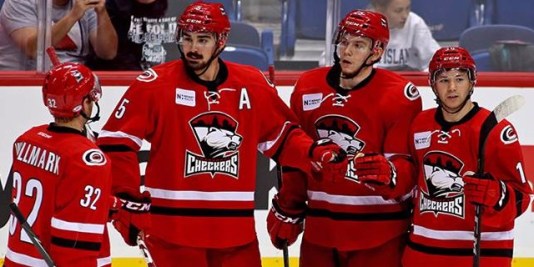
-It may not be because of the move to the Eastern Conference, but the Charlotte Checkers are out to one of the best starts in the AHL this season. Despite only Lucas Wallmark being in the top-20 in points, they are tied for most goals in the league. Valentin Zykov and Warren Foegele are in the top-15 in goals this season, while Alex Nedeljkovic has taken over the reigns from Jeremy Smith and has not lost a game in his seven starts yet this year.

-After missing the playoffs their first two years back into the league, the Manitoba Moose are looking to change that this year. With points in eight of their last 10 games (6-2-1-1), the Moose are atop the Central Division. After finishing up last season with 11 points in 10 games, Jack Roslovic is continuing to lead the Moose with eight goals and 17 points in the first 15 games for the Moose.

ECHL

maxresdefault

-Following an 0-4 start, the Atlanta Gladiators have woke up and put together a 7-0-0-1 record since the first four games. Phil Lane and Thomas Frazee have been a huge factor, both of whom have had a nine-game scoring streak with Frazee’s being snapped on Saturday (4g, 10a), while Lane’s (8g, 6a) continues on.

-Despite being at the bottom of the Mountain Division, the Rapid City Rush have won four-in-a-row, including a weekend sweep of the Kelly Cup champion Colorado Eagles. Kenton Miller has been the offensive leader with seven goals and 11 points, but the real question going forward is how their goaltending is going to fare. Even with Adam Vay and Steve Michalek getting the last four wins, you have to wonder if they can keep up the solid play and lower that team GAA of 3.76.

SPHL

23032504_1505631409529751_3694239080551244529_n

-The start of the revamped Birmingham Bulls is probably not what everyone thought was going to happen…or maybe it was for an expansion team. Through six games, the Bulls are winless and only have six goals for the entire season while giving up 22. If there is a bright spot, it might– oddly enough– be in their goaltending. Mavric Parks has the most saves in the SPHL and is fourth in save percentage (.914) even though he sports an 0-5-0 record.

-Pensacola is still undefeated and it’s interesting that they aren’t the top scoring team in the league. Their balanced attack has put three players in the top-10 in points (Stephen Hrehoriak, Garret Milan, Jessyko Bernard) while also having a great goaltending tandem in Sean Bonar and Greg Dodds. If they can stay healthy– they will be the class of the league once again.

Fixing the Minor League System

maxresdefault

Photo taken from N2B Goal Horns’ YouTube (https://www.youtube.com/watch?v=-BCELxhOAFw)

Yesterday, I talked about the Draft system in the NHL and how it is a broken system when it comes to the player’s rights and actual development with the team overall. However, the only real way to fix this system is to totally overhaul the minor league system as we see it today.

The idea to have a 31-31-31 system is a great idea for hockey– but are there 93 markets out there that are strong enough to keep things solidified for a decent amount of time and are there enough prospects out there to fill that team and make the pipeline system viable and valuable overall to the landscape?? You can say that there are a good amount of markets that are stable as hell, but you can’t assume that all 93 markets will be very strong if they stay across three leagues.

First, you have to make the minors mean something– especially if you change it to a point where players have to choose between their amateur status (in a world with Major Juniors is considered amateur and you have to leave there to start a pro career) and their pro career starting. You’d need a strong first step. Elements need to be taken from the SPHL– not saying that they’d be a jumping off point, but their regional presence is something that minor leagues need more of.

Second, take that regionalism and then create leagues that way. The problem with minor league hockey in the late-90s/early-00s is the fact that while there were a wide array of hockey leagues– they were all in competition with each other trying to be the Alpha League. The ECHL was in competition with the WCHL, UHL, CHL– but ultimately the ECHL won out. The AHL had to compete against the IHL, but the IHL’s owners were too enamored with competing with the NHL that they lost the plot and then the AHL won out.  The thing in this day in age– especially with a stress being put on development– is to take a page out of baseball and have multiple minor leagues in different regions, but a uniform classification for them to battle it out playoffs wise; almost like the NCAA and their conferences.

(In this scenario, amateurs are in my consideration Major Junior and NCAA, with the same rules applying that if you declare and sign a pro contract, you can’t go back to those teams– as a point I suggested with the post on Thursday. You can bet that the CHL will have plenty of push-back on that because they’re trying to run a youth-pro league off these kids; but it’s my imaginary situation– so get over reality for a bit.)

As great as the SPHL has been– they almost have to be considered independent to this whole scenario I’m putting together since I don’t believe there’s any official affiliation with the NHL and the SPHL clubs. Not only that, but I doubt there’s enough prospects for each team to sustain quality hockey across 31 Single-A teams. The SPHL is better off as its own entity anyway because they wouldn’t be held to the hard and fast rules of the NHL in their trickle down theory.

Therefore, the current ECHL is the entry-level point for players who declare and sign their pro contract. However, you can’t have the ECHL as one league anymore– you almost have to have the two conferences as two leagues under the AA banner of hockey. Hell, if they really wanted to get into it– make it three leagues under the banner and then the top teams meet in a final eight– the two top teams from each of the three leagues and overall wild card to win the AA title.

When it comes to the AHL– or AAA level– you can do what baseball does since teams are moving more westward with their teams. Especially with Loveland, Colorado coming into play next season, it just adds to that flavor. Again, you could have three leagues with an Eastern, Midwest, and Pacific leagues under that AAA banner to have all three meet akin to what I suggested with the AA league.

While minor league hockey does have its niche, the fact that people believe that one league is needed seems a little stupid, especially with how the NHL made sure to move their teams closer to them and then held the AHL hostage to make their games/travel less than the rest of the league or they threatened they would start their own league. In all honesty, they should have started their own league and started this upheaval quicker than what I’m suggesting.

Granted, some teams in some areas may want promotions, but at the same time– it’s knowing their market and knowing what they can be capable of doing in those markets with that league. An idea of relegation or promotion– which is sexy in a gimmick sense– won’t do much for stability in a cutthroat business of sports. It’s a nice idea, but when put into reality does more harm than good.

There’s a lot to enjoy about minor league hockey– but when you look at a successful and sustainable league, the regionalism of the SPHL is the front-runner for solid business model. They know their communities, they know their role in hockey, and they don’t get too ahead of themselves thinking they’re going to be the next big thing. They play to what they know and it pays off for them overall. If all minor leagues and minor league teams could see that and realize that regional hockey is a solid money maker/travel saver– then the divided leagues under the same classification could work out very well in order to save minor league hockey decades down the road.

Minor League Monday: Streaking Teams, Odd Scheduling, and Shaky Defense

AHL

23319386_10155868144191202_3527498948950346796_n.jpg

-With three wins in a row and won five of their last six, the Bridgeport Sound Tigers seem to be maturing as the season goes on, especially in net. Christopher Gibson and Kristers Gudlevskis have posted shutouts against Providence this weekend alone. Rookies have also taken a big role with Scott Eansor, Mitchell Vande Sompel, and (the other) Sebastian Aho being in the top-five in team scoring. The addition of Josh Ho-Sang to compliment Tanner Fritz up front will definitely make them offensively stronger moving forward.

-Despite his point-streak ending on Saturday, Andrew Mangiapane is making a name for himself in his sophomore season. With 16 points (6g, 10a) in 11 games, Mangiapane has helped the Stockton Heat lead the way in goals-for in the Pacific Division and second in the Western Conference. As a rookie, Mangiapane, along with Mark Jankowski, were the only 20-goal scorers in the Stockton, which helped Mangiapane build off of two 100-point seasons to end his OHL career. A sixth-round pick, Mangiapane could be a diamond in the rough that Calgary found to help their offensive growth.

ECHL

22853369_775774762628911_7452105598882828371_n.jpg

-During their current four-game winning streak, the Greenville Swamp Rabbits have scored 23 goals in that span. Allan McPherson and Adam Chapie are both atop the ECHL scoring board, while Caleb Herbert is on an 11-point scoring streak from the start of the season. The only issue could be the team defense. The Swamp Rabbits are tied for the most goals given up this year. While Ty Rimmer has turned his game around a bit, the development of Brandon Halverson seems to have hit a rough patch with his 5.06 GAA in six appearances so far.

-The schedulers of the ECHL only seem to have slotted the Jacksonville IceMen to play in five games in the month of October. The IceMen are winless in those five games, but their inexperienced line-up (13 of 21 rostered players are rookies) give them a little leeway. The inexperience is showing with Jamie Phillips being 0-4-1 and a 4.21 GAA after an impressive rookie season last year in Tulsa. The upside for Jacksonville is that Alexandre Goulet has points in all five games and five goals in four of those games.

SPHL

1045_fayetteville__marksmen-primary-2018.png

-While the Fayetteville Marksmen haven’t gotten much puck luck this season, the play of Jake Hauswirth, John Schiavo, and Kyle McNeil should be something to help ease the blow of being in 7th place. Hauswirth’s 11 points are a league-high, while Shiavo and McNeil are tied with Evansville’s Justin MacDonald for the league-high in goals with five. If Peter Di Salvo can get back on track, the the Marksmen could be a threat as the season goes on.

On the Topic Of Marylanders in College, Junior, and Pro Hockey

If you have followed along in my life, Maryland is a huge part of it. After living in Glen Burnie for 21 years, obviously there’s a sort of pride there. But recently, I’ve seen an influx of Marylanders getting into the pro hockey ranks, as well as Division I NCAA and Major Juniors. With it being a dormant landscape for hockey, it’s always a fine sight to see a kid from Maryland get noticed on a big stage.

236-nick-ellis

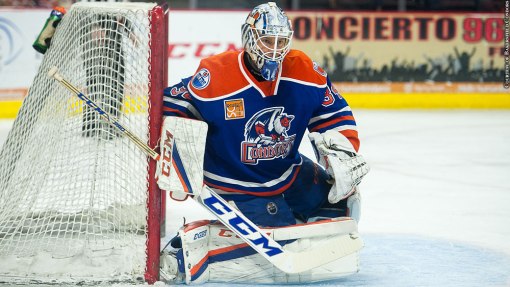
One of the bigger ones recently has been Nick Ellis of the Bakersfield Condors. The Millersville native was signed by the Edmonton Oilers as a free agent after three years at Providence College where he posted a 30-9-5 record with a 1.90 GAA. Earlier this year, Ellis got AHL Player of the Week honors and has been put into a bigger role for the Edmonton affiliate.

Another player to possible get buzz this year or next is 16-year-old Adam Varga. After playing for the Washington Little Capitals U15 team, Varga took an unorthodox step by jumping to Major Juniors and signing with the Mississauga Steelheads of the OHL. While there are territorial disputes of who’s a Marylander and who’s not (more on that in a second), but my count he is the fifth Maryland-born player to play in Major Junior after Jeff Brubaker (Hagerstown), Jeremy Duchense (Silver Spring), Charlie Pens (Perryville), and Campbell Elynuik (Silver Spring) to be stated as Marylanders in Major Junior. It’s a big step for hockey in Maryland and how the development is, as most Maryland kids go the NCAA route or even the Division III route for their higher-level hockey.

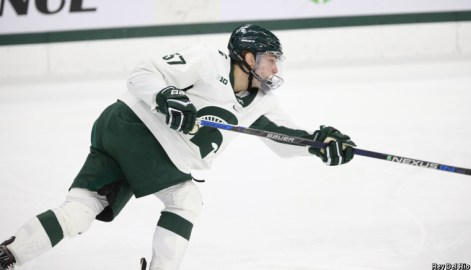
However, there is a bit of a conflict when dealing with player bios because some players will put somewhere else outside of Maryland, while other sites will post Maryland as their hometown. Elynuik is a perfect example as he is listed on HockeyDB as being from Silver Spring, but Elite Prospects will have him listed as being from Calgary, Alberta. Jarred Tinordi is another example, as he was born in Burnsville, Minnesota; but made his hay in Severna Park, Maryland– playing for Severna Park High School in his first year before going to join the US National Developmental Team. A guy like Michigan State’s Jared Rosburg is a whole other can of worms. Rosburg is listed as being from Clarksville, Maryland, but grew up in Strongsville, Ohio. Since he played for River Hill in Howard County, I’ll chalk Rosburg up to one of Maryland’s own.

(Elynuik, Tinordi, and Duchense bring about another example of guys listed as being from Maryland thanks to their father’s playing with the Washington Capitals when they were born. While Tinordi did play within the area, the others didn’t make that big an impact, especially with Duchense living in Quebec City for the majority of his youth.)

10.2.16_MSUHK

Rosburg is one of many players who have touched NCAA Division I ice while being listed as a Marylander. The Michigan State defenseman has dealt with injuries, but has been a big presence on the blue-line and has come up with some big goals in his short career. Rosburg is following in the footsteps of Sam Anas, who is recently the most successful Maryland player, as he’s been in the Minnesota Wild organization for two years after a successful NCAA career at Quinnipiac after a solid high school career at the Landon School in Bethesda. Of course, Anas goes in that disputed Maryland/Washington DC zone where both sides want to claim him. Colgate’s Bruce Racine is in the disputed zone of Maryland/DC, as he was born in DC, but went to school in Bethesda at Georgetown Prep. Other NCAA players for the 2017-18 season are Matt McArdle (Annapolis/Lake Superior State), Colin O’Neill (Odenton/UMass-Lowell), Jason O’Neill (Odenton/Providence), and Graham McPhee (Bethesda/Boston College).

In the minor leagues, outside of Ellis and Anas; there are several others playing in the lower minor league ranks. Jack Burton was born in Reisterstown and went to Baltimore-area St. Paul’s school before heading to Colby College and then joining the Indy Fuel last season, where he is today. Another Maryland ECHLer is Nick Sorkin of the Wheeling Nailers, who played for Team Maryland and the Washington Little Caps before going to University of New Hampshire, then to the Nailers. Former Glenelg High School player and Woodbine native Eric Sweetman is in the ECHL, as well, playing in Idaho after four years at St. Lawrence University. Mike Chen played for Team Maryland growing up before heading to Division III at Salem State and is currently rostered on the Knoxville Ice Bears of the SPHL.

Women’s hockey has also grown in Maryland, especially with the likes of Haley Skarupa being from Rockville and playing on the US Women’s National team, as well as in the NWHL with the Connecticut Whale and Boston Pride after four successful seasons at Boston College. Beth Hanrahan of Poolesville played four years at Providence College for four years, being the team’s MVP in her junior and senior season, then playing for the New York Riveters before being name associate coach of Lindenwood University. Finally, Lindsay Berman of Odenton starts her third season as head coach of UMass-Boston’s Women’s team after her years in the CWHL with the Boston Blades, including a Clarkson Cup championship to her resume. Berman went to Arundel High School and played for the Washington Pride to garner attention leading her career at Northeastern University.

I’ve said before about how Maryland and the mid-Atlantic has been underserved as a market, especially with no NCAA program in the state. However, there’s a new wave coming through, especially with Varga in the OHL and young Patrick Giles (Chevy Chase) joining the US National Program; there’s a lot of shoot for in the youth programs in the Maryland (and sure, DC) area, though the high school systems does have a variety of teams. Also, the club hockey scene does have a lot of talent, but still not the top-tier talent other areas have. The area is still in need of more success stories, but I know I didn’t think in a million years there would be this much Maryland content across the NCAA and minor pro landscape as there is today.

Minor League Monday: Roadrunners Setting Pace, Thunder Cracking in ECHL, Trask Getting Mayhem Going

AHL

DNSNVpLV4AAeOIl

-Unlike their parent affiliate, the Tucson Roadrunners have been utterly successful this season, getting off to a 5-1-1 start to the young season. Seventeen of the 24 players who have played a game this year have a goal on the season, while Dylan Strome leads the team with 10 points (1g, 9a). Three of the top-five in team scoring are rookies with Strome, Nick Merkley, and Kyle Capobianco. While Adin Hill and Marek Langhamer have played well, rookie Hunter Miska definitely is dealing with the pro learning curve, posting a 3-0-0 record, but a dismal 4.02 GAA and .884 Sv%.

-In his third full pro season, Lehigh Valley Phantom Danick Martel is priming himself for a breakout year. In only 10 games so far, Martel has 10 goals (half of his total all of last year) and is second in league scoring with 13 points. With the help of rookie Mike Vecchione, as well a veterans Phil Varone and Greg Carey, the Phantoms are off to their best start (7-2-0-1) since 2007-08 when they started 8-1-1. Both Alex Lyon and Dustin Tokarski have played well in their appearance, though Lyon seems to be the horse leading the way for Lehigh Valley.

ECHL

22860468_506842786352008_2051907062157279232_n

-The first Marvel game happened this weekend and the jerseys were nothing sure of spectacular. The Worcester Railers, as the Incredible Hulk, defeated the Utah Grizzlies, as Thor, 4-1 in the first game of the branded era. The win gave the Railers their third on the season in five games, placing them third in the North Division. The loss put the Grizzlies at 3-5-0 on the season, putting them next to last in the difficult Mountain Division.

-Speaking of the Mountain Division, break up the Wichita Thunder. A team that last year was dead last in the Central Division and next to last in the league has become one of the last unbeaten teams in the league (along with the Reading Royals). After a difficult time in the AHL, Kyle Platzer has found his scoring touch with the Thunder, potting five goals and six assists for the Thunder. In net, both Joel Rumpel and Shane Starrett have three wins while being in the top-5 in the league in GAA and save percentage.

SPHL

trask.jpg

-Jake Trask helped the Macon Mayhem get their first win and first points of the season this weekend thanks to his four goals and two assists Friday and Saturday. Trask’s hat-trick on Friday helped the Mayhem get an overtime loss against the Roanoke Rail Yard Dawgs; while on Saturday, Trask got the first goal to help Macon get their first win of the season. Trask now leads the league in goals and points with four and seven respectively.

-There’s no wonder why the Peoria Rivermen are atop the SPHL. They not only have the most goals in the league, they have distributed the points, as well. 16 of the 18 rostered skaters have a point on the year, with Michael Economos not having a point because he hasn’t played a game year. However, while the offense is good, the fact they only have a plus-4 goal differential is a bit of a concern. Eric Levine and Michael Santaguida have had a lot of goal support, but will need to steal some wins if the deep forward crew has a dry run.

Minor League Monday: Jankowski Potting Points, Beast Licking Wounds, Mayhem Being Settled

While this blog encompasses the hockey landscape, there needs to one day that is dedicated to the lower levels of hockey on this blog when there isn’t a big story that going around the hockey blogosphere. And if just one day is not enough, you can head over to my friends at TheSinBin.net for your fix on almost every team in minor league hockey.

AHL

cut.jpg

-After being one of the last cuts of the Calgary Flames, Mark Jankowski is making every minute count while with the Stockton Heat. In his first six games, Jankowski has five goals and eight points, putting him tied in goals with another Flames cut, Garnet Hathaway and two points behind Andrew Mangiapane for total points.

-The Vegas Golden Knights goaltending situation is in peril, if you hadn’t heard. It’s in so much disarray that they have taken both of their AHL prospects out of Chicago, Oscar Dansk and Maxime Lagace, which leaves CJ Motte as their only rostered goalie for now. Luckily, the Wolves don’t play until Wednesday morning, so they have time to go ahead and get a back-up for Motte. Just goes to show you can never have enough goaltending depth.

ECHL

BrandonMarino_BRM1516

-This is definitely not the start of the season the Brampton Beast wanted after their record-setting season last year. After getting into their first playoffs in the ECHL era of the team, the Beast are out to an 0-4-1 start. While Brandon Marino is putting up the goals (4g, 2a), the secondary scoring is still in need of a boost. There’s also a need to get more of their defense to help out rookie goalies Marcus Hogberg and Michael McNiven, as the team has given up a league high 24 goals.

-With the additions of always dangerous Mitchell Heard and Michael Kirkpatrick, the Florida Everblades are off to a blazing start. The team is a plus-9 in the goal-differential to the young season (only behind the Allen Americans) and a lot can be attributed to Heard and Kirkpatrick making a big impact, as well as rookies Steven Lorentz and Nelson Armstrong jumping in feet first for the ‘Blades.

SPHL

Macon-Mayhem-2

-It has been a rough start to the season for the defending champion Macon Mayhem. With this past weekend yielding only one goal for the team while giving up nine in two games, it’s been the typical hangover we see from some champions time and again. The roster does have some of the returning players from that championship team, so it’s not like they aren’t used to pressure. While they can have a bit of hiccup, the short season in the SPHL makes it so they have to get back in the win column quickly before it gets too out of hand.

-Sean Bonar is building off his strong season last year with Fayetteville, but this time with the Pensacola Ice Flyers. A shutout in his first game with Pensacola was a great way to make a good first impression with his team, but the fact he’s getting goal support is even better for the SPHL’s reigning MVP and top goaltender going into a new season. It wasn’t easy, as Bonar faced 36 shots against the reigning champs in Macon, but once the defense tightens up, the Ice Flyers will surely be one of the teams to beat this SPHL season.

Time to Right the Schedule, AHL

avs eagles_1507731477059_11360269_ver1.0.png

With the announcement of the Colorado Eagles moving to the AHL, as well as the San Antonio Rampage announcing a multi-year affiliation deal with the St. Louis Blues, and barring any unforeseen circumstances with other teams around the league; the AHL team roster has been set for 2018-19 already– which is nice, but brings up some other questions, at least in my mind.

Of course, with Colorado being in there– the divisional alignment is going to be pretty straight forward. The seven teams west of Texas– Stockton, Bakersfield, San Jose, San Diego, Ontario, Tucson, and now Colorado– will mostly likely make up the Pacific Division. This will move the Texas Stars and Rampage to the Central Division, thus pushing Cleveland to the North Division. Simple enough. It also leaves some room for when/if Seattle gets a team and wants to put their affiliate in the Pacific Northwest with them.

The bigger question now is what to do with the schedule. With all seven teams on the equal footing, does the AHL finally pull the trigger on making those Pacific Division team play a full 76-game season or so they think that 68 will be smarter for all the teams, despite having their own division. In either situation, the idea of using percentage points as a deciding factor gets thrown out the window and really shouldn’t be the default playoff that always comes up on TheAHL.com.

My thought on this is that this is the perfect time to sell the 76-game schedule to the Pacific teams. Look, they had a nice run of playing eight less games, though it really hasn’t make much a different in the playoffs for them, but it’s time for the AHL to put their foot down and say, “If you want to play in our league now– it’s time to play by our rules and play the full 76-game slate.”

It’s an easy sell now. There’s seven teams in their division, they won’t have to make “big trips” to Texas to play and could find a way to still keep to themselves, but at the same time– actually be a part of the league in playing an actual full schedule for once. Hell, it’s almost paramount of the AHL to make this happen rather than keep letting them get away with the 68-game slate. If they keep doing that– who’s really in charge?? Why have these teams in the league, even with their full division within a reasonable travel destination, if they don’t play the same amount of games that the other 24 teams do.

As you know, this isn’t my first ranting piece about the AHL schedule, but I hope it will be my last. You can’t have a league that’s touting itself as the step-below The Show, if you have two different set of rules in terms of scheduling for the league. This is the time now to really show that the league is in charge and that eight more games against others in the league are going to be okay and the players will be able to get through the travel. If they want to make the show, they’ll have to deal with some travel here and there anyway– so why not get them used to it and have them earn their stripes (and their reward miles) rather then steal eight games away from there throughout the season.

Wider Lines and Trapezoids: The Rule Changes of the 2004-05 AHL Season

3c05134695d5cac1654200e1996ea0be--patrice-bergeron-paw

Let’s go back in time, shall we?? Back to the season that wasn’t for the NHL, 2004-05. Yes, the lockout year was one that still burns eternal for some people, but since then it’s been….alright, right??

In any case, that year also brought about an interesting design of the AHL, too. With the NHL out of commission, the AHL changed a heck of a lot in terms of their rules during that year. First, the most drastic of changes– which was doubling the width of the red and blue lines from 12 inches to 24.

“I think the reasoning behind the wider lines was to improve game flow by adding space to the neutral zone and reducing offside plays,” said Jason Chaimovitch, the Vice President of Communications of the AHL in an email. “The blue lines and red line went from 12″ to 24″ wide, and the goal line was moved back from 13′ out to 11′ out. The neutral zone went from 54′ to 58′ and it became easier to stay onside, in theory.”

While the look was anything but pleasing to those people who don’t like change, the idea of the wider lines, in hindsight, makes sense. It’s also something that would probably greatly reduce the offsides video reviews that seem to be popping up all over the NHL.  The biggest thing, however, was that the two-line pass violation was still in effect, but with the wider lines, the theory of less of those being called should be there.

Ryan Suter was in the AHL at the time with the Milwaukee Admirals and while he played with the wider lines, he didn’t seem to notice all that much. “You didn’t really notice the changes that much. I guess it still seemed like the same game for the most part,” Suter told The Tennessean in July 2005.

Patrick Sharp, who played with the Philadelphia Phantoms said, “It gives you a little more speed in the neutral zone. That is good for a forward like myself. Now you can really stretch those blue lines and go for the home-run passes.”

The Wilkes-Barre/Scranton Penguins as a whole liked it with then GM Craig Patrick saying the “fat lines” made the zones bigger and better, while defenseman Rob Scuderi said it kept more pucks in the zone and kept the forecheck going.

The wider lines did appear in some games in the 2003-04 season, mostly on Canadian rinks, as those teams seemed most comfortable with adapting their ice surface. The players, coaches, and other involved gave it a positive review; thus allowing the AHL to fully adopt it during the 2004-05 season.  In the end– it was not across the board welcomed by the NHL, as they scrapped the wider lines at the end of the 2004-05 season.

On top of the wide lines, the tag-up offsides was re-instituted, no-touch icing was brought in, the shootouts became a thing again, and then there was that one rule that was a seven-week trial to start: the goalie trapezoid.

“I remember going over to the Olympia here in Springfield when a bunch of players, officials and hockey ops people were on the ice trying to figure out what the lines should look like. That’s where the trapezoid was born,” reminisced Chaimovitch. However, at the onset, some people were a bit outspoken about the trapezoid.

Then Hamilton Bulldogs goalie Olivier Michaud thought the worst of the trapezoid. “For a goaltender, it will mean that you’ll be less involved during the game,” Michaud told the Hamilton Spectator in Februrary of 2004. “But it’s going to be dangerous for defensemen because of the checking. There will be injuries because of it.”

Michaud’s goaltending partner, J-F Damphousse believed that he didn’t think doing something like that was possible. “Goaltenders have worked hard learning to handle the puck and you can’t penalize a goaltender for working hard at his game. You can make the equipment smaller if you want, but I don’t think you can apply this rule,” stated Damphousse in the same Spectator article.

Long-time AHL goalie Neil Little had the same worries about his teammates when talking to the Courier-Post in October 2004, as the trial had started: “These defensemen are going to get run through the glass. Those forwards are going full tilt and I can’t go out there to help them out. We played a (preseason) game the other night and it was a freak show. It’s going to cause all sorts of turnovers.”

Rochester Americans goalies Ryan Miller and Tom Askey were against the no-touch zone, while Hershey Bears goalies Peter Budaj and Tom Lawson were in favor of it. There were others that were in favor of it when all was said and done. Kevin Klein, who was with the Milwaukee Admirals at the time, was very much in favor of it from a skaters standpoint. “It was huge because as a defenseman you’ve got to get on your horse right away and track down pucks in the corner because the goalies can’t play it,” Klein said in July 2005. “When you get a good-skating team like ourselves, you can jump on teams and keep offensive pressure on them.”

From a coach’s standpoint, Mike Kitchen— then coach of the St. Louis Blues– was in favor of the rule change to the goalie movement. “I don’t mind the goaltending rule at all,” Kitchen told The Globe and Mail in December of 2004. “It keeps them from wandering out in the corners and protecting the puck. You can’t hit the goalies, so they get pretty bold by wandering all over.”

“We did a bunch of things that year: Shootout, stricter interpretation of restraining fouls, and stricter supplementary discipline on attempt to injure cases,” mentioned Chaimovitch. “The bottom line is that once the NHL started playing again, we needed to mirror what they were doing. With the portability of our players (more than 350 call-ups every year), it’s important that the rule book is the same in Hershey on Saturday as it is in Washington on Sunday.  The most notable result of that was the icing rule. We played no-touch icing in ’04-’05 and it was well received, but the NHL didn’t adopt it so we switched back to touch icing in ’05-’06.”

It was a drastic change from the norm. Not to mention the blue-ice experiment in Buffalo for the Rochester Americans games (which was very experimental and only approved for a couple games), but you can still see the changes today. The tag-up offsides and trapezoid were brought into the NHL when the lockout ended, while the others are just a fun memory for us all. But, who knows what could have happened if the NHL adopted the wider lines. Could the world class players been able to be more creative?? Would it have slowed down the speed of some of the younger players coming in?? Would there be reviews for interference as much as we have now?? The world will never know.

Thanks to Jason Chaimovitch for his help in this. Follow him on Twitter: @JChaimo