The UHL Relaunch and Its Role in Minor League Hockey

1200px-United_Hockey_League.svg

It was brought to my attention yesterday, to the request of no one, that the United Hockey League would be relaunching itself in the 2018-19 season. You may remember the UHL from 1997 until 2007 when it was a low-AA minor league coming from the ashes of the Colonial Hockey League from 1991 until 1997 and then smoldered into the reformed International Hockey League from 2007 until 2010.

Now, this was put out in August and really not much as come from it since, but it was brought about my virtual desk just yesterday. Since August 2nd, there hasn’t been one point made about it except that it’ll be a six-team league playing 50 games, also kind of the formula that the SPHL has put out there and been successful with.

The key thing to this whole league getting up there is the heads of this not trying to do above their means when it comes to where their place is at in minor league hockey. If they use the model of the SPHL, then they’ll be fine. They will be able to develop talent to push to the ECHL and beyond. Plus, if you’re thinking of how a minor league system is supposed to be– they could be the upper Midwest feeder to ECHL teams like how the SPHL is the southern (and somewhat Midwest with Peoria) feeder to the ECHL. If the Federal Hockey League could get their stuff together, they would be the Northeast feeder, but we know that’ll never happen.

Yet, I’m at the point now where I’m hoping and praying that this league doesn’t think it’s going to be a AA league again or try to go against the ECHL for another turn.

The structure of minor league hockey is, as it stands now, pretty solid. The AHL has the 30 teams (31 next year) to directly feed to the NHL, while the ECHL has 27 and may be thinking of other markets– but you hope they don’t spread themselves too thin with them spreading out across the US more and more. The SPHL is there, but they are a solid stepping stone with what could be the perfect model when it comes to budget, travel, salary cap, and all of that.

If the UHL is going to follow what the SPHL does– then great, it’s much needed in another facility to get players to the ECHL and give opportunities to players coming out college or juniors to play domestically rather than relying on overseas chances. However, if they feel like they’re going to be AA caliber off the bat or if they devolve into the Federal League kind of hockey– we’re in for a long ride.

Another option could be what the Central (1) Hockey League did with their reboot in that it’d be a Junior level league, though are plenty of NAHL and USHL near the Rochester, Michigan homebase the UHL is setting up for itself.

I have emailed the UHL’s for more information, but it was late Thursday when I did it and they have yet to respond as publishing of this post.

All in all, the point of this is for the UHL to know their role when it comes to minor league hockey. Figure out what you are, stick with it, and don’t get too big for your britches because for once the minor league hockey landscape is stable in its structure. Don’t mess it up.

ECHL, Marvel Team Up in Branding Venture…For Real

echl.jpg

Does this mean we’ll get an ECHL Guardian Project??

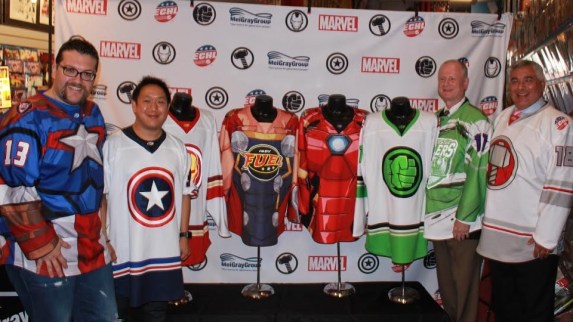
Probably not, but one can always dream, right?? I pose this question after the announcement that the ECHL has teamed up with Marvel Comics in a branding collaboration in Super Hero Nights for each of the teams, as well as merchandise and other in-game promotions.

Now, this may come as a little of a surprise, but it’s a smart move. The fact is most of these teams have a marked night for some kind of superhero night, but now with the backing of Marvel, the money won’t have to come directly out of their budgets entirely and maybe a little help will come with the merchandising sales from in-game and perhaps afar depending on how the merchandise is promoted.

Of course, the biggest thing is how they will follow through on this whole thing. Of course, I brought up the Guardian Project at the start— mostly because it was such a disaster for the NHL and Marvel on the hope that a Stan Lee project would spurn some kind of new fans to the NHL because of super heroes?? I don’t know how the NHL thinks, and at times– I’m sure their marketing people are tilting their heads.

It’s a good synergy and it helped that the announcement came at the Jay and Silent Bob’s Secret Stash store in Red Bank, New Jersey. Not just because the ECHL’s headquarters are an hour away, but because Kevin Smith is an avid hockey fan. Doubtful that he’ll be inter-mingling with these games at all, but it’s not a bad name to have on your side. They did mention that people from AMC’s Comic Book Men were in attendance, but I think they’ll be like Smith and just an observer of it all.

What it seems like is less Guardian Project, more Muppet Project that the NHL got into back in the day where the Muppets were intertwined with the logos of the NHL team.  To have something like this is nice and who knows what it could lead to in the future. Don’t expect something big and glamorous, mostly because the AHL tried their hand at some kind of comic book and it….well, I don’t know what it turned out because very few copies exist and not many images are to be had about it.

Good on the ECHL to step up their corporate marketing, especially if it can save some money for teams when it comes to licensing and coming up with designs.

Wider Lines and Trapezoids: The Rule Changes of the 2004-05 AHL Season

3c05134695d5cac1654200e1996ea0be--patrice-bergeron-paw

Let’s go back in time, shall we?? Back to the season that wasn’t for the NHL, 2004-05. Yes, the lockout year was one that still burns eternal for some people, but since then it’s been….alright, right??

In any case, that year also brought about an interesting design of the AHL, too. With the NHL out of commission, the AHL changed a heck of a lot in terms of their rules during that year. First, the most drastic of changes– which was doubling the width of the red and blue lines from 12 inches to 24.

“I think the reasoning behind the wider lines was to improve game flow by adding space to the neutral zone and reducing offside plays,” said Jason Chaimovitch, the Vice President of Communications of the AHL in an email. “The blue lines and red line went from 12″ to 24″ wide, and the goal line was moved back from 13′ out to 11′ out. The neutral zone went from 54′ to 58′ and it became easier to stay onside, in theory.”

While the look was anything but pleasing to those people who don’t like change, the idea of the wider lines, in hindsight, makes sense. It’s also something that would probably greatly reduce the offsides video reviews that seem to be popping up all over the NHL.  The biggest thing, however, was that the two-line pass violation was still in effect, but with the wider lines, the theory of less of those being called should be there.

Ryan Suter was in the AHL at the time with the Milwaukee Admirals and while he played with the wider lines, he didn’t seem to notice all that much. “You didn’t really notice the changes that much. I guess it still seemed like the same game for the most part,” Suter told The Tennessean in July 2005.

Patrick Sharp, who played with the Philadelphia Phantoms said, “It gives you a little more speed in the neutral zone. That is good for a forward like myself. Now you can really stretch those blue lines and go for the home-run passes.”

The Wilkes-Barre/Scranton Penguins as a whole liked it with then GM Craig Patrick saying the “fat lines” made the zones bigger and better, while defenseman Rob Scuderi said it kept more pucks in the zone and kept the forecheck going.

The wider lines did appear in some games in the 2003-04 season, mostly on Canadian rinks, as those teams seemed most comfortable with adapting their ice surface. The players, coaches, and other involved gave it a positive review; thus allowing the AHL to fully adopt it during the 2004-05 season.  In the end– it was not across the board welcomed by the NHL, as they scrapped the wider lines at the end of the 2004-05 season.

On top of the wide lines, the tag-up offsides was re-instituted, no-touch icing was brought in, the shootouts became a thing again, and then there was that one rule that was a seven-week trial to start: the goalie trapezoid.

“I remember going over to the Olympia here in Springfield when a bunch of players, officials and hockey ops people were on the ice trying to figure out what the lines should look like. That’s where the trapezoid was born,” reminisced Chaimovitch. However, at the onset, some people were a bit outspoken about the trapezoid.

Then Hamilton Bulldogs goalie Olivier Michaud thought the worst of the trapezoid. “For a goaltender, it will mean that you’ll be less involved during the game,” Michaud told the Hamilton Spectator in Februrary of 2004. “But it’s going to be dangerous for defensemen because of the checking. There will be injuries because of it.”

Michaud’s goaltending partner, J-F Damphousse believed that he didn’t think doing something like that was possible. “Goaltenders have worked hard learning to handle the puck and you can’t penalize a goaltender for working hard at his game. You can make the equipment smaller if you want, but I don’t think you can apply this rule,” stated Damphousse in the same Spectator article.

Long-time AHL goalie Neil Little had the same worries about his teammates when talking to the Courier-Post in October 2004, as the trial had started: “These defensemen are going to get run through the glass. Those forwards are going full tilt and I can’t go out there to help them out. We played a (preseason) game the other night and it was a freak show. It’s going to cause all sorts of turnovers.”

Rochester Americans goalies Ryan Miller and Tom Askey were against the no-touch zone, while Hershey Bears goalies Peter Budaj and Tom Lawson were in favor of it. There were others that were in favor of it when all was said and done. Kevin Klein, who was with the Milwaukee Admirals at the time, was very much in favor of it from a skaters standpoint. “It was huge because as a defenseman you’ve got to get on your horse right away and track down pucks in the corner because the goalies can’t play it,” Klein said in July 2005. “When you get a good-skating team like ourselves, you can jump on teams and keep offensive pressure on them.”

From a coach’s standpoint, Mike Kitchen— then coach of the St. Louis Blues– was in favor of the rule change to the goalie movement. “I don’t mind the goaltending rule at all,” Kitchen told The Globe and Mail in December of 2004. “It keeps them from wandering out in the corners and protecting the puck. You can’t hit the goalies, so they get pretty bold by wandering all over.”

“We did a bunch of things that year: Shootout, stricter interpretation of restraining fouls, and stricter supplementary discipline on attempt to injure cases,” mentioned Chaimovitch. “The bottom line is that once the NHL started playing again, we needed to mirror what they were doing. With the portability of our players (more than 350 call-ups every year), it’s important that the rule book is the same in Hershey on Saturday as it is in Washington on Sunday.  The most notable result of that was the icing rule. We played no-touch icing in ’04-’05 and it was well received, but the NHL didn’t adopt it so we switched back to touch icing in ’05-’06.”

It was a drastic change from the norm. Not to mention the blue-ice experiment in Buffalo for the Rochester Americans games (which was very experimental and only approved for a couple games), but you can still see the changes today. The tag-up offsides and trapezoid were brought into the NHL when the lockout ended, while the others are just a fun memory for us all. But, who knows what could have happened if the NHL adopted the wider lines. Could the world class players been able to be more creative?? Would it have slowed down the speed of some of the younger players coming in?? Would there be reviews for interference as much as we have now?? The world will never know.

Thanks to Jason Chaimovitch for his help in this. Follow him on Twitter: @JChaimo

Ontario vs. Berlin Shows the Need for More Transcontinental Games

1718FrozenFriendly-44e3a409dd

The International Frozen Friendly (Photo Courtesy of the Ontario Reign)

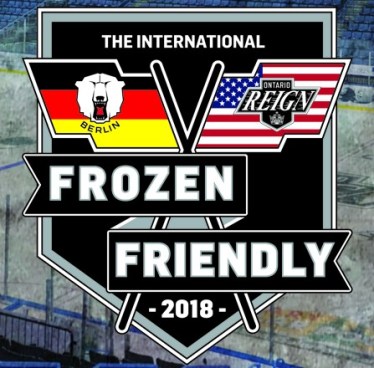
On February 13th, the Ontario Reign will host Eisbaren Berlin in what is being called the International Frozen Friendly. The German Elite squad will be the first European team to play an AHL team since 2014 when Farjestad BK played the Toronto Marlies and the AHL All-Stars. Both Eisbaren and Ontario are owned by the Anschutz Entertainment Group.

This is a concept that is needed more when it comes to minor league hockey. Granted, this is something that a team in the Pacific Division can afford to do since they play eight less games; but that notwithstanding, the idea is something more teams should do. It has gone the other way with the Rochester Americans going to participate in the Spengler Cup in 2013, but it seems like it’s something few and far between– especially during in-season play.

Whether or not Berlin will bring their top squad remains to be seen, but it should lay the groundwork for the AHL to maybe explore something with other European teams. If hockey is truly universal, then this is something that would be great as a yearly exhibition between the AHL side and a European squad. Sure, if the European teams lose a lot to the “AAA” pro squads, they may be a little hesitant, but it’s something that needs to be drifted.

That, or the AHL tries to get into that Champions’ League thing that the European leagues have every season. Sure– it’s a pipe dream to make that logistically work in terms of travel and scheduling, but it would be a fun sight to see and maybe actually get more eyes on leagues that fans may not be totally accustomed to.

There’s no losers in all of this– this helps out the AHL get attention on a semi-global scale with the Europeans looking at this game as a nice little gimmick, Berlin gets help with a North American tour of sort, and the game wins when you have a clashing of ideas and cultures when it comes to how teams are coached and how players are developed. More leagues need to look into it and if they can make it work with travel and money– why not have that?? It’s something that helps the sport overall and I think in the end– that’s the goal of everyone in the game of hockey.

Yeah, No– Just Call Them The Wild Blueberries

Blueberry Bailout

The Portland ECHL team, who won’t take the ice until 2018, revealed the five finalists for their Name-the-Team gimmick and the one that has been a runaway favorite is the Wild Blueberries.

No, you heard me right– the Wild Blueberries.

The other four did have connections to the Maine area– the Mariners, Watchmen, Puffins, and Lumberjacks– but they don’t have the pop that Wild Blueberries had when it comes to the Name-the-Team thing.

But this is what is needed for minor league hockey as it follows the minor league baseball scheme of teams changing their name to something extremely odd to garner attention, thus giving the team some new life and, in this case, attention for a team who won’t take the ice until October 2018. Hell, would you rather enjoy the New Orleans Zephyrs at the ball yard or the New Orleans Baby Cakes?? In Jacksonville– would you rather soak in the Suns or binge on the Jumbo Shrimps??

Is it goofy?? Yes.

Will traditionalist be pissed?? When are they not??

But the point is that this is what is needed for a team who is in a market who lost their AHL team a few years back and have dropped to the ECHL. You need to garner the attention in any way possible, especially in the social media age where it could go viral and really give national appeal to the team. It’s not like it’s a thing that’s not connected to the Maine area, so it also makes local sense, as well.

Just look at the Greenville Swamp Rabbits. It was a rabbit as their logo, but people when crazy for it. The brand change connected the team to the city via the old rail line in the city, national media who never really paid attention to the ECHL was taking notice because of the huge change in the name, and it went over well– so why not take the chance and do something original.

For me, it wouldn’t be my first choice– I’d rather the traditional Mariners or even the Lumberjacks; though Puffins are a dark horse in all of this. Yet– if they were called the Wild Blueberries– I’d be fine with it. The name allows for great punny headlines (“Portland gets juiced by Worcester”; “Blueberries ripen to .500 record”) and is something that would give that civic pride to people that is really needed in the minor league game over something that has been used before. Sure, each of these names have that connection– but none will really connect like the Wild Blueberries.

On the Topic Of Non-NHL Olympic Rostering

team-canada-gewann-90-spengler-cup-41-68318586

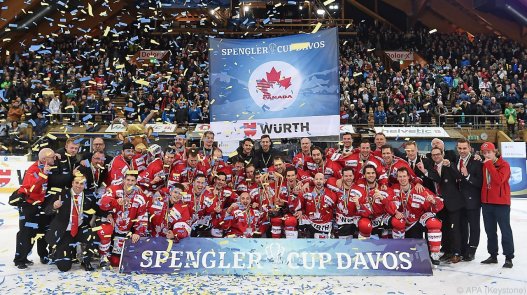
When it comes to Canada and their roster when it comes to the Olympics, they really need to look no further than to their Spengler Cup roster that they’ll send over to Davos at Christmas time. It seems to be the way that Hockey Canada is going when it comes to the exhibition games they’ll have to play beforehand.

Sure, the AHL is allowing their contracted players to be available for the Games, but when you’re a country like Canada who is all about hockey– having a team that has played together (at some point) is what they need for a tournament like this. This would be a bit of a leg-up on the competition, which is not what they had back in the ’80s when most every country had a dedicated national team playing exhibitions in the lead-up to the Games.

Would a team of AHLers be better than a Spengler Cup team?? Perhaps. Could there be some AHLers on the Spengler Cup team that could go to the Olympics?? Absolutely– as AHL players representing Canada in the Spengler is not unheard of in the least. But it’s time to let those guys who moved over to Europe to play hockey and know the bigger ice a little bit better, especially against countries who have players who use that ice surface all year long.

And let’s be honest– it’d be a huge chance for these guys to represent their country on a big stage; not just for Canada, but other countries as well.. Hell, even when it comes to the World Championships, the NHLers get the luster of coming over to play for that while the Canadians, Americans, Finnish players who play in Europe are left out in the cold. You don’t think those guys would be even hungrier to prove they belong at the Olympics and should be considered when representing their nation?? While it’s not the amateur idea that some people have in making the World Juniors as the Olympics every four years; it’s definitely something that has great storylines for the broadcasting companies to have a field day with.

Plus, let’s be honest– this is a one-and-done for the non-NHL players because we all know their coming back for Beijing in 2022. These will be the games to show the depth of each national team has. Sure, we know what they bring to the table on the NHL or even AHL side…but for the overall landscape of hockey, this will prove what they have.

(Of course, I am saying this assume there isn’t a secret schedule to save the NHL going to the Olympics and the NHL players who go rogue and play in the Olympics anyway.)

Jaromir, the Everblades, and the Money of Minor League Hockey

jaromir-jagr.jpg

With Jaromir Jagr still unsigned, which some people think is odd for a 45-year-old to be unsigned at this point in the free agency period, the shenanigans have begun. The Florida Everblades of the ECHL have made the first pitch to keep Jagr in North America and keep him in Florida, as well.

This is a kind of minor league gimmick we need, as the last time this has happened– I think– is when the Bakersfield Condors offered a contract to Justin Bieber. Sure, it won’t work, but to get the team some press (especially in the summer months) is a pretty smart marketing idea. Plus, it goes with a trend of Jagr signing in areas that are tax-free places to play during the season.

But….what if it did work?? What if Jagr goes, “You know….the hell with it, I’ll play in the ECHL, stay in America with my adoring fans, and really shove it up the asses of the NHL people who passed me by.” It would be something Jagr has never done, playing in the minors, and it could be something he would want to put on his bucket list and check off…but maybe a Spengler Cup would be one, as well, but that’d require him to go back to Europe for that.

Look, it’s the 30th season of the ECHL, which is a solid milestone for the AA-level league. You’d have to think that they would love to have someone like Jagr in their league for this noteworthy year. Yet, is there anything the league or the Everblades can do to get this done without violating the salary cap. For 2016-17, the ECHL salary cap was $12,600 with a rookie minimum of $445 and returning player minimum of $500. Some elite veteran players can make north of $1,000, but that comes at the expense of their teammates’ wallet.

Plus, you can’t expect the ECHL as a league to help out with Jagr’s contract when other teams don’t get afforded the same ability to get a superstar player or have help from the league to have and keep an elite player on their roster. You can’t expect the league to make an exceptional player clause for every team like the MLS does for one player to not have their salary against the salary cap.

Or can they?? It’s a slippery slope, especially for a league with a lot of independent owners with little to no NHL support coming back the other way…but it’s an interesting concept for a minor league to do in order to attract some players that may have some contract situations in the NHL or AHL or even over in Europe. Yet, you look at the IHL and what had happened to some teams who went the route of signing hold-out NHL talent– and it didn’t end well.

Not only that, but you can’t blame Jagr for balking at this, especially since he still believe he has more value than a minor league contract (no offense) and that he could just go over to the Czech Republic and play for the team he owns and get plenty of bank for returning and getting plenty of the gate receipts that go with it.

All of this depends on what Jagr wants to do with his career, what the ECHL wants to do for publicity, and what people want to do with their dollars should he do something like travel around the bus leagues and see cities he’s only flew over in charter flights.

That’s Enough, AHL; Even It Out

PacificDivisionPuck16_17_1024x1024.jpg

With the reveal of the AHL schedule today, it shows that the league which is the top developmental league in North American hockey is still keeping the schedule for six of the eight Pacific Division teams at eight games below everyone else.

That’s quite enough of that then.

Sure, it hasn’t benefited the Pacific Division when it comes to the playoffs as none of the teams have made it to the Calder Cup Finals by having fresher legs, but if that’s the case– why keep kowtowing to the NHL teams and actually have a business plan to keep all the teams at 76 games or all of them at 68. To have a different schedule for six of the teams is completely bush-league for a league that’s trying to be the top developmental league for the NHL.

I’m a broken record on this, mostly because I say it every year they come out. The ECHL doesn’t give a different schedule to Utah or Colorado or Rapid City– they didn’t give a different schedule to Alaska when they were in the league and they’re almost in Russia. So why, in their infinite wisdom, is the AHL doing this for a third straight year??

Look, I get it– the NHL teams moved their AHL teams so that the proximity was closer– great. However, shouldn’t they be worried more about actually game-play rather than having more practice time?? Hell, why even have games at all and just have controlled scrimmages. It seems to defeat the purpose if you’re going to have only one division in the entire league rely on points percentage (as the other divisions have an equal amount of games).

It’s almost as if the AHL should have called the original five teams’ bluff and let them break away and start their own league to see how much that could stayed afloat and how much that would have helped. The AHL was smart enough to allow the teams to move out west, but at the same time– they should have put their foot down and say, “Sure, you can move the markets who have been good to us over to the left coast, but you have to play the same amount of games as the rest of the league to make us not look stupid or walked over.”

As much as I love the AHL and all the things they have done, it just seems stupid that they’re still allowing six teams to rewrite the rules on how a schedule should be presented and how many games they should be playing versus the rest of the league.

I’ll leave with this– if the proposed move of the Colorado Eagles to the AHL happens, will they still stick with those seven teams playing a 68-game schedule?? Will that whole division be an island onto themselves?? Does that make them more or less prepared for the NHL because they don’t bother themselves with long road trips??

We’ll have to wait another 365 days or so for that to all play out.