Meh Rushmore: Central Division

Everyone and their mother can do a Mount Rushmore of greatest players. Pick a generation and go and the stats tell their tale. So why not do a Rushmore of guys who just existed on their teams?? It’s not as if their tenure was the worst, but it wasn’t all that big or memorable. Which is why we’re here right now. Here’s my look at the four guys in each franchise that had a less than memorable tenure with those clubs. We’ll continue on with the Central Division and here are the guidelines I’m going by: 

RULES
200 Skater/75 Goalie minimum GP with team
At least one goalie on the list
No individual performance awards
Transplanted teams CAN use previous location for players
*Colorado can pull from Quebec
*Dallas can pull from Minnesota North Stars
*Utah will pull from Arizona/Phoenix/Winnipeg 1.0
*Winnipeg 2.0 can pull from Atlanta
Not known for designated role on team (Enforcer, Shot Blocker, Face-offs)
No current NHL players
“Meh” Status based on time with team they’re represented on
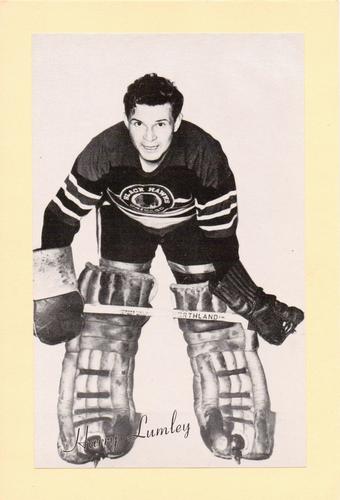
CHICAGO BLACKHAWKS: Cam Barker (200 GP, 17g, 63a); Steve Ludzik (413 GP, 46g, 92a); Rick Paterson (430 GP, 50g, 43a); Harry Lumley (134 GP, 29-85-18, 3.63 GAA)

Barker was a former 3rd overall pick with a dynamic junior career. Aside from one year, Barker’s tenure in Chicago got overshadowed by the likes of Brent Seabrook and Duncan Keith’s production. Ludzik set franchise records in juniors, but the offensive side didn’t come as easily for him in the pros. Ludzik was used in a more bottom six role with Chicago having plenty of top production already in their line-up. Paterson had one season of 14 goals, but he was another player where success offensively in lower leagues didn’t translate to the NHL. Lumley went from the Cup champions in Detroit to a sad-sack Chicago team in 1950, hitting the 40-loss mark in both seasons in Chicago. Despite being a Hall of Famer, Lumley’s time in Chicago was a forgettable mark on his resume. 

COLORADO AVALANCHE: Dan Hinote (353 GP, 27g, 38a), Rene Corbet (230 GP, 39g, 47a), Shjon Podein (239 GP, 34g, 37a), Mario Gosselin (192 GP, 79-82-12, 3.67 GAA, .871 Sv%)

Hinote had two solid years at Army before moving to major juniors and saw a regression. Hinote was able to carve out a role as a grinder and get his name on the Cup. Corbet was a better than point-per-game player coming into the NHL, however a deep line-up didn’t allow Corbet to shine as much as he did in his junior and minor league years. Podein had solid years in the NHL before coming to Colorado where the depth got the best of his ability and his adaptation to a bottom-six role allowed him to walk around in full-gear with the Cup after the 2001 win. Gosselin was in a back-up role for most his time, which suited him well. Gosselin’s lone year with starter minutes was his most disappointing year in his tenure. 
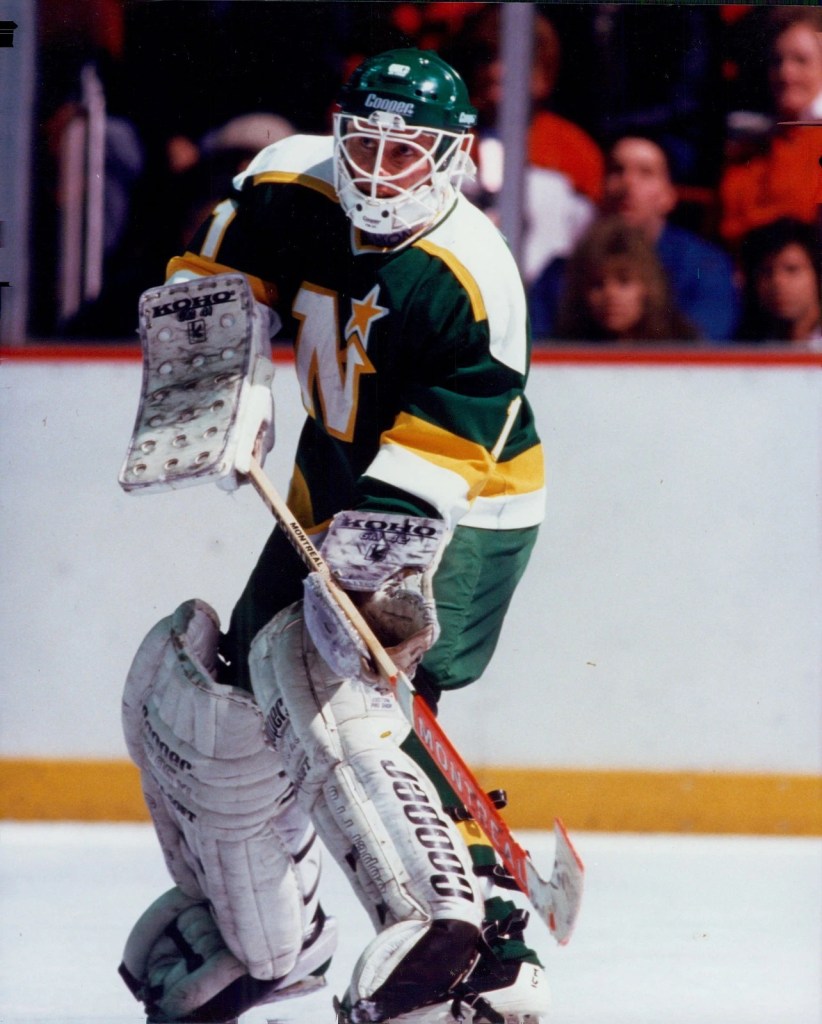
DALLAS STARS: Niko Kapanen (239 GP, 20g, 56a), Toby Petersen (243 GP, 17g, 23a), Brett Ritchie (241 GP, 33g, 21a); Kari Takko (131 GP, 33-67-14, 3,88 GAA,.879 Sv%)

Kapanen spent time in Finland before the jump to the NHL, but the point total didn’t come with. Kapanen got 14 of his 20 goals with Dallas in the post-lockout season. Petersen made a long trek through the minors before heading over to Dallas. With Dallas, Petersen got bottom-six time, which didn’t allow him to find much of an offensive punch. Ritchie had a bit of a physical game, but injuries would take its toll on him. Ritchie’s biggest season was his 16-goal campaign, which was also his career-high in games played in a season. Takko was a back-up supreme, but couldn’t seem to get the bounces to go his way. One of the memorable contributions was the Takko-Bell trade when he was dealt to Edmonton for Bruce Bell. 
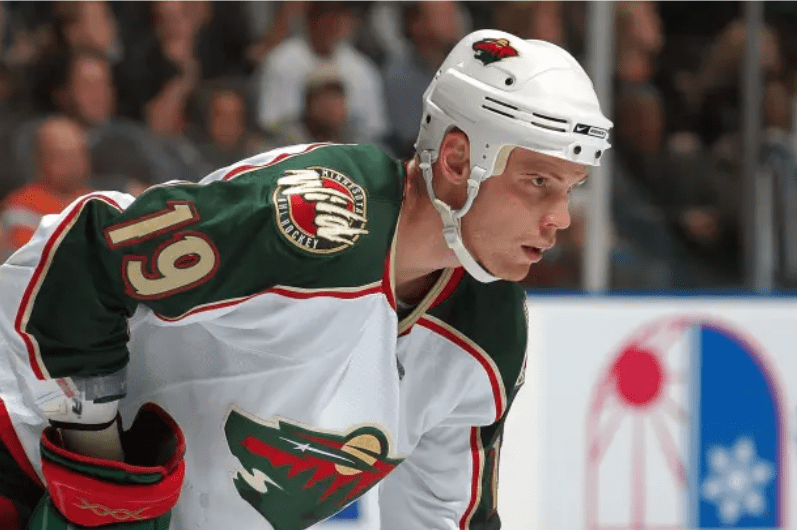
MINNESOTA WILD: Antti Laaksonen (323 GP, 55g, 63a), Stephane Veilleux (428 GP, 47g, 50a), Richard Park (217 GP, 37g, 37a), Josh Harding (151 GP, 60-59-11, 2.45 GAA, .918 Sv%)

Laaksonen was a consistent player for the first years of the Wild, but couldn’t replicate his output from college. Laaksonen was highly underrated in the grand scheme in a very defensive Wild line-up. Veilleux had a big year in his draft year, but through his NHL career, he couldn’t reach that peak. Veilleux bounced between the AHL and NHL post-lockout. Park was also part of the early teams who didn’t score all too much, but his consistency kept him as a viable bottom-six source. Harding is only here because his numbers were slightly less than Dwayne Roloson’s and Manny Fernandez won an individual stat award– that’s all. 

NASHVILLE PREDATORS: Adam Hall (234 GP, 43g, 42a), Nick Spaling (297 GP, 40g, 44a), Yannick Weber (223 GP, 6g, 18a), Mike Dunham (217 GP, 81-104-24, 2.74 GAA, .910 Sv%)

Hall had a consistent college career that moved onto the NHL ranks. Hall started to be a special teams threat in his last season in Nashville with 10 of his 14 goals coming on the power play. Spaling had a decent junior career, but it wasn’t until his last year in Nashville when he was moved to wing where he had an offensive breakout. Weber was in his last NHL years when he got to Nashville and was kind of there. Weber was in and out of the line-up in his four seasons with the Preds. Dunham was the first starter for the Preds and got shelled as a reward. Dunham’s 2000-01 season allowed his numbers not be as terrible as he had a 2.2.8 GAA and .923 save percentage. 

ST. LOUIS BLUES: Ralph Klassen (225 GP, 18g, 37a), Dmitri Jaskin (266 GP, 25g, 36a), Dave Lowry (311 GP, 53g, 51a), Vincent Riendeau (122 GP, 58-45-16, 3.34 GAA, .883 Sv%)

Klassen had a solid junior career, but couldn’t make it transfer in his years in the NHL. Klassen bounced in and out of the line-up through his Blues tenure. Jaskin came out of juniors looking like an offensive dynamo. However, Jaskin’s physical game would be his calling card in his six years with the Blues. Lowry’s highest single-season goals and points total came with the Blues, but it was under 20 goals and exactly 40 points. Lowry’s hockey IQ helped him keep a constant role in the NHL. Riendeau had a great 1990-91 season, but even still he never had a season under a 3.00 or above a .900 save percentage in his tenure with the Blues. 

UTAH “ARIZONA COYOTES” MAMMOTH: Mike Sullivan (256 GP, 13g, 20a), Lauri Korpikoski (401 GP, 62g, 83a), Radoslav Suchy (372 GP, 13g, 50a), Brian Boucher (96 GP, 28-45-18, 2.98 GAA, .898 Sv%)

Sullivan’s last stop was in Phoenix, where he played a bottom-six role. Sullivan only registered one season with double-digit points with the Coyotes. Korpikoski hit his career-high in points in his second Coyotes season, but declined in the NHL from there. Korpikoski was able to get back on track once he went back to Finland. Suchy was offensively talented in juniors and the AHL, but didn’t find that spark in the NHL. Suchy was able to transition to a more defensive role to round out his game. Boucher was in net for most of the harder times for the mid-00s Coyotes, but could not get the goal support needed. Boucher’s lone bright spot was his consecutive shutout record with five shutouts in a row in 2004. 

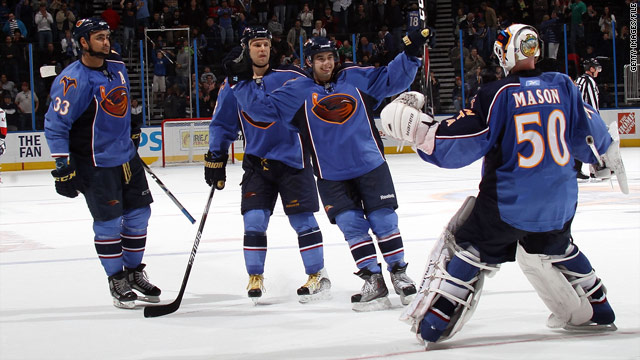
WINNIPEG JETS: Alexander Burmistrov (298 GP, 30g, 51a), Chris Thorburn (709 GP, 49g, 72a), JP Vigier (213 GP, 23g, 23a), Milan Hnilicka (117 GP, 29-65-13, 3.31 GAA, .901 Sv%)

Burmistrov never flourished as a top-ten pick with Atlanipeg or the rest of his time in North America. Burmistrov’s hockey IQ has gotten him a roster spot in Russia since leaving. Thorburn was a consistent scorer in junior, but his role jumping to the NHL changed. Thorburn did adapt, but never brought the scoring touch he had in the OHL. Vigier was an AHL stalwart who put up decent numbers, but couldn’t translate that into the NHL. Vigier found his touch again in Switzerland after his NHL time was up. Hnilicka took some time to get to the NHL, but his first full season was a respectable one in Atlanta. Unfortunately, Hnilicka’s second and third seasons left plenty to desire.
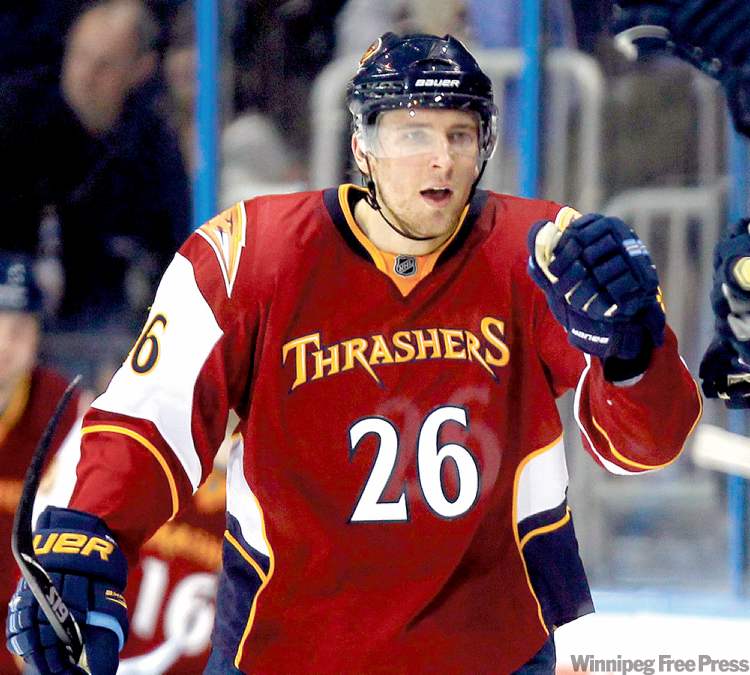
TEPID TAKE: Wheeler’s Record Reminds Winnipeg Fans They Were Once Thrashers

Photo via Winnipeg Free Press

It took seven years, but finally a player who actually played for the Winnipeg Jets now hold the franchise record for points, as Blake Wheeler surpassed Ilya Kovalchuk’s record of 615 points. Wheeler took 81 more games to do it, but he did have some carryover from when he played for the Atlanta Thrashers before they moved.

Now, more than ever, we need Kovalchuk on the Jets to battle it out with Wheeler for points. At least Kovalchuk still leads the all-time goals for the team by 111 goals over Bryan Little, as well as most goals in a season with 52– twice.

The interesting thing is how much the Jets are celebrating it now, even though the Thrashers history is not really promoted; mostly due to the Atlanta Spirit LLC. still holding the rights to the name and all the iconography with it. Plus, I don’t think the Thrashers name or history– outside of the rookies they were able to produce– is much to crow about. The Devils don’t tout the Rockies or Scouts all that much and there’s no reason they should have either.

But the Jets Centric Podcast had an interesting thread they put up on Sunday (FOUND RIGHT HERE) that’s really telling of where people in Winnipeg really stand when it comes to the Atlanta history. And if memory serves, I don’t think there was a big countdown for when Wheeler was to break Kovalchuk’s mark– but I’m sure I’m wrong in that.

With the lack of ties to Atlanta in Winnipeg, it’s easy to forget where they came from. When you go up to Winnipeg, there’s not much of a trace of the Thrashers history in the MTS Centre that I’ve seen at all. You’d think they’d want to be happy a team in the south fell or else they’d still be lobbying for an expansion team when other US markets are getting it.

Jets fans started their erasing of the Thrashers at the 2011 Draft when they were yelling down at people wearing Thrashers jersey, whether ironically or not, and just being jackasses to anyone and everyone. I get the hype behind getting a team back, but to do it in the face of people who just lost a team– not cool. They sure forget about how they felt when the actual Jets moved to Phoenix real quick when it comes to that.

In any case, the Jets are now seven wins away from tying the Thrashers win mark and I hope Bob Hartley and Curt Fraser are there to help usher the passing of the win torch to Paul Maurice.

Who’s Identity is it Anyway??

Infograph by 16Wins.com

Okay, so the Winnipeg Jets are paying homage to the WHA’s Jets for their blue Heritage Classic. Kind of a cop-out to just change the color of the jerseys from 2016 and not really pay heritage to say the Falcons that won an Olympic gold, but whatever sells merch, right??

But it brings up an interesting point about the lineage of hockey. Twitter pal Mitch brings up a good point in that– doesn’t all the original Jets’ identity– including the WHA– belong to the Coyotes?? I mean, the Jets as we know them now started off as the Atlanta Thrashers and as far as I know ( I found out in research of this– the Thrashers name and logo are still owned by the people in Atlanta for some ungodly reason); it’s not like the Cleveland Browns in that when they left for Baltimore they got a settlement to keep the original Cleveland Browns stats and history, leaving the Ravens with a clean sheet.

Yet, it also goes to show how little teams care about their actual lineage. The Coyotes used to do a lot of things with Winnipeg Jets’ legends and legacy, but they rarely do that anymore with a new Winnipeg Jets in the league. The Avalanche left all of the Nordiques’ records and such in Quebec City, while the Devils sometimes give a nod to the Kansas City Scouts and Colorado Rockies through Easter Eggs in their jersey– but it’s nothing outward. The Hurricanes are finally starting to rekindle their heritage with their Whalers’ nights– which is a nice thing to see.

So, who owns the rights to teams identities when they leave for another market?? The Coyotes have Bobby Hull, Dale Hawerchuk, and Thomas Steen’s jerseys retired; so they must own the records, right?? Rick Ley and John McKenzie’s numbers have been used by the Hurricanes (which Jack Edwards will let you know about), though the #2 of Ley is retired under Glen Wesley’s name.

To the victors go the spoils and they can do with it what they want. The sad fact is that most teams don’t utilize this enough. People clamor for nostalgia, people want the merch that comes with those old gaudy logos and jerseys (read: St. Louis Blues’ new throwback/alternative), and if you’re going to know where you’re going as a hockey fans– you’ve got to know where you’ve been. Not enough teams realize that with their old guards moving forward into the next realm of being, their stories and history goes with them if it’s not properly preserved or used. It’ll be a faded memory of another time.

While the Surviving….errr….”Original” Six teams do a decent job at honoring them– it needs to be more widespread through the league. While it’s great to make new memories and great that we’re seeing probably the best caliber of players in the history of the game…it’s best not to forget those that were before it– whether it was great or not. More over, teams need to remember where they came from– not in a get-famous-and-forget-your-roots movie tropes; but literally need to hash out where their heritage lies. If they moved and they’re not going to recognize where they moved from– give those records back to the NHL or the city they came from and move on. If they’re going to use that history of where they moved from– then use it and don’t let it rot.

Though, I will say I haven’t seen an area be this hungry for their former glory that Winnipeg and the Jets. I don’t remember this kind of uproar about the Minnesota Wild coming back and the fans wanting the North Stars records and logos and such. That either makes them really hardcore or just overly fanatical.

It Should Have Been the Battle of Atlanta

Though I know it was a long-shot because it would have been funny, the NHL Media website pretty much shuts down the official idea of having the Battle of Atlanta, as they revealed the logos for the Heritage Classic in an email for accreditation. The logos of the Jets looks like one they had for the Heritage Classic in 2016, while the Flames look like a take of their original uniforms as the moved from Atlanta. Of course, we got a hint of what the Jets were doing when Connor Hellebuyck donned a retro mask for pre-training camp in Winnipeg.

What could have been with the Atlanta Thrashers and Atlanta Flames coming back to life again in, of all places, Regina, Saskatchewan.

While we won’t know the actual Jets uniforms until September 13th when they’ll officially unveil their duds for the event, you look at the Jets jersey history– even with the original team; the pickings are very slim. When you look at the Flames, who have yet to set a date for their jersey reveal, the pickings are as slim– though plenty gaudy. Hell, the Flames needed to make up a jersey for their outdoor game in 2011 from a Calgary team few knew about.

Thus is the issue with teams that are in these games and want to do something special for their jerseys– but have a limited palette to choose from when it comes time. The Blackhawks ran out of idea, the Canadiens only have limited options, as do many of the “Original” Six teams. Then you have teams that don’t have a lot of old jerseys– like the Jets, Flames, and Capitals– and have to model some kind of faux-retro to go along with the idea of the game. Which is what’s going to make the Winter Classic jerseys interesting with Dallas and Nashville not being known for their jersey history.

Part of that is the reason why I suggested it becoming the Battle of Atlanta. I mean, sure– it helps that both teams defected from Georgia to move to Canada, but at the same time– it’d be a different jersey take than we may have expected. Plus, it would annoy Canadians who believe they are gatekeepers to hockey and all that it means to people. Plus, it’s about fun, right?? What’s more fun than to bring back two old teams and their jerseys for a night?? People want all kinds of old jerseys back– so here’s a perfect chance to do it.

But the NHL botched it. The teams botched. Now, we have to be subjected to recycled jersey concepts and act like we are happy about seeing something we’ve seen before– like the Blackhawks in an outdoor game.

My Wishes for the Battle of Atlanta in Regina

We all know this won’t happen. The NHL won’t let this happen. The Winnipeg Jets won’t let this happen. But I want the #BattleOfAtlanta to go down in a big, big was in October for the Heritage Classic game in Regina between the Flames and Jets.

Both teams are formerly of Atlanta. The real issue stems with one team actually caring about their heritage, whereas the other wants to think this is a Cleveland Browns situations– in that they keep the records of the team that relocated.

Word to the wise– the Winnipeg Jets are the Atlanta Thrashers and hold all the Atlanta Thrashers records. The franchise leader in points for the Winnipeg Jets is Ilya Kovalchuk with 615 points. Dany Heatley holds the record for goals and points by a rookie. These are Winnipeg Jets legends by proxy. Dale Hawerchuk, Bob Essensa, Teemu Selanne– all those records belong to the Arizona Coyotes. Even dumb, idiot, blowhard bloggers from six years ago say the Jets are the Thrashers.

Okay– with that all out of the way: the only way to play this is to have the Flames wear the classic Atlanta Flames jerseys. They already have the template with their third jerseys and with this game being about Heritage…it only makes sense. Like I said before, the Flames incorporated their Atlanta roots many times, including putting the old logo as an alternate captain letter.

Powder blue is something that the Jets should wear as the Thrashers– it would help that color clash people enjoy. Plus, they already incorporate that in their alternate jerseys now– which is a nice step for them bringing back the Thrashers garb for one night only.

(Photo by Scott Cunningham/Getty Images)

Musical act is Lil’ Jon– point blank period. Not because he’s an Atlanta guy, but it’s because he’s someone who has held the torch for Atlanta hockey since the Flames played at the Omni. He was a great ambassador for the Thrashers and really help bring more pop culture into the game when it was looking for it. So much impact that Kari Lehtonen put him on the back of his mask.

So it’s set– this is what it should be, especially if we’re talking about a HERITAGE CLASSIC. Before you get where you’re going, you’ve gotta know where you’ve been. That’s what it’s all about– knowing both teams came from Atlanta to Canada in different generations. Time to mesh them.

And honestly– to the people who might be butt-hurt over this (probably Jets fans who are defensive of their identity and want to believe 1996-2011 didn’t happen); if you liked the Hurricanes becoming the Whalers for one night– why can’t you enjoy the Jets becoming the Thrashers for one night?? It’s all in the name of fun, right?? All the nostalgia is great right??

You might not like it, but I’m sure there’s a lot more people who would. It’s the history of the team and regardless of what you try– it’s not going away. Preserve history rather than put it under the rug and then you can enjoy things rather than being overly uptight.

#BattleOfAtlanta

South-Beast Division Representing in Conference Finals

southeastdivision

Photo Source: Link

Of the four teams still left in the NHL Playoffs– three of them at some point played in the Southeast Division.

Let that sink in. Let the worst division in all of hockey; a division that angered so many because they got a top-seed when many times they were undeserving, a division you could say set off these new divisions because of how inferior it was to the others. That division accounts for 75% of the Final Four.

Of course, the Winnipeg Jets only played two seasons after moving from Atlanta because the NHL powers that be didn’t own a map that could have given a better option from the Central Division at the time to move to the Southeast– but whatever. The representation of this often horrid division is finally coming to light.

For the Capitals, they were seven-time Southeast Division champions, while the Lightning had only two division titles to their name– one of which led to a Stanley Cup in 2004. In the 14 seasons that the Southeast Division was in existence, eight times did more than one team get into the playoffs. The biggest margin of victory for a year in the Southeast was that 2003-04 season, where Tampa Bay had 106 points, which was 28 points better than the 2nd place Atlanta Thrashers.

Granted, with all the turnover in the league since the last time there were six divisions only four years ago, it’s hard to compare what would happen now since they’re all spread out in different divisions; but I’d like to believe that the cornerstones to these teams had major ties to the Southeast Era (or Error depending on who you ask). Alex Ovechkin, Dustin Byfuglien, Steven Stamkos– all of those guys were in the midst of the Southeastern heyday. The fact all three came out of their division is pretty fantastic, not only that– but we could see an all former-Southeast Division Stanley Cup Final if Winnipeg beats out Vegas to face one of their former foes.

For my money, however, I see it as a media member’s dream of Vegas beating Winnipeg in six games, while Tampa takes out Washington in seven to make it a very sunny, very warm Stanley Cup Final.