Meh Rushmore: Central Division

Everyone and their mother can do a Mount Rushmore of greatest players. Pick a generation and go and the stats tell their tale. So why not do a Rushmore of guys who just existed on their teams?? It’s not as if their tenure was the worst, but it wasn’t all that big or memorable. Which is why we’re here right now. Here’s my look at the four guys in each franchise that had a less than memorable tenure with those clubs. We’ll continue on with the Central Division and here are the guidelines I’m going by: 

RULES
200 Skater/75 Goalie minimum GP with team
At least one goalie on the list
No individual performance awards
Transplanted teams CAN use previous location for players
*Colorado can pull from Quebec
*Dallas can pull from Minnesota North Stars
*Utah will pull from Arizona/Phoenix/Winnipeg 1.0
*Winnipeg 2.0 can pull from Atlanta
Not known for designated role on team (Enforcer, Shot Blocker, Face-offs)
No current NHL players
“Meh” Status based on time with team they’re represented on
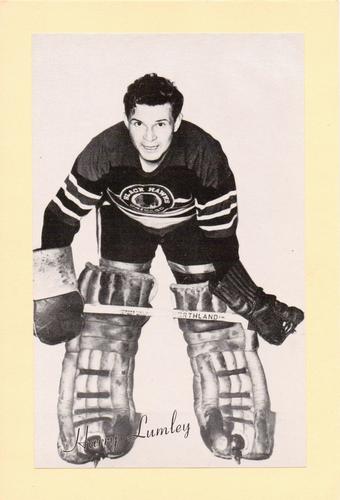
CHICAGO BLACKHAWKS: Cam Barker (200 GP, 17g, 63a); Steve Ludzik (413 GP, 46g, 92a); Rick Paterson (430 GP, 50g, 43a); Harry Lumley (134 GP, 29-85-18, 3.63 GAA)

Barker was a former 3rd overall pick with a dynamic junior career. Aside from one year, Barker’s tenure in Chicago got overshadowed by the likes of Brent Seabrook and Duncan Keith’s production. Ludzik set franchise records in juniors, but the offensive side didn’t come as easily for him in the pros. Ludzik was used in a more bottom six role with Chicago having plenty of top production already in their line-up. Paterson had one season of 14 goals, but he was another player where success offensively in lower leagues didn’t translate to the NHL. Lumley went from the Cup champions in Detroit to a sad-sack Chicago team in 1950, hitting the 40-loss mark in both seasons in Chicago. Despite being a Hall of Famer, Lumley’s time in Chicago was a forgettable mark on his resume. 

COLORADO AVALANCHE: Dan Hinote (353 GP, 27g, 38a), Rene Corbet (230 GP, 39g, 47a), Shjon Podein (239 GP, 34g, 37a), Mario Gosselin (192 GP, 79-82-12, 3.67 GAA, .871 Sv%)

Hinote had two solid years at Army before moving to major juniors and saw a regression. Hinote was able to carve out a role as a grinder and get his name on the Cup. Corbet was a better than point-per-game player coming into the NHL, however a deep line-up didn’t allow Corbet to shine as much as he did in his junior and minor league years. Podein had solid years in the NHL before coming to Colorado where the depth got the best of his ability and his adaptation to a bottom-six role allowed him to walk around in full-gear with the Cup after the 2001 win. Gosselin was in a back-up role for most his time, which suited him well. Gosselin’s lone year with starter minutes was his most disappointing year in his tenure. 
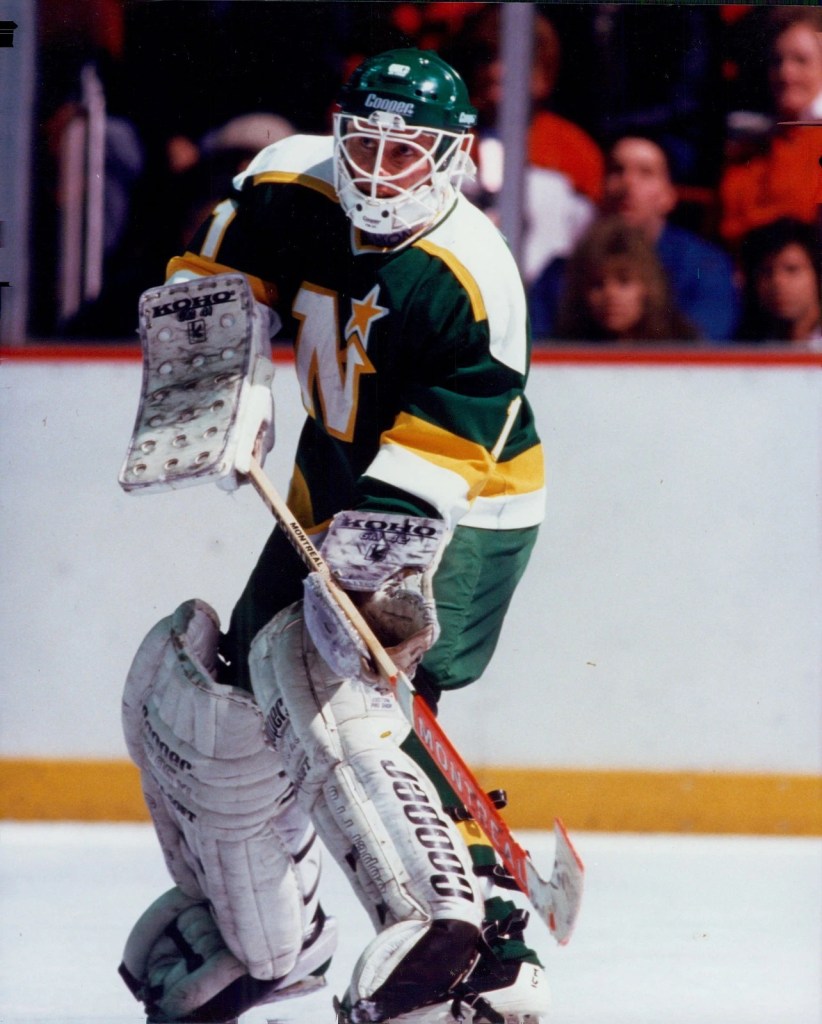
DALLAS STARS: Niko Kapanen (239 GP, 20g, 56a), Toby Petersen (243 GP, 17g, 23a), Brett Ritchie (241 GP, 33g, 21a); Kari Takko (131 GP, 33-67-14, 3,88 GAA,.879 Sv%)

Kapanen spent time in Finland before the jump to the NHL, but the point total didn’t come with. Kapanen got 14 of his 20 goals with Dallas in the post-lockout season. Petersen made a long trek through the minors before heading over to Dallas. With Dallas, Petersen got bottom-six time, which didn’t allow him to find much of an offensive punch. Ritchie had a bit of a physical game, but injuries would take its toll on him. Ritchie’s biggest season was his 16-goal campaign, which was also his career-high in games played in a season. Takko was a back-up supreme, but couldn’t seem to get the bounces to go his way. One of the memorable contributions was the Takko-Bell trade when he was dealt to Edmonton for Bruce Bell. 
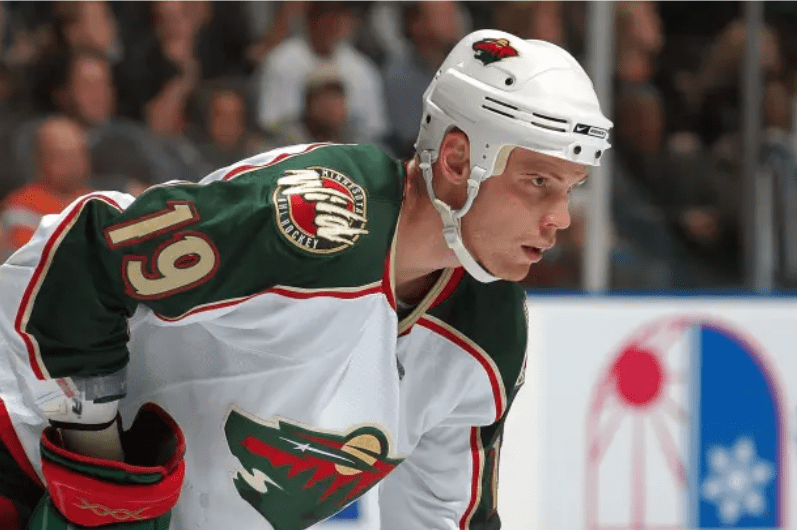
MINNESOTA WILD: Antti Laaksonen (323 GP, 55g, 63a), Stephane Veilleux (428 GP, 47g, 50a), Richard Park (217 GP, 37g, 37a), Josh Harding (151 GP, 60-59-11, 2.45 GAA, .918 Sv%)

Laaksonen was a consistent player for the first years of the Wild, but couldn’t replicate his output from college. Laaksonen was highly underrated in the grand scheme in a very defensive Wild line-up. Veilleux had a big year in his draft year, but through his NHL career, he couldn’t reach that peak. Veilleux bounced between the AHL and NHL post-lockout. Park was also part of the early teams who didn’t score all too much, but his consistency kept him as a viable bottom-six source. Harding is only here because his numbers were slightly less than Dwayne Roloson’s and Manny Fernandez won an individual stat award– that’s all. 

NASHVILLE PREDATORS: Adam Hall (234 GP, 43g, 42a), Nick Spaling (297 GP, 40g, 44a), Yannick Weber (223 GP, 6g, 18a), Mike Dunham (217 GP, 81-104-24, 2.74 GAA, .910 Sv%)

Hall had a consistent college career that moved onto the NHL ranks. Hall started to be a special teams threat in his last season in Nashville with 10 of his 14 goals coming on the power play. Spaling had a decent junior career, but it wasn’t until his last year in Nashville when he was moved to wing where he had an offensive breakout. Weber was in his last NHL years when he got to Nashville and was kind of there. Weber was in and out of the line-up in his four seasons with the Preds. Dunham was the first starter for the Preds and got shelled as a reward. Dunham’s 2000-01 season allowed his numbers not be as terrible as he had a 2.2.8 GAA and .923 save percentage. 

ST. LOUIS BLUES: Ralph Klassen (225 GP, 18g, 37a), Dmitri Jaskin (266 GP, 25g, 36a), Dave Lowry (311 GP, 53g, 51a), Vincent Riendeau (122 GP, 58-45-16, 3.34 GAA, .883 Sv%)

Klassen had a solid junior career, but couldn’t make it transfer in his years in the NHL. Klassen bounced in and out of the line-up through his Blues tenure. Jaskin came out of juniors looking like an offensive dynamo. However, Jaskin’s physical game would be his calling card in his six years with the Blues. Lowry’s highest single-season goals and points total came with the Blues, but it was under 20 goals and exactly 40 points. Lowry’s hockey IQ helped him keep a constant role in the NHL. Riendeau had a great 1990-91 season, but even still he never had a season under a 3.00 or above a .900 save percentage in his tenure with the Blues. 

UTAH “ARIZONA COYOTES” MAMMOTH: Mike Sullivan (256 GP, 13g, 20a), Lauri Korpikoski (401 GP, 62g, 83a), Radoslav Suchy (372 GP, 13g, 50a), Brian Boucher (96 GP, 28-45-18, 2.98 GAA, .898 Sv%)

Sullivan’s last stop was in Phoenix, where he played a bottom-six role. Sullivan only registered one season with double-digit points with the Coyotes. Korpikoski hit his career-high in points in his second Coyotes season, but declined in the NHL from there. Korpikoski was able to get back on track once he went back to Finland. Suchy was offensively talented in juniors and the AHL, but didn’t find that spark in the NHL. Suchy was able to transition to a more defensive role to round out his game. Boucher was in net for most of the harder times for the mid-00s Coyotes, but could not get the goal support needed. Boucher’s lone bright spot was his consecutive shutout record with five shutouts in a row in 2004. 

WINNIPEG JETS: Alexander Burmistrov (298 GP, 30g, 51a), Chris Thorburn (709 GP, 49g, 72a), JP Vigier (213 GP, 23g, 23a), Milan Hnilicka (117 GP, 29-65-13, 3.31 GAA, .901 Sv%)

Burmistrov never flourished as a top-ten pick with Atlanipeg or the rest of his time in North America. Burmistrov’s hockey IQ has gotten him a roster spot in Russia since leaving. Thorburn was a consistent scorer in junior, but his role jumping to the NHL changed. Thorburn did adapt, but never brought the scoring touch he had in the OHL. Vigier was an AHL stalwart who put up decent numbers, but couldn’t translate that into the NHL. Vigier found his touch again in Switzerland after his NHL time was up. Hnilicka took some time to get to the NHL, but his first full season was a respectable one in Atlanta. Unfortunately, Hnilicka’s second and third seasons left plenty to desire.

The Mullett Arena Student Section Will Be the Best Thing Other NHL Teams Will Never Incorporate

Photo via VenuesNow.com

Everyone is going to dunk on the Arizona Coyotes. Rightfully so, as this team has been a disaster since 2009 when Jerry Moyes first sold the team. Even more now playing in a college hockey arena with an unfinished visiting locker room for the opening weekend and no concrete plans for their own arena coming up. 

But could this turn the corner for them?? Could playing in a sub-5,000 capacity building be the turning point for the Coyotes to get people to love them and not wish them to move elsewhere. 

Short answer, no. 

Long answer, no– but they’re going to give people and the league an experience that won’t soon be forgotten. 

The one thing out of this whole situation is going to be what becomes of the “Student Section” portion of Mullett Arena. With the cost-effective student tickets in that section, it could very well create something akin to what European fans experience every game. It’s something that would be strictly unique to the Coyotes and Mullett Arena…but when it’s gone once the Coyotes leave, will that concept stay??

A part of me would like to think that if the Student Section is a success, especially being so close to the ice, would more teams think about doing the same kind of thing in their arenas to build a younger fan base and create a more jovial atmosphere for their rink??

Short answer, no.

Longer answer, no– but because they don’t want to give up those high-dollar seats for $25 tickets for a rowdy crowd because sports is corporate and the belief is that you can’t have a good fan experience when the rowdies are near the ice and not in the nosebleed– where some think they belong. 

It all comes down to dollars. Regardless of if the Student Section at Mullett becomes one of the bigger stories out of this season. Regardless of if you can build a new, younger fan base from lowering ticket prices for a section to accommodate college students to build their own culture. Regardless of if it will make the sport grow because of how insane the crowds will become– owners don’t want to give up $100 a seat to make a better atmosphere. 

Because sports aren’t about fun. Sports are a business. And businesses need money– not fun. My hope is that through this whole situation the Coyotes find themselves in (yet again), that the Student Section can bring some fun to the hockey-going experience and to the TV experience, as well. My hope is that enough Arizona State students show up to not only support the Coyotes, but to make their mark on hockey to let other colleges know that they are a hockey school now, too. Make the experience big, make it project through the TV broadcasts, and make it so that people actually start thinking of Arizona as a hockey destination.

Big League Dogs to Small Town Pond??

Where will this couple go if the Coyotes can’t get into Tempe/ Photo via Arizona Coyotes

We’re well aware the issues with the Arizona Coyotes over the better part of a decade now. It’s been added to thanks to the story about possibly sharing the new rink built for the Arizona State hockey team while they await their arena in Tempe to be build.

You know– the arena they don’t actually have yet but how the hell could they lose to themselves since they were the only bidder for the grounds that Tempe put out there– oh wait, they are losing out on it due to lack of support form the city.

Some of the uproar about the move varies from the arena being very small for NHL standards to people pointing out the effort the NHL has put in to keeping the team in the area through all the ownership issues and money problems. To which, I can see their point. First, the new Arizona State arena only is slated to hold 5,000 people in there. Fun fact– only two AHL arenas (Utica and Belleville), two ECHL teams (Glen Falls and Trois-Rivieres), and two SPHL arenas (Vermilion County and Birmingham) hold less than the new arena. Optics don’t look at this too kindly for a top-level NHL team.

Secondly, the NHL has gone all out to try and make the Coyotes works in Arizona– rightly or wrongly. The owners have come and gone from this franchise, all citing being in Glendale as the reason for their shortcomings in the stands. While that could be true, Glendale has over 250,000 people living there so it’s not like it’s some out of the way hamlet with no people– hell, it’s even considered part of the Phoenix-metro area that consist of almost five-million people. You’d have to think there’s some kind of marketing scheme that’d be able to get 17,000 people into Gila River Arena on a gamely basis.

The debate about trying to keep the Nordiques, original Jets, and North Stars in their area could rage on forever– but at the time you could see the NHL’s strategy in order to boost league revenues and interests beyond the markets they were in– Quebec City and Winnipeg being the two smallest at the time. That said, the NHL has been consistent in trying to keep teams in their current markets– Pittsburgh, Edmonton, Ottawa, Buffalo, Nashville– they’ve all had the NHL intervene with finding owners to keep the team in the area or being the medium to bridge a gap for a new arena– looking at you next, Calgary. So, the fight they are putting up now with the Coyotes (and have been since 2008) is consistent with what they have been doing– so I’m not shocked.

For me, the biggest play will be what happens if the Arizona State deal does work and the Coyotes actually do get granted the land to build in Tempe. Since Gila River is no longer an option since the Coyotes will get the boot after this season and it’ll be 3-4 years before any new arena will be done; owners and players probably aren’t going to be too happy with a team playing in that small of an arena. Will it be a ruckus crowd?? Perhaps, if the ticket prices are right– hell, you get enough die-hards into that building; it might be the toughest place to play by year two.

Of course, that’s if everything were to go to plan and the history of the Coyotes dictates that there’s always going to be a wrench thrown in there. All the while, people in Houston get their hopes up and lick their lips at the possibility of getting this team in their area– an area I’m sure the NHL owners would love to be in.

While this does suck for fans of the Coyotes and it drains the nerves of other fans– you can’t deny how interesting and entertaining from the outside this really is. For 14 years it’s been a “will they, won’t they” situation and has amused me for that time span. Wherever the cards may fall– this could be the final season of it and we should enjoy it while we can because stability will ruin this whole bit.

A Look Back at the Qualifiers

The NHL’s first attempt at a Qualifier Round in the Hub Bubble was a success, regardless of how your team finished. The idea of a 24-team playoffs as the “new normal” began to have a little traction, especially with Barry Trotz speaking up about it. The downside to this would be the length of the season, of course. Unless teams vote to knock off 10 games to the regular season in lieu of those playoff games, the 24-team concept will be a one-and-done situation. Of course, playoff tickets do outweigh regular season ones; so teams who consistently make the playoffs could be swayed by that extra revenue; whilst the constant also-rans will hate to have five home games taken from them.

It’s hard to argue that it’s a novel concept– a qualifier of some sort with the top-four teams battling out to reshuffle the top positions. Though, some of the top teams would cry foul if they did get that top spot to have a better advantage in the playoffs, only to lose that spot when it came to the actual playoffs starting– much like how the Bruins lost their top spot because of their subpar play in the round-robin.

Granted, it’s not to say that getting the top spot will assure victory. We saw with the Oilers and the Penguins that just because you’re facing the weakest-seeded team, it doesn’t really mean the top team will get out in front. In fact, four of the eight qualifiers saw the lower seed winning, with Chicago, Montreal, and Arizona being below the 10-seed and still advancing.

A bugaboo for me was the statistics of it all. I don’t understand how the round-robin games count as playoffs games when the OT structure was that of the regular season. It’s not as if they were in any kind of series structure to it, so why would they count as playoff games??

The bubble concept has been great for people, especially since you can’t have fans in the arena, the time teams play is very flexible and creates all-hockey, all-the-time on the networks. We’d have to assume, however, when people are allowed back into the arenas, this will be a thing of the past. You’d actually have to choose between a number of games rather than just sit down and have them come one right after another.

Unsung to these games is the ice crew, who have been amazing in the bubble with the ability to keep the ice as good as can be with three games playing at a time, while also making sure they had the correct local ads on the boards for the “home” team and their regional broadcast. Not only that, but the game operation folks have been tremendous with their humor to the in-game presentations.

This was a good trial run to see how the length of a qualifier, coupled with how to spread out the games. If the NHL does start to scratch their chins about the idea of a consistent 24-team playoffs, then they can pretty much push to this in order to determine the success and failure. Only issue would be doing it across multiple sites and not just one or two.

Overall, the qualifying round proved to be a nice re-introduction to most people for hockey and the playoffs, which will hopefully carry over into the actually playoffs when they start on Tuesday.

John Chayka Checks Out on Coyotes Before Reboot

Okay, so this Arizona Coyotes thing is just as Arizona Coyotes as it gets, right??

John Chayka quits the team days before the playoffs, this after another team requested to talk with him about a job and after owner Alex Meruelo and his team took over contract discussions with Taylor Hall. Seeing the writing possibly on the wall, Chayka bails and now the team is going to the league to see what they can do with his contract.

It’s hard to believe that Meruelo was said to be a fan of Chayka and his style, which lead to Chayka having his contract extended. Then Chayka goes and does this because the ownership group started to micro-manage talks with a pending free agent; which has to be an odd situation considering the Coyotes are almost at the cap limit as it is with Hall’s contract going to bring in much more that the $6M he’s getting now.

Obviously, Chayka is going to be blamed for the money issues– he is the GM afterall. But wouldn’t he have to get clearance from Meruelo or previous owner Andrew Barroway to even get the money for those moves??

When Chayka came in, he was the wunderkind of this new movement toward analytics some NHL teams were making. At just 26, Chayka came from an analytics company called Stathletes founded by himself and his sister Meghan. However, for Chayka; the only playoff appearance a team under his watch has seen is this one with the expanded playoff format, as they were fifth in the Pacific prior to the pause.

Are the Coyotes jackasses for undercutting the job of their GM in contract talks?? Sure, especially when he’s not present to get a write-off dinner out of it. Is Chayka a quitter and may have screwed his team over with the contract given?? Well, the numbers don’t really lie.

Is it a shocking surprise that it’s Arizona having to deal with this?? Kind of, especially when they looked to be going in the right direction for long-term growth. It’s almost a shame that it’s going down like this and playing out as chaotically as it is prior to the NHL Reboot. But so it goes with the Coyotes.

Hall and ‘Yotes

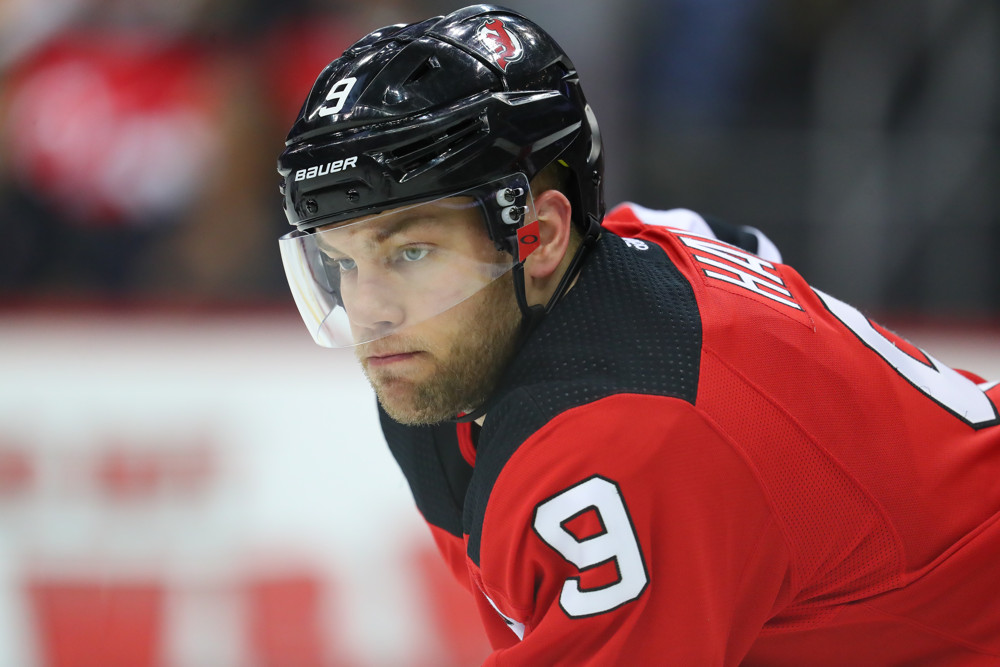
NEWARK, NJ – DECEMBER 06: New Jersey Devils left wing Taylor Hall (9) during the second period of the National Hockey League game between the New Jersey Devils nd the Chicago Blackhawks on December 6, 2019 at the Prudential Center in Newark, NJ. (Photo by Rich Graessle/Icon Sportswire)

We all knew Taylor Hall was going to be traded this year, we didn’t know it’d be to Arizona of all places. Not only that, but the Devils didn’t get too much to help them in the short-term and some people thinking Ray Shero got a little fleeced in this one.

But in all honesty, the match could be a great fit overall. The Coyotes needed someone like Hall in their line-up to be an offense creator. The Coyotes are 24th in the NHL in goals-for and while their power-play is in the top-10, you can’t go wrong getting a former MVP onto the roster. More over, this is a move that could help spark Phil Kessel’s output, which has been lacking a little due to no playmakers being up to the Kessel caliber of play. The Coyotes are surprising enough this season being third in the west and getting solid performances from Darcy Kuemper in net and Conor Garland being their offensive dynamo; but adding Hall just ups the value of this team– especially at this point in the season where there’s still time for Hall to adjust to Rick Tocchet’s style in Arizona.

Yet, looking at the Devils…this was not a great deal. You know they had to move Hall to get something for the future; but you’d also like to get something for today, too. Not many people think the return will be much of anything outside of the draft picks, but you never know how the picks and players will turn out. This move really doesn’t address the bigger issue of the Devils, which is their goaltending. Sure, MacKenzie Blackwood has been better than some of the options the Devils have, but that doesn’t say much overall.

This does, however, open the way for the younger Devils to really show their muster. Nico Hischier and Jack Hughes are now the face of the team more than ever, while the older crew up front in Wayne Simmonds, Kyle Palmieri, and Blake Coleman are going to have to be offensive mentors to these talented players. But wouldn’t you have liked to have Hall be with these former top picks and guide them through the peaks and valleys through his first-hand experiences??

There will be instant results in Arizona because they have a known commodity in Taylor Hall; they got a piece that could be the big thing missing not only for their team, but for their other acquired star player, and they are making a push to be a desirable spot outside of the climate to be. For New Jersey– it’ll take some years, if it ever happens for them when it comes to the results of this deal. But they’ll always have that one year, they’ll always have 2017-18.

ITPST: October 24th, 2019

It’s the second edition of the gimmick that keeps on giving. Hey, we’re almost across the board with teams playing double-digits games– which means we’re getting closer to that sweet, sweet playoff push.

Keeping it in the East to start, the Buffalo Sabres’ hot start (8-1-1) have them at the top of the Atlantic Division. Right behind them are the Boston Bruins (6-1-2) and the Toronto Maple Leafs (5-4-2). Who can’t wait for another round of Bruins/Leafs in the first round?!? Yeah– I could wait for a good long while. In the Metro, the Caps (7-2-2) and John Carlson are on a big streak after a rough start, putting them atop the Metro. Carolina have a little bit of a stall after a torrid start (6-3-0), with the Penguins right after them (6-5-0). The Wild Card spots head to both Florida teams in the Lightning (5-3-1) and the Panthers (4-2-3).

Therefore it’ll be the Sabres vs. the Panthers, the Bruins take on the Leafs, the Caps will take on the Lightning, with the Hurricanes and Penguins going at it to round it out.

Out West, the Colorado Avalanche (7-1-1) are ripping it up and are atop the division, with the Predators (5-3-1) and Blues (4-2-3) rounding out the tough Central Division. Getting rid of Milan Lucic has helped the Edmonton Oilers (7-2-1) put themselves ahead in the Pacific, as the Golden Knights (7-4-0) and Canucks (6-3-0) round out the top three. The Wild Card spots will be headed to Anaheim (6-4-0) and the rejuvenated Coyotes (5-2-1).

And as we see it– the Avalanche will duel with the Coyotes in the relocation bowl, with the Blues and Predators being the other match-up, as the Oilers will take on the Ducks and the Golden Knights battle the Canucks.

Quickly Thrown Together 2019-20 NHL Preview

You’ve seen the best– now it’s time for the rest. Let’s go:

THIRD TIME FOR FIRST TIME??: There’s 11 teams who haven’t won a Stanley Cup yet: Arizona, Buffalo, Columbus, Florida, Ottawa, Minnesota, Nashville, San Jose, Vancouver, Vegas, Winnipeg. Of those 11, you’d have to say that maybe four have a chance in Nashville, San Jose, Vegas, and Winnipeg; but the window is closing if it’s not already shut. Of course, they said that about the Caps two years back and they lifted the Stanley Cup.

HUNT FOR 50: Will Alex Ovechkin hit the 50-goal mark for the ninth time?? Odds are pretty good given he has four of the last five 50-goal season, including last year. And let’s be completely honest– Wayne Gretzky’s goal-record is out of reach for Ovechkin. Even as a Caps fan, it’s not something I think is attainable. However, tying the mark for most 50-goal campaigns in a career with Gretzky and Mike Bossy?? Much more than attainable.

YOUNG GUNS ON THE HUDSON: You could argue that with Jack Hughes and Kaapo Kakko; the Devils and Rangers could be the best rivalry coming back– akin to Ovechkin and Sidney Crosby pumping new life in to a Caps-Pens rivalry that was fading into obscurity. Two young talents, ready to take over the New York Market in a big way, which the media there will undoubtedly eat up, overanalyze, and do their best to be like Toronto sports media figures.

McPLAYOFFS: Depending on what you believe, there’s frustration with Connor McDavid and the Oilers not making it to the playoffs but once in his tenure there. It’s a tough pill to swallow when you have one of the best players in the league not being on the biggest stage for the biggest trophy every year. Will that help with Mike Smith and James Neal coming from Calgary while Milan Lucic went south on the QE2?? The Neal part may help a little, but I’m not a believer in the defense and goaltending for Edmonton one bit.

RETOOLING EARLIER DYNASTIES: Both the Los Angeles Kings and Chicago Blackhawks had less than desirable finishes, with both teams looking to retool heading into this season. With both playing in divisions that may be tougher than they look, it might be an uphill battle. I wouldn’t put too much money down on either of them making it too far if they do make the playoffs.

WORTH THE WAIT??: A lot of restricted free agents waiting until the 11th hour to sign, but is it something that their teams will be happy about or upset about should they not perform to the contract they were dealt?? Let’s be honest, I’m shocked Patrik Laine didn’t burn the bridges in the locker room already with what he said and it’s probably awkward as hell right now. The Mitch Marner deal looks like an overpayment when you look at other RFAs signing for a bit less than retail, but in the market space. That said, regardless of the price– Marner and Laine will be on the hot seat regardless of what their contracts were since they’re on teams that are supposed to be contenders.

SUNBELT RISING??: We all know what the Tampa Bay Lightning are– but do we really know what the Arizona Coyotes and Florida Panthers are outside of their team financials?? I would venture to guess that both teams are on the upswing, with Arizona getting Phil Kessel, Nick Schmaltz being healthy, and the possibility for solid defense. All the while, the Panthers have their goalie in Sergei Bobrovsky, young guns primed to really break out and put teams on notice, all while maybe trying to snatch a wild card spot away from others in the strong Atlantic Division.

Who’s Identity is it Anyway??

Infograph by 16Wins.com

Okay, so the Winnipeg Jets are paying homage to the WHA’s Jets for their blue Heritage Classic. Kind of a cop-out to just change the color of the jerseys from 2016 and not really pay heritage to say the Falcons that won an Olympic gold, but whatever sells merch, right??

But it brings up an interesting point about the lineage of hockey. Twitter pal Mitch brings up a good point in that– doesn’t all the original Jets’ identity– including the WHA– belong to the Coyotes?? I mean, the Jets as we know them now started off as the Atlanta Thrashers and as far as I know ( I found out in research of this– the Thrashers name and logo are still owned by the people in Atlanta for some ungodly reason); it’s not like the Cleveland Browns in that when they left for Baltimore they got a settlement to keep the original Cleveland Browns stats and history, leaving the Ravens with a clean sheet.

Yet, it also goes to show how little teams care about their actual lineage. The Coyotes used to do a lot of things with Winnipeg Jets’ legends and legacy, but they rarely do that anymore with a new Winnipeg Jets in the league. The Avalanche left all of the Nordiques’ records and such in Quebec City, while the Devils sometimes give a nod to the Kansas City Scouts and Colorado Rockies through Easter Eggs in their jersey– but it’s nothing outward. The Hurricanes are finally starting to rekindle their heritage with their Whalers’ nights– which is a nice thing to see.

So, who owns the rights to teams identities when they leave for another market?? The Coyotes have Bobby Hull, Dale Hawerchuk, and Thomas Steen’s jerseys retired; so they must own the records, right?? Rick Ley and John McKenzie’s numbers have been used by the Hurricanes (which Jack Edwards will let you know about), though the #2 of Ley is retired under Glen Wesley’s name.

To the victors go the spoils and they can do with it what they want. The sad fact is that most teams don’t utilize this enough. People clamor for nostalgia, people want the merch that comes with those old gaudy logos and jerseys (read: St. Louis Blues’ new throwback/alternative), and if you’re going to know where you’re going as a hockey fans– you’ve got to know where you’ve been. Not enough teams realize that with their old guards moving forward into the next realm of being, their stories and history goes with them if it’s not properly preserved or used. It’ll be a faded memory of another time.

While the Surviving….errr….”Original” Six teams do a decent job at honoring them– it needs to be more widespread through the league. While it’s great to make new memories and great that we’re seeing probably the best caliber of players in the history of the game…it’s best not to forget those that were before it– whether it was great or not. More over, teams need to remember where they came from– not in a get-famous-and-forget-your-roots movie tropes; but literally need to hash out where their heritage lies. If they moved and they’re not going to recognize where they moved from– give those records back to the NHL or the city they came from and move on. If they’re going to use that history of where they moved from– then use it and don’t let it rot.

Though, I will say I haven’t seen an area be this hungry for their former glory that Winnipeg and the Jets. I don’t remember this kind of uproar about the Minnesota Wild coming back and the fans wanting the North Stars records and logos and such. That either makes them really hardcore or just overly fanatical.

Better Know An Affiliate: Arizona Coyotes

The season is right around the corner, so why not let people into the whole line of teams that their parent team will be dealing with throughout the season. I did this a few years back on another website of mine, so why not revive it and go from there??

AHL: Tuscon Roadrunners (34-25-5-3, 5th in Pacific, Did Not Qualify for Playoffs)
TEAM LINEAGE: After the California teams moved, the Coyotes bought the Springfield Falcons and moved them to Tucson in 2016. Much like the rest of the AHL Pacific, the reasoning was so that players didn’t have to make cross-country flights in the event of a call-up. Before the Roadrunners, the Coyotes bookended their affiliation with Springfield– who was their first affiliate from 1996 until 2004, with the IHL’s Las Vegas Thunder taking some players in 1998-99. After the first time with the Falcons, the Coyotes put their prospects with the Utah Grizzlies, San Antonio Rampage, and Portland Pirates before returning to Springfield and the moving to Tucson.
FREQUENT FLYER CANDIDATES: Goalie Adin Hill is a likely candidate depending upon the health of the goalies above him, but it could be a look at the blue-line for guys moving up and down. Robbie Russo, who signed a one-year, two-way deal this summer, has a lot of offensive upside that could be useful for the Coyotes moving ahead. Though, Russo’s age could play a factor– which means that another talented blue-liner– who already had some time with the Coyotes– Kyle Capobianco has the same offensive upside, but is four years younger and has a better two-way play element that Russo has; albeit very slightly.

ECHL: Rapid City Rush (30-33-5-4, 6th in Mountain, Did Not Qualify for Playoffs)
TEAM LINEAGE: The Coyotes moved back to the Black Hills of South Dakota, as the Rush return as the ECHL affiliate after the Coyotes left in 2017. The Coyotes have had a bevvy of secondary affiliates across a couple leagues– ECHL, UHL, and CHL– over the 23-year franchise history. In fact, the Coyotes have had multiple secondary affiliates four times in their franchise history: 2001-02 (Mississippi Sea Wolves and BC Icemen), 2006-07 (Phoenix Roadrunners and Laredo Bucks), 2010-11 (Las Vegas Wranglers and Laredo Bucks), and 2012 until 2014 (Gwinnett Gladiators and Arizona Sundogs).
NOTABLE GRADUATES: There have been a couple of Rush players who have moved up from the Rush to the NHL, including Adin Hill, Marek Langhamer, and Michael Bunting– all of which were called through the Coyotes system.