Rogers Communications and the Columbus Blue Jackets are cheap and lazy.
A few weeks back, Rogers shut down two of their sports radio stations– one in Calgary, one in Vancouver. Both were the homes of NHL broadcasts of the Flames and Canucks respectively. Currently, both teams are without radio homes for the 2026-27 season.
Then it was announced this week that the Blue Jackets were getting rid of their radio broadcasts by not renewing their radio voice Rob McElligott and will instead put a simulcast of their TV broadcast as their radio feed. This also comes after the new that the Blue Jackets were one of the four teams that will have their local games produced by the NHL
We all know radio is a dying medium for a variety of reasons– some more valid than others– but it does still serve a purpose overall and in the sports landscape. And sure, it may be me romanticizing sports on the radio since that’s how I was able to listen when I was younger and had to go to bed, but had a clock radio to get WBAL-AM for late night Orioles games and syndicated ESPN and Fox Sports radio– but there’s still a viable outlet for broadcast games on the radio.
Rogers Communications has a lot of money. They bring in $21 billion (with a B) in revenue, they own 75% of Maple Leaf Sports and Entertainment, they have the rights to the NHL, and own countless other entities. For them to shutter radio stations, especially out in Western Canada, it’s a disservice to the consumer who gets affected when that happens. It’s a cheap and lazy way to save some money, while putting people out of work because of it. Hell, they don’t care about much broadcasting wise if it doesn’t make a profit– just look at them taking Hockey Night in Canada off the CBC.
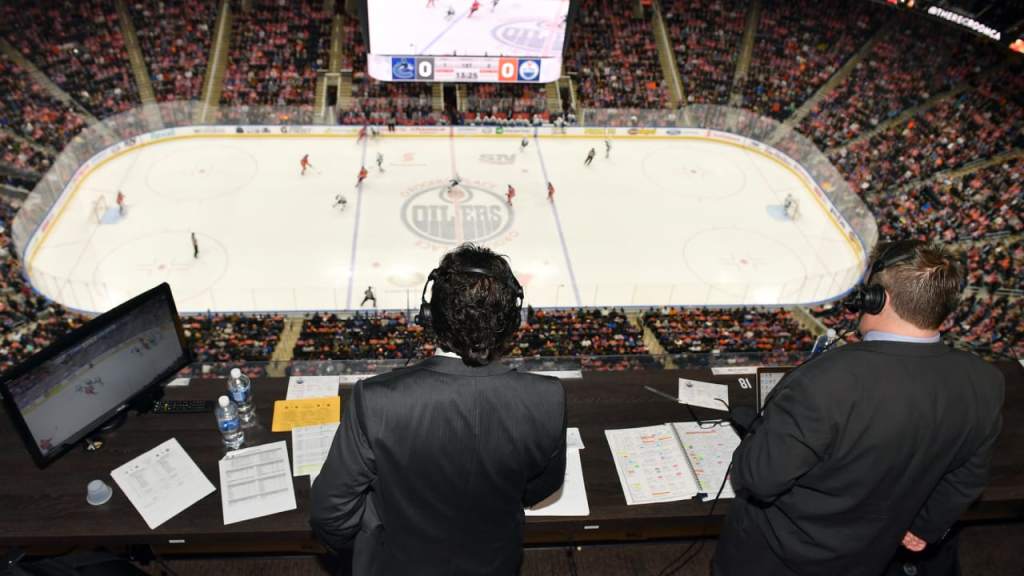
In Columbus, TV on the radio isn’t great. Broadcasters who are on TV don’t have to talk about every nuance in the game because they have video feeds to do that for them. Analysts can just draw on a telestrator rather than create a picture for the listener to give them all the details on what’s going on in the game. Falling back on video does no good to the listening experience and really makes for a bad broadcast on audio only.
Now, TV simulcasts are better than no radio at all. It’s just a lazy way to cut back costs for owners who want to keep more money and not pay talented individuals to do what they do well on a medium they know all about.
I’ve been broadcasting for 25 years now– mostly podcast host, but occasionally doing play-by-play for the Maryland Black Bears. When doing play-by-play, I try to describe the game as if it was a radio broadcast, even with the video element. Why?? Because I know people might be multitasking and aren’t looking at the screen every second of the game. And that’s what radio broadcasts do for people. Even if it’s just on the NHL dot com side of things to turn on the radio broadcast through that. It’s a good background soundtrack if you’re doing something else, but don’t lose the description of the game at all. Odds are that simulcasts from TV to radio aren’t going to provide that same ambiance it did in the past.
You can be assured that some teams will look at TV on the radio and think it’s a good idea to save a few bucks because that’s the bottom line for them. Not how fans consume hockey, not how talented their people are at their jobs, just the bottom line to save some money. This could be the start of a trend that will make things a lot worse for how fans consume the game and put really talented people out of work because they’re not enough spots out there for them.
I’m glad Blue Jackets fans and other fans are seeing this and are getting upset about their radio going away. I know many people in Calgary and Vancouver are up in arms over their sports radio being taken from them. The sad thing is that most of these big corporations and owners won’t care too much because they save the money to pad their accounts that they won’t use towards the hockey team. It’s a slippery slope that may make game broadcasts worse off because of it.

