Caps By The Numbers: The Save Gives Caps a Split in Vegas

For the first time in franchise history– the Washington Capitals won a game in the Stanley Cup Final. In what could be the best save in his career, Braden Holtby stopped Alex Tuch late in the third period to preserve the Capitals 3-2 lead, which ended up being the final as the teams go back to Washington tied up at one game a piece. Caps goals came from Lars Eller, Alex Ovechkin, but the game-winner came from Brooks Orpik– his first goal in 220 games.

The game didn’t come without a price, as Evgeny Kuznetsov took a hit from Brayden McNab in the first, looking like he jammed his wrist and didn’t return. Late in the game, Jay Beagle took a shot off the inside of his foot. He did play the rest of the game, but had a noticeable hobble when he was on the ice. Luckily, the teams have space between games, as they don’t play until Saturday night.

With the 13th win, we have a former Caps #13.
35b09e87257f8d26a6c2b7abe0ed622a.jpg

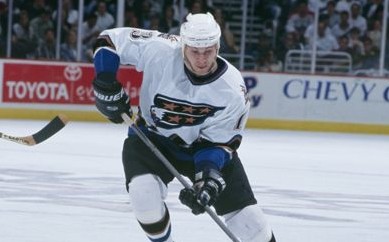
Since it’s the first time that the Caps have won their 13 games in the playoffs, why not go with the first guy who wore the #13?? That feat didn’t happen until 1997 when it was the man they call Niko, who first donned the superstitious number after coming over from the Hartford Whalers. It’s time for Andrei Nikolishin.

Nikolishin came into the league as an offensive forward, but adjusted his game to the North American style, while also keeping his solid hands, impressive strength of skating, and one of the most balance players in the league, though the numbers never translated that. Coming to the Caps in the middle of the 1996-97 season, Niko was put into a checking role– which is something he happily went into. While he only peaked at 38 points for the Caps in his six years in DC, Nikolishin’s backchecking, forechecking, and ability to give up the body for the play was one of the big reasons why the Caps wanted him in the trade.

Of course, the relationship wasn’t without its drama with contract disputes. Nikolishin sat out most of the 1997-98 season due to trying to get a better contract, which limited him to only 38 games. However, once the playoffs came– Niko was a big reason why the Capitals were able to get into the Stanley Cup Final, putting up 13 assists in 21 games, while also providing the stingy defense that tends to win you championships.

Nikolishin would improve his offensive output after that season, peaking at 13 goals and 25 assists in 2000-01, complimenting that with a 13-goal, 36-point output for the Caps in 2001-02 before leaving the team to test the waters. With two failed attempts in Chicago and Colorado, Nikolishin went to Russia to end out his career.

My Life As a Caps Fan

home-main.jpg

Photo via CapsJerseys.com

This story is unique, but not. Many Caps fans have a similar tale– one of hope, heartbreak, despair, and faith. This is just mine.

My first Caps game I remember seeing on TV was on WDCA Channel 20 when the Caps played the New York Rangers in 1987 or 88. I knew the game of hockey because I had saw two wooden souvenir sticks in my bedroom, I believe a gift from my Godfather. They were red with blue lettering “Washington Capitals” with the Caps logo on it. I also had Fisher-Price roller skates with bells on it– so when I saw the game and wanted to imitate that– my mom and dad were reluctant about it. Not because of the game itself, it was mostly because of the ringing.

The first Caps game I attended was in February of 1989 (a story that I’ll hopefully get to tell at the end of the playoffs). I was instantly hooked, not with hockey– but with the Capitals. They were my local(ish) team, even though the Baltimore Skipjacks were a few miles from me– my dad had some connections at the Capital Centre that allowed us to see many games together until they left for the then MCI Center.

Through it all, this is the team I hung my hat on. From the days of never getting out of the Patrick Division until 1990 or the times going up three games to one in a series, only to lose. From the miraculous run in 1998 until the Cup Final to the Jaromir Jagr trade, which always left a bad taste in my mouth. From all the rebuild, which included Matt Yeats as a goalie to now in this era of Caps hockey that’s great and scary all in one. This is a team that always gave me the highest of highs and lowest of lows in sports fandom.

It also provided a community. Because of the Caps, I got into local hockey– first at Benfield Pines and then Piney Orchard– which happened to be the Caps practice facility. Through youth hockey, I have some of my closest friends, who have all come together through the wonders of social media to enjoy this series, as well as relive moments from our own glory days of travel hockey.

For many, the Caps are more than just a team (not to be confused with the 1989-90 team video), but it’s something that bound us together through our formidable years. We won’t be watching the Cup Final from our assistant coach’s sun room (shoutout Coach Gary), but we’re all in-tune with this. Especially since this is not something that’s supposed to happen. The window for this team was closed after they went all-in with Kevin Shattenkirk. But they kept it open enough to have the breeze roll in and keep the hope alive. Keep this whole thing going, as improbable as it has been.

And I won’t kid anyone in saying that this all seems like a fever dream. The Caps have had the odds against them and it seems like it’s all going to come to an end in typical Caps fashion so many times….but it hasn’t. We’ve prepared for the worst, but the best has been happening. It’s atypical in so many ways– especially with who they’re playing in this Cup Final.

Seemingly, all the playoff ghosts have been vanquished– beating the Penguins, winning a Game 7– save for three: Marc-Andre Fleury (22-12-2 regular season, 8-6 postseason vs. Caps), George McPhee (former Caps GM, now Vegas GM), and Lord Stanley (The Cup). If there was a time to flip the script and eliminate them all– it’s now.

For now…time to face the next game and hope that these past 30 years as a fan of this team that many love (despite them seemingly not wanting to love us back) continues to be all worth it. I’m not ready to use the “B” word when it comes to this team. Maybe if they get four more wins, I can admit to myself– it’s okay. It’s all okay.

Caps By The Numbers: Burakovsky’s Pair Lifts Caps to Stanley Cup Final

Dd7gZD6VAAAtgTo.jpg

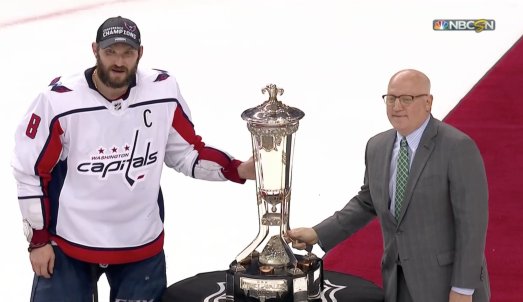
After Alex Ovechkin scored 1:02 into the game, the Tampa Bay Lightning tried like hell to even up the game and take the lead. However, with the Caps setting up a wall in front of Braden Holtby and two Andre Burakovsky goals– the Washington Capitals will go back to the Stanley Cup Final for the first time since 1998. Holtby had back-to-back shutouts and Nicklas Backstrom had the empty net goal to finish it.

The Caps have beaten the Penguins, won a big Game 7, won the Eastern Conference, and now will try to slay another demon in beating Marc-Andre Fleury and George McPhee of the Vegas Golden Knights. Those games start Monday.

Win #12….and there’s only one.

cut.png

Before Alex Ovechkin, the Caps’ biggest superstar offensively was Peter Bondra. While he may not have had the national appeal that Ovechkin has, he was a big part of the Capitals offense in the mid-to-late-90s with nine of his 14 seasons being 30-plus goal seasons, including two 50-goal seasons in 1995-96 and 1997-98. Bondra was the new wave of goal-scorer with the exits of Mike Gartner, Dino Ciccarelli,Geoff Courtnall, and really made the team his own.

Once over from what is now Slovakia, Bondra formed a kinship with Michal Pivonka, who helped Bondra and his family get accustom to life in the US and the NHL. While Bondra would also use Dmitri Khristich as a resource, Pivonka and Bondra seemed to be the bosom buddies. With the same agent, both Bondra and Pivonka held out for a period before the 1995-96 season, where they would play in the IHL with the Detroit Vipers. Both would come back and had his top goal scoring season with 52 goals in only 67 games.

As the Caps were sinking, the team felt they owed Bondra the chance to go for a Cup, to which they traded him to Ottawa for Brooks Laich. A chapter of the Caps had closed, but due to that trade and others during the end of 2004, it paved the way for Alex Ovechkin to take the reigns and be the new face of the franchise. Luckily, Bondra is still in this organization, serving as a community ambassador and should be the next in line to get his number retired.

Caps By The Number: Holtby Comes Up Big in Game 6 Win

Carolina Hurricanes v Washington Capitals

In what needed to be their best game of the season in order to survive, the Caps did just that in shutting out the Lightning to force a Game 7 Wednesday. Braden Holtby stopped all 24 shots thrown at him, while TJ Oshie had two goals with Devante Smith-Pelly having the third to give the Caps a 3-0 win.

With win #11, the time has come to talk about a former #11 in Caps history.

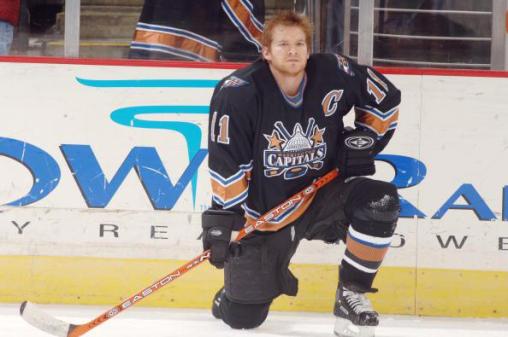
When it comes to the Capitals, there’s very few players who grew up in the area that have been able to play on the team. In fact, this #11 is the only one to do so thus far, the Potomac native, Jeff Halpern. He is also the last Capital to wear #11 before it was retired for Mike Gartner.

Halpern grew up in the DC area, but learned his hockey in the Northeast due to not many elite schools in the area during his time. His father would drive him to Connecticut and back for practices and games. While he didn’t get noticed in prep school– Halpern played Junior B in Ontario, which got him noticed for him to go to Princeton.

Though he was undersized, Halpern impressed the Capitals enough during their prospects camp for them to give him a contract after his four seasons at Princeton. Halpern only played six games for the Portland Pirates after his senior season before becoming part of the Caps everyday line-up in 1999-2000. Halpern was a heart-and-soul player, which is to say he didn’t put up the superstar point totals, but had those intangibles that people seem to crave these days. With only one 20-goal season in 2000-01, Halpern was more of the ilk to block shots and get into the dirty areas to score goals.

He was a favorite amongst his teammates, too, which allowed him to be named captain in 2005-06, which was also the last season for him in his first stint with the Capitals. After some time in the south, west, and Montreal; Halpern landed back with the Capitals in 2011-12, playing 69 more games and putting up 16 points before moving onward to different things before his retirement following the 2013-14 season.

It’s a dream of players to play with their hometown team, but not something you often hear about when it comes to the teams in the non-traditional market. For someone like Halpern to come in and be able to achieve that dream created a solid connect and showed that players from that area can make it in the big time.

Caps By The Numbers: Five Unanswered Give Caps 2-0 Series Lead

2376.jpg

After a quick start thanks to a Tom Wilson tipped-goal 28 seconds in, the Caps fought through some adversity after the Lightning netted two power play goals from Brayden Point and Steve Stamkos. However, this Caps team didn’t give up and scored the last five goals of the game to notch a 6-2 victory and leave Tampa with a 2-0 series lead. The win was the seventh win on the road for the Caps this playoffs, tying a team record set in 1998. Along with Wilson, Devante Smith-Pelly, Lars Eller, Evgeny Kuznetsov, Alex Ovechkin, and Brett Connolly had goals. Eller, Kuznetsov, Ovechkin, Wilson, and John Carlson had multi-point games.

The Caps are in double-digits for wins this players, so it’s time to look at a former #10 in Caps history.

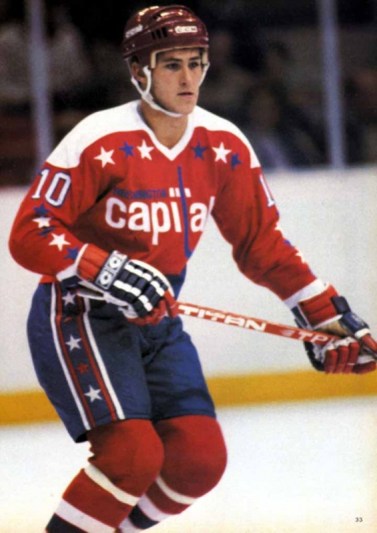
This entrant was a two-time member with the Capitals, but made his name more known when wearing #10. Bobby Carpenter garnered a lot of attention with his selection in the 1981 NHL Draft, being the first player to go into the NHL right out of high school when he took the ice for the Capitals. While he did have some clashes with his head coach Bryan Murray, the short time in his first stint was something the Caps needed from a young player in their line-up.

Right off the bat, Carpenter was able to get the offense going for the Capitals with two straight 30-goal seasons in 1981-82 and 1982-83. While he had a drop-off in his stats in his third season, the 1984-85 season was the real big break-out for Carpenter, as he led the team in goals with 53 and was only behind Mike Gartner in points (95). It was Carpenter’s highest output in goals and points. Carpenter was the first US-born player to put up 50 goals in a season.

However, the clash between him and coach Murray reached a boiling point during the 1986-87 season. Murray and the Capitals had communication issues, chief among them was Carpenter– who said that Murray panicked too much behind the bench and held him back from being a bigger part of Washington’s offense. Carpenter sat out waiting to be traded as the Caps struggled without him before getting dealt to the Rangers for Mike Ridley and Kelly Miller.

Carpenter re-sign with the Caps ahead of the 1992-93 season, but donned #11 after Miller took over the #10 role. On his second stint, Carpenter was only able to register 11 goals and 28 points over 68 games.

Caps By The Numbers: Quick Start Helps Caps Take Game One

21055

Though they were heavily put as the underdog in this series, the Caps got out to a quick start in Game One– scoring two goals in the first thanks to Michal Kempny and Alex Ovechkin, then two in the second from Jay Beagle and Lars Ellers. While they had four goals, they had to hang-on, as Tampa Bay had two goals in the third and were pressing late, but Braden Holtby was equal to the task for the Caps 4-2 win in Game One of the Eastern Conference Final. The Caps won again without Nicklas Backstrom and hope to keep a good pace going for Sunday’s game.

With a ninth win, we get to number nine of the Caps history chart.

While he didn’t pan out as a Flyers’ first round pick, Dainius Zubrus started to live up to expectation when he got to Washington…but not just on the ice. Formerly one of the poster boys for Easton Hockey, Zubrus couldn’t transition his game to the North American style when he first game over. Zubrus was brought to Washington in 2001 and took off as a bit of an offensive threat– at least to the Capitals side of things, as they were going through their rough times.

In his six seasons with the Capitals, he hit season-highs in points and goals, netting three straight 20-plus goal seasons towards the end of his run with the Caps, before his trade to Buffalo. As I mentioned, Zubrus was part of the teams that were going through the rough phase of contenders to tanking and having a difficult rebuild ahead of them. However, Zubrus was traded away before he could see the full bloom of the rebuild.

Yet, the most important part of Zubrus’ tenure with the Capitals was what he was able to help a new young star for the Capitals, doing something that may not have been done for him when he came into the league. When Alex Ovechkin came over to North America, Zubrus was not only a mentor to the young winger, but he played the role as translator, roommate, and someone to get Ovechkin comfortable with the game. Once Zubrus was traded, Ovechkin’s production in his sophomore season slowed down a bit. As we know, he’s gotten back on track– but Zubrus made a big impact for Ovechkin coming over and maybe allowed the Caps to have their franchise face develop quicker because of Zubrus’ off-ice help.

South-Beast Division Representing in Conference Finals

southeastdivision

Photo Source: Link

Of the four teams still left in the NHL Playoffs– three of them at some point played in the Southeast Division.

Let that sink in. Let the worst division in all of hockey; a division that angered so many because they got a top-seed when many times they were undeserving, a division you could say set off these new divisions because of how inferior it was to the others. That division accounts for 75% of the Final Four.

Of course, the Winnipeg Jets only played two seasons after moving from Atlanta because the NHL powers that be didn’t own a map that could have given a better option from the Central Division at the time to move to the Southeast– but whatever. The representation of this often horrid division is finally coming to light.

For the Capitals, they were seven-time Southeast Division champions, while the Lightning had only two division titles to their name– one of which led to a Stanley Cup in 2004. In the 14 seasons that the Southeast Division was in existence, eight times did more than one team get into the playoffs. The biggest margin of victory for a year in the Southeast was that 2003-04 season, where Tampa Bay had 106 points, which was 28 points better than the 2nd place Atlanta Thrashers.

Granted, with all the turnover in the league since the last time there were six divisions only four years ago, it’s hard to compare what would happen now since they’re all spread out in different divisions; but I’d like to believe that the cornerstones to these teams had major ties to the Southeast Era (or Error depending on who you ask). Alex Ovechkin, Dustin Byfuglien, Steven Stamkos– all of those guys were in the midst of the Southeastern heyday. The fact all three came out of their division is pretty fantastic, not only that– but we could see an all former-Southeast Division Stanley Cup Final if Winnipeg beats out Vegas to face one of their former foes.

For my money, however, I see it as a media member’s dream of Vegas beating Winnipeg in six games, while Tampa takes out Washington in seven to make it a very sunny, very warm Stanley Cup Final.

Caps By The Numbers: Caps Get Past the Penguins, Second Round

For the first time in 20 years, the Washington Capitals will go to the Conference Final with a 2-1 win in overtime from an Evgeny Kuznetsov winner to defeat the Penguins in six games. Kuznetsov got a semi-breakaway feed from Alex Ovechkin and went five-hole on Matt Murray for the game-winner. Alex Chiasson had the other goal on an assist from Aussie Nathan Walker. The Caps will now take on the Tampa Bay Lightning in the Eastern Conference Final.

With that eighth win– a famous number eight from the Caps yesteryear.

murphy

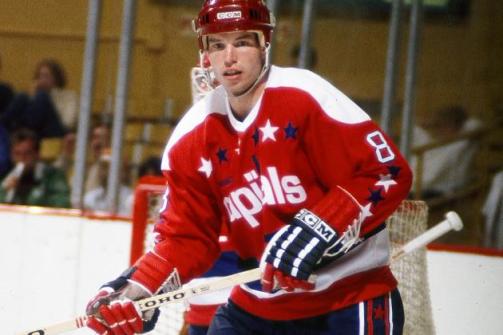
While Alex Ovechkin will always be synonymous with #8, there’s one other guy who is notable for that number, but not for the right reasons. Despite that, he’s a Hall of Famer, a four-time Cup winner, and had quite the resume, though it’s at time not enough for the Caps’ faithful. It’s Larry Murphy.

WHOOPWHOOPWHOOPWHOOPWHOOPWHOOPWHOOPWHOOPWHOOPWHOOPWHOOPWHOOPWHOOPWHOOPWHOOP

WHOOPWHOOPWHOOPWHOOPWHOOPWHOOPWHOOPWHOOPWHOOPWHOOPWHOOPWHOOPWHOOPWHOOPWHOOP

2165900-tumblr_llgmwmcpwt1qjyzc5o1_500

Seriously, though….it’s a number so nice, he wore it twice and that was Dmitri Khristich. For a guy who had two tours of duty with the Capitals, he was able to go ahead and get the #8 twice in his career. While he did wear #29 when he came up to the NHL in 1990-91, #8 is the one that people remember him most for.

While he played 40 games in 1990-91, Khristich came to form in his first full season in 1991-92, where the Ukranian forward potted 36 goals and 73 points, which put him second and fourth respectively in team scoring, while also providing a little bit of defensive touch to his game and create a little (very little) Selke buzz for best defensive forward. Despite Khristich was a better than point-per-game player (66 points in 64 games) in his second season. While leading the team in goals in 1993-94 with 29 goals on the season. However, Khristich only had nine goals in 42 playoff games with the Caps in his first tenure in DC.

After some time in LA, Boston, and Toronto, Khristich came back to the Caps in the middle of the 2000-01 season, while contributing solidly in his 43 games with 10 goals and 29 points when coming back, while his last season with the Caps and in the NHL was a dud with nine goals in 61 games before going to the Russian Superleague.

Though he did have some declining numbers, Khristich was one of the more popular #8s in the Caps history and is very well remembered for his tenured. Not only that, but he was sort of a mentor to some of the young European players– most notably with a young Peter Bondra and his family when Bondra was coming over. Khristich and his family helped the transition to a new life in hockey and make Bondra comfortable and we know what Bondra did for the Caps after that.

Caps By The Numbers: Four Unanswered in Third Lift Caps

yvon-labre-dljpg.jpeg

In what could be one of the most sloppily played defensive game, the Caps used Jakub Vrana bumping up to the first line to help propel them to four unanswered goals (including two empty netters) in the third and gave the Caps a 3-2 series lead. Evgeny Kuznetsov had the game-tying goal and two assists, but the rest star was Braden Holtby. Holtby kept the Caps in the game after a barrage of Penguins chances and shut the door on them in key moments to keep the Caps alive and ahead.

That’s win seven in the playoffs, which means we look at the ONLY #7.

In the 43 seasons the Capitals have operated, there has only been one player to wear #7 and it’s the man who has ties to the organization and area– that’s Yvon Labre. While he only played 334 of his 371 games with the Capitals, he kept himself involved with the team after his retirement in 1981.

Labre was picked from Pittsburgh in the Expansion Draft of 1974, while being fourth in scoring in the inaugural season with the Caps and top amongst defensemen. Labre was the first player to score a goal at home for the Caps and was captain from 1975-76 until 1977-78 before starting to see some injuries mount up on him and forced him into retirement at only 31 years old.

However, Labre was dedicated to the DC area, taking part in a number of community projects, while also staying with the team as a coach, scout, and community ambassador. His number 7 was the first to be retired by the team, as he continues his time around the community with the Capitals and around area hockey. The Yvon Labre Award is given to the high school senior in the Maryland Student Hockey League based on dedication, work ethic, skill, and leadership.

Labre is always going to be remembered by Caps fans, though it was probably more for his contributions off the ice, as little is remembered from his on-ice days for more.

Caps By The Numbers: Late Captain Heroics Give Caps Series Lead

Bild-1.jpg

It wasn’t pretty, but it was a typical Pens/Caps game…but with the Caps getting the better of the Western Pennsylvania foes with Alex Ovechkin tipping in his own rebound with 1:07 left in the game to give the Caps a 4-3 win and 2-1 series lead. Not without controversy, as Tom Wilson became more of a villain for the Penguins for a borderline hit on Zach Aston-Reese. However, on the upside– goals from the blueline was big with John Carlson and Matt Niskanen putting up goals for the Caps, while Chandler Stephenson had the other goal for the Caps. Nicklas Backstrom was a true playmaker with three helpers in the game.

Sixth win of the playoffs means it’s time for a famous– if not THE famous– #6 for the Caps.

When it come to the #6, there’s only one guy to look for and it’s Calle Johansson, who’s longevity leaves him at second all-time with most games played as a Capital at 983 games. Johansson also continued the sturdy defenseman role that was left when Rod Langway retired. Having spent two seasons learning from Langway, Johansson picked up the reigns to anchor the Caps defense for 15 years.

After being acquired from Buffalo in 1989, Johansson fit right into the everyday line-up and never looked back. While there was a drop-off, Johansson was good for between five to 10 goals a year and in the mid-30s in points. A major power play contributor and key in their transition game, Johansson hit the 40-point plateau four times, while being a key part in the Capitals’ only trips past the second round in 1990 and 1998.

Calle Jo was quite sturdy, as well, with a few hiccups here and there– the most notable coming in 2001-02 when he missed the bulk of the season with a rotator cuff injury. Johansson played one more season with the Capitals after the rotator cuff injury before he retired for a time, then came back to play eight games before retiring again. Johansson’s legacy is one of an under appreciated defenseman league-wide, but was a major contributor for the Caps from the blue line and could be one of the finest two-way defensemen of his era.