Rebooting the Avalanche

164122316_241_Avalanche_at_Blackhawks

The odds are good that the Colorado Avalanche will be bad this season.

In all honesty, unless there’s some kind of change at the top, this will continue to be norm.

On paper, this is a team that should be competing for a Wild Card spot every year. However, something isn’t clicking. Sure, the defense is a bit thin, the goaltending has “FRAGILE” stamped over it, and their once star player seems like he’s going to sabotage the team from within if he’s not traded soon.

This team reminds me of the 2000s Edmonton Oilers. Old players were brought back into prominent positions in the front office, but didn’t know what the hell they were doing. That’s the road that Joe Sakic is going down right now. He doesn’t know what to do with Matt Duchene (though he could have gotten him for Travis Hamonic if he asked nice enough), his hires are very interesting, and it just seems like the cardboard cut-out that was Greg Sherman could do just as good a job as Sakic is doing right now.

The young talent on this team is real up front. Mikko Rantanen and Tyson Jost are the next wave to help compliment Nathan MacKinnon and Gabriel Landeskog. While it’s great to score goals, a problem is keeping them out. Like I said, very thin on the blue line and as of this point– only have four defensemen on their NHL roster under contract. As solid as Erik Johnson, Tyson Barrie, Nikita Zadorov, and Mark Barberio could be…there seems to be a lot left to be desire. The outlook for the defense does look a little bright with Andrei Mironov and Nicolas Meloche coming into the fold– though you wonder if they’ll stand up or be in a holding pattern like Chris Bigras and Duncan Siemens have been in– which has been a couple years now.

However, the biggest issue is the amount of “glory days” Avalanche members in front office roles. Sakic is one of them, Patrick Roy was another before he left/forcibly resigned, and Craig Billington as the assistant GM, though he’s been in the organization for years now. When you look up and down the list– it’s amazing how many more of these guys are in the hockey ops side: Nolan Pratt (assistant coach, 2000-01), Brett Clark (player development consultant, 2003-09), and Brian Willsie (player development consultant, 1999-2003 and 2008-10). Adam Foote just left the organization in August, but it seems like he could have seen how downhill this team was going and wanted out.

This once great team is turning into a tire fire– if it’s not there already. One has to wonder how much longer the Kroenke family will allow this to go on. However, who knows how much the family is paying attention to the team with their other sporting interests they have to deal with. They should be paying attention and should be seeing that this is a team in need of a huge reboot. Get the nostalgia out of there, get some people who know what they’re doing in there, and fix this team that’s gone in such a tailspin that they may finish below the expansion team this year

Where are they going to get this new blood?? That’s a question for someone far smarter than me to address– but the loyalty needs to be thrown out the window if that’s the reason why Joe Sakic is still in his spot. Kroenke does owe something to Sakic for helping make Denver a true hockey town– but there comes a point where enough is enough and they need to do something to stay relevant in the hockey landscape rather than just be a laughingstock. You can’t look from within because there’s more of the same. The pickings could be slim outside because who knows how many people see the Avalanche as a desirable fit or just a dead destination. It’ll take a lot of convincing, money, and the idea they’ll get total control of their decisions to convince an assistant GM or someone like that to be the next GM of the Avalanche and really turn the ship around.

I’m sure there’s people out there willing enough to take on this task as a vanity project to show how smart they are, but at the same time– you have to hope they don’t get ahead of themselves to think it’ll be a quick fix. The roster may not need to be blown up, but it may need plenty of renovation to get it back to their glory they once had.


II’

Wider Lines and Trapezoids: The Rule Changes of the 2004-05 AHL Season

3c05134695d5cac1654200e1996ea0be--patrice-bergeron-paw

Let’s go back in time, shall we?? Back to the season that wasn’t for the NHL, 2004-05. Yes, the lockout year was one that still burns eternal for some people, but since then it’s been….alright, right??

In any case, that year also brought about an interesting design of the AHL, too. With the NHL out of commission, the AHL changed a heck of a lot in terms of their rules during that year. First, the most drastic of changes– which was doubling the width of the red and blue lines from 12 inches to 24.

“I think the reasoning behind the wider lines was to improve game flow by adding space to the neutral zone and reducing offside plays,” said Jason Chaimovitch, the Vice President of Communications of the AHL in an email. “The blue lines and red line went from 12″ to 24″ wide, and the goal line was moved back from 13′ out to 11′ out. The neutral zone went from 54′ to 58′ and it became easier to stay onside, in theory.”

While the look was anything but pleasing to those people who don’t like change, the idea of the wider lines, in hindsight, makes sense. It’s also something that would probably greatly reduce the offsides video reviews that seem to be popping up all over the NHL.  The biggest thing, however, was that the two-line pass violation was still in effect, but with the wider lines, the theory of less of those being called should be there.

Ryan Suter was in the AHL at the time with the Milwaukee Admirals and while he played with the wider lines, he didn’t seem to notice all that much. “You didn’t really notice the changes that much. I guess it still seemed like the same game for the most part,” Suter told The Tennessean in July 2005.

Patrick Sharp, who played with the Philadelphia Phantoms said, “It gives you a little more speed in the neutral zone. That is good for a forward like myself. Now you can really stretch those blue lines and go for the home-run passes.”

The Wilkes-Barre/Scranton Penguins as a whole liked it with then GM Craig Patrick saying the “fat lines” made the zones bigger and better, while defenseman Rob Scuderi said it kept more pucks in the zone and kept the forecheck going.

The wider lines did appear in some games in the 2003-04 season, mostly on Canadian rinks, as those teams seemed most comfortable with adapting their ice surface. The players, coaches, and other involved gave it a positive review; thus allowing the AHL to fully adopt it during the 2004-05 season.  In the end– it was not across the board welcomed by the NHL, as they scrapped the wider lines at the end of the 2004-05 season.

On top of the wide lines, the tag-up offsides was re-instituted, no-touch icing was brought in, the shootouts became a thing again, and then there was that one rule that was a seven-week trial to start: the goalie trapezoid.

“I remember going over to the Olympia here in Springfield when a bunch of players, officials and hockey ops people were on the ice trying to figure out what the lines should look like. That’s where the trapezoid was born,” reminisced Chaimovitch. However, at the onset, some people were a bit outspoken about the trapezoid.

Then Hamilton Bulldogs goalie Olivier Michaud thought the worst of the trapezoid. “For a goaltender, it will mean that you’ll be less involved during the game,” Michaud told the Hamilton Spectator in Februrary of 2004. “But it’s going to be dangerous for defensemen because of the checking. There will be injuries because of it.”

Michaud’s goaltending partner, J-F Damphousse believed that he didn’t think doing something like that was possible. “Goaltenders have worked hard learning to handle the puck and you can’t penalize a goaltender for working hard at his game. You can make the equipment smaller if you want, but I don’t think you can apply this rule,” stated Damphousse in the same Spectator article.

Long-time AHL goalie Neil Little had the same worries about his teammates when talking to the Courier-Post in October 2004, as the trial had started: “These defensemen are going to get run through the glass. Those forwards are going full tilt and I can’t go out there to help them out. We played a (preseason) game the other night and it was a freak show. It’s going to cause all sorts of turnovers.”

Rochester Americans goalies Ryan Miller and Tom Askey were against the no-touch zone, while Hershey Bears goalies Peter Budaj and Tom Lawson were in favor of it. There were others that were in favor of it when all was said and done. Kevin Klein, who was with the Milwaukee Admirals at the time, was very much in favor of it from a skaters standpoint. “It was huge because as a defenseman you’ve got to get on your horse right away and track down pucks in the corner because the goalies can’t play it,” Klein said in July 2005. “When you get a good-skating team like ourselves, you can jump on teams and keep offensive pressure on them.”

From a coach’s standpoint, Mike Kitchen— then coach of the St. Louis Blues– was in favor of the rule change to the goalie movement. “I don’t mind the goaltending rule at all,” Kitchen told The Globe and Mail in December of 2004. “It keeps them from wandering out in the corners and protecting the puck. You can’t hit the goalies, so they get pretty bold by wandering all over.”

“We did a bunch of things that year: Shootout, stricter interpretation of restraining fouls, and stricter supplementary discipline on attempt to injure cases,” mentioned Chaimovitch. “The bottom line is that once the NHL started playing again, we needed to mirror what they were doing. With the portability of our players (more than 350 call-ups every year), it’s important that the rule book is the same in Hershey on Saturday as it is in Washington on Sunday.  The most notable result of that was the icing rule. We played no-touch icing in ’04-’05 and it was well received, but the NHL didn’t adopt it so we switched back to touch icing in ’05-’06.”

It was a drastic change from the norm. Not to mention the blue-ice experiment in Buffalo for the Rochester Americans games (which was very experimental and only approved for a couple games), but you can still see the changes today. The tag-up offsides and trapezoid were brought into the NHL when the lockout ended, while the others are just a fun memory for us all. But, who knows what could have happened if the NHL adopted the wider lines. Could the world class players been able to be more creative?? Would it have slowed down the speed of some of the younger players coming in?? Would there be reviews for interference as much as we have now?? The world will never know.

Thanks to Jason Chaimovitch for his help in this. Follow him on Twitter: @JChaimo

Reducing Seating Smart for Sens

1297491681823_ORIGINAL

Good for the Ottawa Senators.

Going the way of many NASCAR tracks, the Senators are going to reduce seating by 1,500 to make their capacity just over 17,000. To be honest, there’s not much else they could do. They are in a “damned if you do, damned if you don’t” situation. They can either have people taking them to task for the empty seats or they can have people taking them to task for taking out the seats. They took the latter hoping that will make the arena look better.

While we’ve seen such a thing happen in Florida with the Panthers, the fact that it’s a Canadian team is why there’s so much guff. It’s not as if the Senators are THAT bad a hockey team, but much like Florida– their arena is way the hell and gone from the city center (or centre in this case), no one wants to make the trek out to the middle of nowhere to watch their team play. It’s amazing that the Washington Capitals had as many people come out to Landover when they played at the Capital Centre as they did because we see it doesn’t fly now.

Barring the move to downtown Ottawa that Eugene Melnyk wants, the Senators needed to do something because it does have a bad appearance to it when a playoff team, one goal away from being the Eastern Conference champions, can’t sell out their arena in Canada. And it’s a tactical move, too– by doing this, it’s showing the powers that be in Ottawa that they need to have this downtown arena they’ve been stumping for because if not– they’ll have to keep reducing the number of seats in the Canadian Tire Centre; which has a bad look on the city that they can’t support an NHL team despite the team being somewhat decent.

That said, if the Senators can’t get their stuff figured out attendance-wise, I have to wonder if they aren’t going to be put into the relocation discussion. It makes sense and they have the same problems that teams like the Coyotes, Hurricanes, and Islanders have faced, but it seems that because they’re in Canada– they get a bit of a pass. It would be something if the Sens were the first team to move only to move to Quebec City and have them really show up the Ottawa fans.

All in all, the move is odd– but I’m okay with them getting sick of the empty seats and saying the hell with it– here’s some tarps. This will either wake up the fans and have them rally around the team (or the team’s bid to get to downtown) or it’ll piss them off more and they become apathetic to the team’s plight.

The Final Two Principles

cut

With the NHL unveiling their Declaration of Principles for hockey and having every North American entity and the IIHF latch onto it is a great thing for the growth of hockey. I mean, it was even praised by His Holiness, Pope Francis— so you know it must be good.

But, when thinking about the whole Pope’s blessing thing…why was there only eight principles of this whole thing?? For those who follow or know the littlest thing about Catholicism; there’s really four big numbers: 7, 10, 12, and 40. I’m shocked that the Pope didn’t suggest two more principles in order to mirror the commandments; which– let’s be honest– seems to be the sense of happening here.

So, in my infinite wisdom, I had an idea on what the final two principles could be– especially given what this whole thing is all about: inclusiveness.

#9. Have some respect for your fellow player. We all know the big hit and all that seems cool and gets the highlights– but what about the other player in this situation?? Maybe they should have their head up, maybe you just accidentally stuck your leg out if they got past you– but have a bit of accountability for your actions out there and not just say it’s a “hockey play.”

#10. Honor the hockey mom and dad…to a point. Sure, they get up early and haul you around and bankroll your career; but you and your teammates should have to put up with the overactive parent. Players have the right to speak up when their parent isn’t acting properly and putting you in a bad situation with your teammates. Other parents should to and those offending parents need to have a reality check for the whole thing and not act like they’re doing nothing wrong.

There’s definitely others you could go about, but that’s up for the Martin Luther of the hockey world to put up their 95 Theses to this Declaration of Principles in a couple years.

It’s a mean-well effort and really a solid show of solidarity to make hockey available for every one in North America and the world, but mostly North America. If you add this to their “You Can Play” stand the NHL has taken, but they’re going to make sure that hockey is available to everyone and anyone who wants to take an interest– which is a great and noble ideal.

However, the one problem to all of this is people. Once you get people involved, you always have some numbskulls who ruin it for the rest of the group. Hopefully, that won’t happen for this project or the other projects where hockey wants everyone involved. One can only hope and follow all of these principles to make things a lot better on and off the ice.

Darlington: NASCAR’s Winter Classic

2017-Monster-Energy-NASCAR-Cup-Series-Bojangles_-Southern-500-ticket

It’s Darlington weekend coming up in NASCAR, which means the most gimmicky regular season race is happening in full-force. To appeal to the nostalgia crowd, Darlington Speedway decided that since NASCAR moved the Southern 500 back to Labor Day weekend; they would make it a “Throwback Weekend” where drivers and teams alike can really get into the old-time racing attitude and have fun with their paint schemes and their look and really by into that “Good Ol’ Boy” mentality that some think the modern NASCAR has been missing.

While it has been great to see the old paint schemes from yesteryear, the tributes to lesser known racers, the old-time broadcast effects, and the antics that the drivers put on; it’s still getting very, very stale very, very quickly. In fact, a lot of the teams aren’t trying anymore. There’s three cars this Sunday that look like they have the exact same red-white-and-blue scheme (Dale Earnhardt, Jr.Danica PatrickClint Bowyer), the #3 and #31 have just about the same paint scheme, and like always– the #43 is going to have a Richard Petty STP scheme on the track.

The Darlington Weekend is becoming like the NHL’s Winter Classic in some aspects. While the heart is in the right place for a different kind of feel, as it keeps going year-after-year, the whole vibe to the thing wears off. We all know who’s going to be there, you can be assured of what they’ll look like, and while it’s well-hyped– it comes off very “meh” by the end of it.

When the NHL starting doing their annual Winter Classic in 2008 (there was a one-off outdoor game in 2003 which started the wheels in motion for this), it was a great hype vehicle. It allowed for the NHL to go to historic venues of other sports to play their game and get a ton of revenue through ticket sales and merchandise. However, the biggest problem was over-saturating the market when the formula worked. Once they saw the Winter Classic work, they moved to a Stadium Series of multiple outdoor games, the Heritage Classic games in Canada, then when those faded– they started using the teams that people would watch and make the other fans annoyed with a team like the Chicago Blackhawks getting into all the outdoor games.

The NHL lost the plot because they killed a golden goose.

Yes, other markets wanted games, but you can’t blow the wad of outdoor games as quickly as the NHL has seemingly done. Hell, in 2014 alone they had six outdoor games. Last season, the NHL had four outdoor games– but I bet people maybe remember one. Sure, they have gone to places like Wrigley Field, the Big House in Michigan, and Fenway Park; but they’ve also played in BMO Field (Toronto), Investors Group Field (Winnipeg), and Levi’s Stadium.

While this race only happens in Darlington, the drivers and teams are going to the well too many times with the same thing. Not only the Richard Petty STP scheme, but the #13 always going with the Smokey Yunick scheme, and RCR going with some sort of Dale Earnhardt, Sr. scheme. The originality is starting to fade and there’s not much they can do to regulate it– unless they just kill the idea altogether– which they won’t do because then they can’t exploit it.

For this Darlington race, at least, it could be a tool to distract fans from realizing how much NASCAR has bungled this season with the segments, the mismanagement of how points are distributed through said segments, and just the overall lack of hype for the new ideas that NASCAR has tried to instill with their “activation” with Monster Energy. The sanctioning body is a detriment to themselves and the sport. Darlington Weekend is a passing fad that seems to be getting less and less interesting by the year due to the fact we’ve seen it all before and nothing really changes but the looks of the cars.

On the Topic Of NHL18

nhl-threes-screen-2.jpg

NHL18 looks terrible. Not visually– but conceptually…or lack of concept.

I’ll be first to admit that I’m not much of a gamer, but the NHL franchise for EA Sports has really become bland when you pit it against other sports games and what those game bring to the table.

In the latest trailer for the game, EA highlighted their NHL Threes mode– which is NHL Hitz, but with EA Sports powered behind it. They had all the fancy moves they wanted out of an All-Star Skills competition and, wait for it– MASCOTS….yup….Mascots. Their selling point has been reduced to mascots. Oh, and something they stole from MTV’s Rock N’ Jock– the multiplier puck….Dan Cortese should sue.

NHL-Roster-Update18 is just going through with the motions. With no competition for them, why would they want to up the ante outside of the hokey NHL Hitz clone they’re pushing right now. Sure, to have a be-a-player mode where your cliches are judged by the media depending on the inflection in which you say it doesn’t seem all that creative; but it’s much better than what you have going for it right now which– at least check– defensive skill stick and more dekes. Lovely.

When you put the EA’s NHL franchise against something like MLB: The Show or NBA 2K and their amazing franchise mode, it’s hard to say that this is anything more than NHL17, but with new logos and updated rosters. No impressive be-a-player modes where you play it like a roleplaying game, no creative GM or ownership modes. Nothing really worth the MSRP of $59.99 on the pre-order. Hell, at least with NHL17 you could get the AHL and ECHL (which NHL18 doesn’t not have as of time of this post; though, if you find confirmation– lemme know).

The thing is that EA Sports is becoming Upper Deck in that there’s no competition for them, so why bother upping their game. With Upper Deck, they’ve become very bland with their cards, not making them at all unique to what they used to be. Simple border, picture, done. Sure, the sports card market isn’t what it used to be– but it doesn’t mean you stop trying. EA is doing that with their NHL because….well, there’s nothing out there that can compare. Sure, 2K tried their hand– but failed and once EA got the exclusive rights– it was game over for creativity or going that extra mile to give some unique gameplay to a sports game.

The hype surrounding the NHL Threes, as EA would have you believe, makes me wonder if NHL18 shouldn’t just be the NHL Threes platform with a much lower price-point, say $10-15 dollars. That way, you can get the casual player to have some goofy fun time and if they wanted the full NHL game– they could pay the $45-50 on the full game with all the modes.

As it stands right now, they’re not selling me by going the NHL Hitz/Hit the Ice route. Sure, I’m not their target demo, but as a casual fan I wanted some time-killing fun– let me get just the NHL Threes game and the rest can be for the more hardcore fan. Yet, my hope is that some independent designer can make a hockey game that’s somewhat visually appealing and fun to play.

Maybe someone can pick up the pieces of Old Time Hockey and run with it or develop a new Eastside Hockey Manager– but with the juggernaut of EA– I doubt that’ll happen anytime soon.

NHL Needs to Take It Back to the Streets

s-l1600 (1)

With it being the dog-days of summer, wouldn’t this be the time for the NHL to revitalize an old thing they really sold hard during the summer in the mid-to-late ’90s?? With everything in the ’90s being hip again, this is the time to bring ’em back to not only kill the summer doldrums, but to maybe put life into hockey off-the-ice.

That’s right, I’m talking about the NHL Street program.

Now, for justification, the NHL still has the NHL Street Program which all 30 teams take part in and the NHL has programs in 50 markets total thanks to the help of the club teams. However, it doesn’t have the peak appeal that it did in the ’90s.

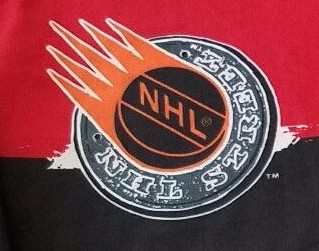
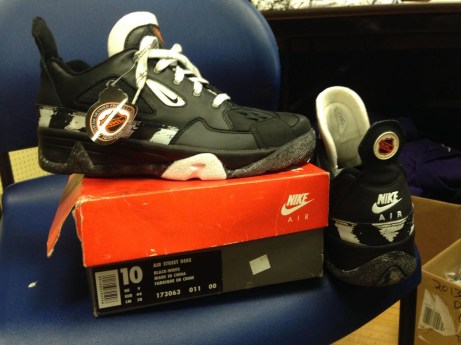
Granted, during that time– Nike had gotten very deep into the hockey landscape. They even created a shoe for it– the Nike Air Street Deke. They had a huge roll-out with Sergei Fedorov as the poster boy for the whole experiment (it’s not like L.A. Gear with Gretzky, but it was a start). I remember seeing these ads in the NHL Faceoff and USA Hockey magazines, though I didn’t really like the idea of Nike coming into hockey. That said, Nike did pump some money and advertisement into the NHL Street idea. Plus, the jerseys they made for the teams were very of the times in the fashion sense.

vintage-nike-air-street-deke-hockey_1_ee7e77b44d7434b1c88203986b76e807.jpg

With Nike into the game, they also expanded their appeal with the now Nike/NHL Street program. Not only were the sunbelt areas catered to, since street hockey was probably the only kind of hockey most knew with the lack of ice rinks at the time; but urban areas as well. This was covered in the June/July 1995 issue of Vibe Magazine where Nike’s marketing manager just wanted to get hockey sticks into the hands of kids who may not have been able to afford the game prior, just for them to experience the game first hand, which could in-turn mean a lifelong fan of hockey.

Despite not having the big flair it once had, the NHL Street program still goes around school and community centers with the same ideal– getting hockey sticks into the hands of kids who may not have had the chance to experience it. Of course, there are other tournaments in Canada that have brought a big appeal, especially with Hockey Night in Canada having the “Play On” tournament across the Great White North.

So, why hasn’t the NHL decided to bring something like this back?? To have tournaments in all 24 NHL cities would be a nice thing for the club teams to do in the lag during the summer months and have their names out there in the community.  Hell, why not do an entire summer league of street hockey and have the team sponsor it?? Seems simple…so, to steal a line from the old sponsors….Gotta be the shoes….wait, no– just do it.

But that’s just the street hockey leg. There’s still plenty to tell about the roller side of things. Not only the NHL side of things, but the other leagues who did their best and succeeded for a time, but couldn’t maintain past the ’90s boom. More on that next time through.

PODCASTS: FOHS, SB, and ITD

Here’s the weekly dump from me about my podcasts

Face Off Hockey Show: The Jon and Scott show happens where we rambled about people not checking their DMs, the Carolina Hurricanes, and other ramblings.

DOWNLOAD HERE


The Soderstrom Bubble: Jen and I talk about the evolution of hockey equipment through the years. From skates to pads to sticks. We ramble on about it all.

45a0-4675-45ad-a4e3-44345aae219b

DOWNLOAD HERE


In The Draft: Wilson and I talk about the big news about Dale Jr.’s replacement in the 88, what it means for the sports, the recap on New Hampshire and Eldora, plus what domino could be the first to fall in Silly Season.

1200x630bb

DOWNLOAD HERE

Jaromir, the Everblades, and the Money of Minor League Hockey

jaromir-jagr.jpg

With Jaromir Jagr still unsigned, which some people think is odd for a 45-year-old to be unsigned at this point in the free agency period, the shenanigans have begun. The Florida Everblades of the ECHL have made the first pitch to keep Jagr in North America and keep him in Florida, as well.

This is a kind of minor league gimmick we need, as the last time this has happened– I think– is when the Bakersfield Condors offered a contract to Justin Bieber. Sure, it won’t work, but to get the team some press (especially in the summer months) is a pretty smart marketing idea. Plus, it goes with a trend of Jagr signing in areas that are tax-free places to play during the season.

But….what if it did work?? What if Jagr goes, “You know….the hell with it, I’ll play in the ECHL, stay in America with my adoring fans, and really shove it up the asses of the NHL people who passed me by.” It would be something Jagr has never done, playing in the minors, and it could be something he would want to put on his bucket list and check off…but maybe a Spengler Cup would be one, as well, but that’d require him to go back to Europe for that.

Look, it’s the 30th season of the ECHL, which is a solid milestone for the AA-level league. You’d have to think that they would love to have someone like Jagr in their league for this noteworthy year. Yet, is there anything the league or the Everblades can do to get this done without violating the salary cap. For 2016-17, the ECHL salary cap was $12,600 with a rookie minimum of $445 and returning player minimum of $500. Some elite veteran players can make north of $1,000, but that comes at the expense of their teammates’ wallet.

Plus, you can’t expect the ECHL as a league to help out with Jagr’s contract when other teams don’t get afforded the same ability to get a superstar player or have help from the league to have and keep an elite player on their roster. You can’t expect the league to make an exceptional player clause for every team like the MLS does for one player to not have their salary against the salary cap.

Or can they?? It’s a slippery slope, especially for a league with a lot of independent owners with little to no NHL support coming back the other way…but it’s an interesting concept for a minor league to do in order to attract some players that may have some contract situations in the NHL or AHL or even over in Europe. Yet, you look at the IHL and what had happened to some teams who went the route of signing hold-out NHL talent– and it didn’t end well.

Not only that, but you can’t blame Jagr for balking at this, especially since he still believe he has more value than a minor league contract (no offense) and that he could just go over to the Czech Republic and play for the team he owns and get plenty of bank for returning and getting plenty of the gate receipts that go with it.

All of this depends on what Jagr wants to do with his career, what the ECHL wants to do for publicity, and what people want to do with their dollars should he do something like travel around the bus leagues and see cities he’s only flew over in charter flights.