Everyone and their mother can do a Mount Rushmore of greatest players. Pick a generation and go and the stats tell their tale. So why not do a Rushmore of guys who just existed on their teams?? It’s not as if their tenure was the worst, but it wasn’t all that big or memorable. Which is why we’re here right now. Here’s my look at the four guys in each franchise that had a less than memorable tenure with those clubs. We’ll continue on with the Central Division and here are the guidelines I’m going by:
RULES
200 Skater/75 Goalie minimum GP with team
At least one goalie on the list
No individual performance awards
Transplanted teams CAN use previous location for players
*Colorado can pull from Quebec
*Dallas can pull from Minnesota North Stars
*Utah will pull from Arizona/Phoenix/Winnipeg 1.0
*Winnipeg 2.0 can pull from Atlanta
Not known for designated role on team (Enforcer, Shot Blocker, Face-offs)
No current NHL players
“Meh” Status based on time with team they’re represented on
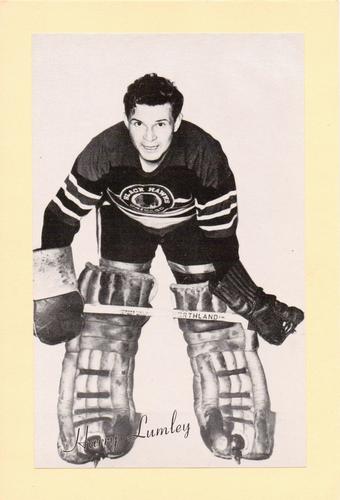
CHICAGO BLACKHAWKS: Cam Barker (200 GP, 17g, 63a); Steve Ludzik (413 GP, 46g, 92a); Rick Paterson (430 GP, 50g, 43a); Harry Lumley (134 GP, 29-85-18, 3.63 GAA)
Barker was a former 3rd overall pick with a dynamic junior career. Aside from one year, Barker’s tenure in Chicago got overshadowed by the likes of Brent Seabrook and Duncan Keith’s production. Ludzik set franchise records in juniors, but the offensive side didn’t come as easily for him in the pros. Ludzik was used in a more bottom six role with Chicago having plenty of top production already in their line-up. Paterson had one season of 14 goals, but he was another player where success offensively in lower leagues didn’t translate to the NHL. Lumley went from the Cup champions in Detroit to a sad-sack Chicago team in 1950, hitting the 40-loss mark in both seasons in Chicago. Despite being a Hall of Famer, Lumley’s time in Chicago was a forgettable mark on his resume.

COLORADO AVALANCHE: Dan Hinote (353 GP, 27g, 38a), Rene Corbet (230 GP, 39g, 47a), Shjon Podein (239 GP, 34g, 37a), Mario Gosselin (192 GP, 79-82-12, 3.67 GAA, .871 Sv%)
Hinote had two solid years at Army before moving to major juniors and saw a regression. Hinote was able to carve out a role as a grinder and get his name on the Cup. Corbet was a better than point-per-game player coming into the NHL, however a deep line-up didn’t allow Corbet to shine as much as he did in his junior and minor league years. Podein had solid years in the NHL before coming to Colorado where the depth got the best of his ability and his adaptation to a bottom-six role allowed him to walk around in full-gear with the Cup after the 2001 win. Gosselin was in a back-up role for most his time, which suited him well. Gosselin’s lone year with starter minutes was his most disappointing year in his tenure.
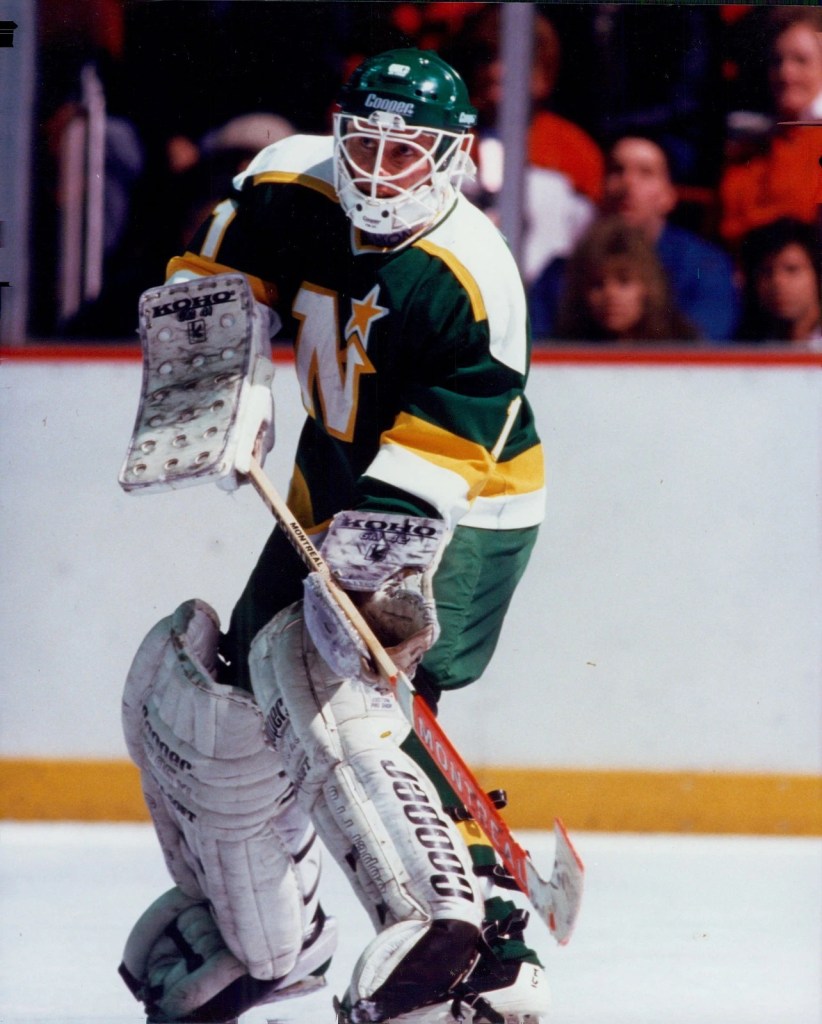
DALLAS STARS: Niko Kapanen (239 GP, 20g, 56a), Toby Petersen (243 GP, 17g, 23a), Brett Ritchie (241 GP, 33g, 21a); Kari Takko (131 GP, 33-67-14, 3,88 GAA,.879 Sv%)
Kapanen spent time in Finland before the jump to the NHL, but the point total didn’t come with. Kapanen got 14 of his 20 goals with Dallas in the post-lockout season. Petersen made a long trek through the minors before heading over to Dallas. With Dallas, Petersen got bottom-six time, which didn’t allow him to find much of an offensive punch. Ritchie had a bit of a physical game, but injuries would take its toll on him. Ritchie’s biggest season was his 16-goal campaign, which was also his career-high in games played in a season. Takko was a back-up supreme, but couldn’t seem to get the bounces to go his way. One of the memorable contributions was the Takko-Bell trade when he was dealt to Edmonton for Bruce Bell.
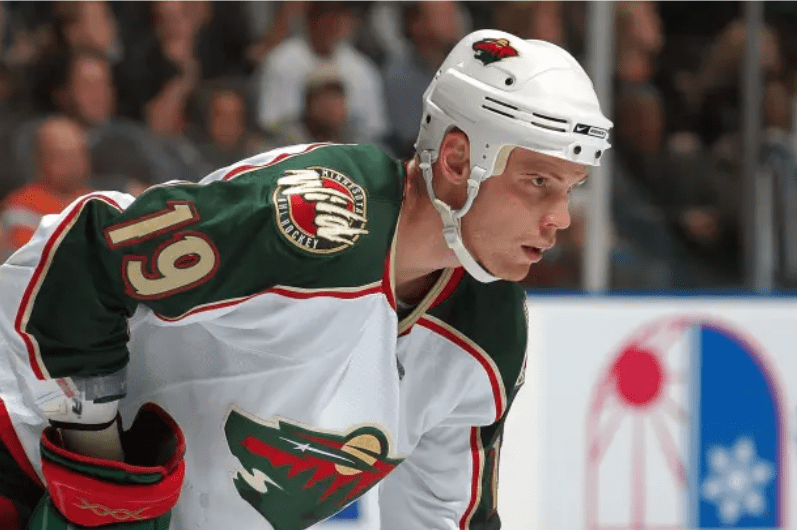
MINNESOTA WILD: Antti Laaksonen (323 GP, 55g, 63a), Stephane Veilleux (428 GP, 47g, 50a), Richard Park (217 GP, 37g, 37a), Josh Harding (151 GP, 60-59-11, 2.45 GAA, .918 Sv%)
Laaksonen was a consistent player for the first years of the Wild, but couldn’t replicate his output from college. Laaksonen was highly underrated in the grand scheme in a very defensive Wild line-up. Veilleux had a big year in his draft year, but through his NHL career, he couldn’t reach that peak. Veilleux bounced between the AHL and NHL post-lockout. Park was also part of the early teams who didn’t score all too much, but his consistency kept him as a viable bottom-six source. Harding is only here because his numbers were slightly less than Dwayne Roloson’s and Manny Fernandez won an individual stat award– that’s all.

NASHVILLE PREDATORS: Adam Hall (234 GP, 43g, 42a), Nick Spaling (297 GP, 40g, 44a), Yannick Weber (223 GP, 6g, 18a), Mike Dunham (217 GP, 81-104-24, 2.74 GAA, .910 Sv%)
Hall had a consistent college career that moved onto the NHL ranks. Hall started to be a special teams threat in his last season in Nashville with 10 of his 14 goals coming on the power play. Spaling had a decent junior career, but it wasn’t until his last year in Nashville when he was moved to wing where he had an offensive breakout. Weber was in his last NHL years when he got to Nashville and was kind of there. Weber was in and out of the line-up in his four seasons with the Preds. Dunham was the first starter for the Preds and got shelled as a reward. Dunham’s 2000-01 season allowed his numbers not be as terrible as he had a 2.2.8 GAA and .923 save percentage.

ST. LOUIS BLUES: Ralph Klassen (225 GP, 18g, 37a), Dmitri Jaskin (266 GP, 25g, 36a), Dave Lowry (311 GP, 53g, 51a), Vincent Riendeau (122 GP, 58-45-16, 3.34 GAA, .883 Sv%)
Klassen had a solid junior career, but couldn’t make it transfer in his years in the NHL. Klassen bounced in and out of the line-up through his Blues tenure. Jaskin came out of juniors looking like an offensive dynamo. However, Jaskin’s physical game would be his calling card in his six years with the Blues. Lowry’s highest single-season goals and points total came with the Blues, but it was under 20 goals and exactly 40 points. Lowry’s hockey IQ helped him keep a constant role in the NHL. Riendeau had a great 1990-91 season, but even still he never had a season under a 3.00 or above a .900 save percentage in his tenure with the Blues.

UTAH “ARIZONA COYOTES” MAMMOTH: Mike Sullivan (256 GP, 13g, 20a), Lauri Korpikoski (401 GP, 62g, 83a), Radoslav Suchy (372 GP, 13g, 50a), Brian Boucher (96 GP, 28-45-18, 2.98 GAA, .898 Sv%)
Sullivan’s last stop was in Phoenix, where he played a bottom-six role. Sullivan only registered one season with double-digit points with the Coyotes. Korpikoski hit his career-high in points in his second Coyotes season, but declined in the NHL from there. Korpikoski was able to get back on track once he went back to Finland. Suchy was offensively talented in juniors and the AHL, but didn’t find that spark in the NHL. Suchy was able to transition to a more defensive role to round out his game. Boucher was in net for most of the harder times for the mid-00s Coyotes, but could not get the goal support needed. Boucher’s lone bright spot was his consecutive shutout record with five shutouts in a row in 2004.

WINNIPEG JETS: Alexander Burmistrov (298 GP, 30g, 51a), Chris Thorburn (709 GP, 49g, 72a), JP Vigier (213 GP, 23g, 23a), Milan Hnilicka (117 GP, 29-65-13, 3.31 GAA, .901 Sv%)
Burmistrov never flourished as a top-ten pick with Atlanipeg or the rest of his time in North America. Burmistrov’s hockey IQ has gotten him a roster spot in Russia since leaving. Thorburn was a consistent scorer in junior, but his role jumping to the NHL changed. Thorburn did adapt, but never brought the scoring touch he had in the OHL. Vigier was an AHL stalwart who put up decent numbers, but couldn’t translate that into the NHL. Vigier found his touch again in Switzerland after his NHL time was up. Hnilicka took some time to get to the NHL, but his first full season was a respectable one in Atlanta. Unfortunately, Hnilicka’s second and third seasons left plenty to desire.





 Scotty Wazz