On the Topic Of Changing the Draft Rules

19367592_1896075357334843_6708927894913024_n.jpg

On this week’s Face Off Hockey Show, we debuted our new Patreon Pick segment where contributors of our Patreon who hit the donation tier picked a subject we would go long-form on. This week, one of the selections was the return to Major Juniors to two big names in the start of the season for their teams.

Kailer Yamamoto was sent from the Oilers back to Spokane, while Owen Tippett was moved from the Panthers to Mississauga. These two made enough of an impression to make the team out of camp, but due to their youth, inexperience, and the loopholes of an entry-level contract, they were allowed the ability to go back to Major Junior and grow more there.

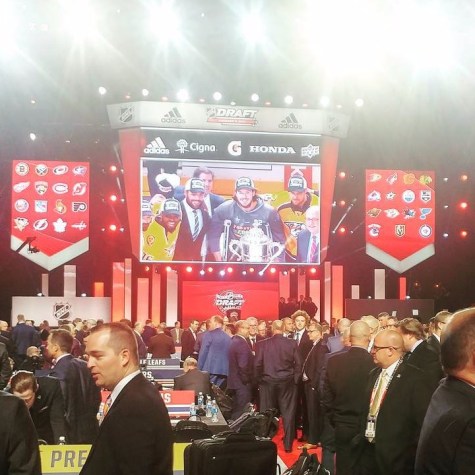
This sparked a questions from our own Marc “with a ‘C'” who wondered if there was a way for players to lose their eligibility once they declare for the draft, which would also lead to the building of a new minor league system in that aspect. While I think this is something that could be an interesting test, I don’t know how much it could work in practice.

By in large, the NHL (and hockey in general) is very odd when it comes to the set-up of their draft, in that the rights of the player is held even if he’s not in their organization– like Junior and College players. For Major Junior players, they have two years to get signed or else they go back into the draft, however– if they sign a deal– they can play up to nine games before their first year is burnt up in their contract. For college players, they have all four years to decide if they want to stay or go. Yet we have seen in situations like Will Butcher, Jimmy Vesey, and Corban Knight where the college guys pick their poison once they get out of college and don’t have to sign with the team that drafted them– which is almost a waste of a spot for those teams that did pick them.

In other drafts, players have to declare and then lose their amateur rights when they sign a professional deal. Also, the NBA makes players aren’t eligible until a full year after their last high school year (though that may change), NFL is three years after your last high school year, while MLB is odd in that they draft players— but if the player steps into a college classroom, their rights are immediate withdrawn (see point 5 on that link). However, MLB has such a deep area of minor leagues that it’s not something hockey as a whole could take on unless they wanted to really, really shrink the size of each minor league. My belief is that minor league hockey “heads of state” are too bull-headed into doing something like that because for some reason they feel that a league has to have a 31-31-31 situations rather than what baseball has where the minor leagues are spread out.

Not only that, but it’s not as if hockey has the development situations the other sports have, since high school kids are in Major Juniors at 16 and don’t develop through an actual school team, but by a team within a leagues that is pulling in multi-million dollars a year. Those Major Junior leagues are run like a pro league, without having to pay the pro prices for players– but that’s another story for another time and another writer who has better knowledge on the inner workings of that kind of hockey.

So, what do you do to help the development so that 18-year-olds aren’t rushed in when they are not ready to do so?? The one thing people keep coming back to is raising the draft age to 19 or 20 years old, which is what the NBA did a couple years back.

It only makes sense to raise the age. The maturity of the player will be able to show through more, the player would get even more time in their development, and the teams won’t be playing roulette all that much because you’d be able to see a kid three-years into his playing cycle and maybe get some trends on how he plays. Of course, this is only for Major Juniors.

The college side is a little different. Players can get drafted by NHL teams and still play college because they have “advisors” which, according to the NCAA, aren’t agents and still allows the student-athlete to keep their amateur status and NCAA eligibility. It goes with the weird NHL thing where the kid isn’t property of the team until they sign a pro contract, but their rights are held for “x” amount of time until they decide to sign or wait it out to be a free agent. A great cheat sheet about the CBA and NCAA and Draft Rules is right here.

Personally, I don’t think it’s fair for a kid to have to lose their eligibility to play in college or major junior if they get drafted in the NHL, I also think the system is broken in that the whole “rights” ideal is something that is really antiquated. When you look at it, raising the draft age would fall in line with the age limits that the AHL has, where a player who is drafted out of Major Junior and still has eligibility has to be 20-years-old to play in the league– which would mean that they would be done with their Major Junior eligibility just as they’re ready to go to the next level. That makes sense.

However, if you actually want to put stock into the player and have their lose eligibility if they declare early– the need would be to totally revamp the minor league hockey system as we see it. How do you do that?? I’ll bring about that idea tomorrow.
On the Topic Of Marylanders in College, Junior, and Pro Hockey

If you have followed along in my life, Maryland is a huge part of it. After living in Glen Burnie for 21 years, obviously there’s a sort of pride there. But recently, I’ve seen an influx of Marylanders getting into the pro hockey ranks, as well as Division I NCAA and Major Juniors. With it being a dormant landscape for hockey, it’s always a fine sight to see a kid from Maryland get noticed on a big stage.

236-nick-ellis

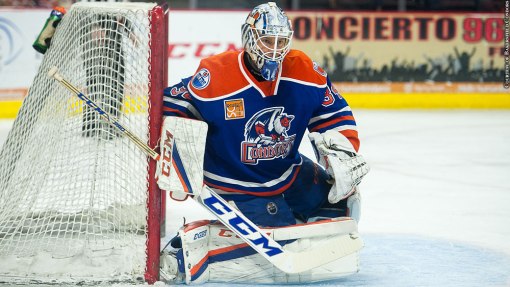
One of the bigger ones recently has been Nick Ellis of the Bakersfield Condors. The Millersville native was signed by the Edmonton Oilers as a free agent after three years at Providence College where he posted a 30-9-5 record with a 1.90 GAA. Earlier this year, Ellis got AHL Player of the Week honors and has been put into a bigger role for the Edmonton affiliate.

Another player to possible get buzz this year or next is 16-year-old Adam Varga. After playing for the Washington Little Capitals U15 team, Varga took an unorthodox step by jumping to Major Juniors and signing with the Mississauga Steelheads of the OHL. While there are territorial disputes of who’s a Marylander and who’s not (more on that in a second), but my count he is the fifth Maryland-born player to play in Major Junior after Jeff Brubaker (Hagerstown), Jeremy Duchense (Silver Spring), Charlie Pens (Perryville), and Campbell Elynuik (Silver Spring) to be stated as Marylanders in Major Junior. It’s a big step for hockey in Maryland and how the development is, as most Maryland kids go the NCAA route or even the Division III route for their higher-level hockey.

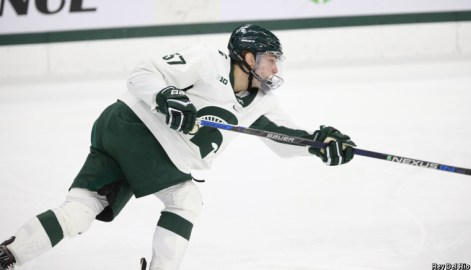
However, there is a bit of a conflict when dealing with player bios because some players will put somewhere else outside of Maryland, while other sites will post Maryland as their hometown. Elynuik is a perfect example as he is listed on HockeyDB as being from Silver Spring, but Elite Prospects will have him listed as being from Calgary, Alberta. Jarred Tinordi is another example, as he was born in Burnsville, Minnesota; but made his hay in Severna Park, Maryland– playing for Severna Park High School in his first year before going to join the US National Developmental Team. A guy like Michigan State’s Jared Rosburg is a whole other can of worms. Rosburg is listed as being from Clarksville, Maryland, but grew up in Strongsville, Ohio. Since he played for River Hill in Howard County, I’ll chalk Rosburg up to one of Maryland’s own.

(Elynuik, Tinordi, and Duchense bring about another example of guys listed as being from Maryland thanks to their father’s playing with the Washington Capitals when they were born. While Tinordi did play within the area, the others didn’t make that big an impact, especially with Duchense living in Quebec City for the majority of his youth.)

10.2.16_MSUHK

Rosburg is one of many players who have touched NCAA Division I ice while being listed as a Marylander. The Michigan State defenseman has dealt with injuries, but has been a big presence on the blue-line and has come up with some big goals in his short career. Rosburg is following in the footsteps of Sam Anas, who is recently the most successful Maryland player, as he’s been in the Minnesota Wild organization for two years after a successful NCAA career at Quinnipiac after a solid high school career at the Landon School in Bethesda. Of course, Anas goes in that disputed Maryland/Washington DC zone where both sides want to claim him. Colgate’s Bruce Racine is in the disputed zone of Maryland/DC, as he was born in DC, but went to school in Bethesda at Georgetown Prep. Other NCAA players for the 2017-18 season are Matt McArdle (Annapolis/Lake Superior State), Colin O’Neill (Odenton/UMass-Lowell), Jason O’Neill (Odenton/Providence), and Graham McPhee (Bethesda/Boston College).

In the minor leagues, outside of Ellis and Anas; there are several others playing in the lower minor league ranks. Jack Burton was born in Reisterstown and went to Baltimore-area St. Paul’s school before heading to Colby College and then joining the Indy Fuel last season, where he is today. Another Maryland ECHLer is Nick Sorkin of the Wheeling Nailers, who played for Team Maryland and the Washington Little Caps before going to University of New Hampshire, then to the Nailers. Former Glenelg High School player and Woodbine native Eric Sweetman is in the ECHL, as well, playing in Idaho after four years at St. Lawrence University. Mike Chen played for Team Maryland growing up before heading to Division III at Salem State and is currently rostered on the Knoxville Ice Bears of the SPHL.

Women’s hockey has also grown in Maryland, especially with the likes of Haley Skarupa being from Rockville and playing on the US Women’s National team, as well as in the NWHL with the Connecticut Whale and Boston Pride after four successful seasons at Boston College. Beth Hanrahan of Poolesville played four years at Providence College for four years, being the team’s MVP in her junior and senior season, then playing for the New York Riveters before being name associate coach of Lindenwood University. Finally, Lindsay Berman of Odenton starts her third season as head coach of UMass-Boston’s Women’s team after her years in the CWHL with the Boston Blades, including a Clarkson Cup championship to her resume. Berman went to Arundel High School and played for the Washington Pride to garner attention leading her career at Northeastern University.

I’ve said before about how Maryland and the mid-Atlantic has been underserved as a market, especially with no NCAA program in the state. However, there’s a new wave coming through, especially with Varga in the OHL and young Patrick Giles (Chevy Chase) joining the US National Program; there’s a lot of shoot for in the youth programs in the Maryland (and sure, DC) area, though the high school systems does have a variety of teams. Also, the club hockey scene does have a lot of talent, but still not the top-tier talent other areas have. The area is still in need of more success stories, but I know I didn’t think in a million years there would be this much Maryland content across the NCAA and minor pro landscape as there is today.

On the Topic Of NCAA Expansion

NCAA-Ice-Hockey

With Penn State and Arizona State making the jump from Division I club team to Division I in the NCAA, it makes some wonder who is going to be the next team to make the big jump to the NCAA and who is really able to make the jump with few stumbles along the way.

During this year’s NHL Draft, the University of Illinois announced that they were the first team to participate in the newly sponsored research for the feasibility of more college teams being brought up to the Division I level of hockey. It would make sense for Illinois to be the first to be in this program, as the state is surrounded by plenty of college hockey and would have a built-in conference alignment in the Big Ten once they move into D1. In the ACHA, Illinois went 13-11-3 in 2016-17 and finished the season being ranked 13th in the final rankings. That ranking is up from their 17th final ranking in 2015-16 and even with their final 2014-15 ranking at 13th. Illinois has been a club team for 60 years and with the Big Ten finally getting a hockey conference, it could be time for them to make the jump to the big show.

That said, I wholly expect that the next team to get funding to see if their program is viable for NCAA D1 status will be the Naval Academy. You can bet that the NHL and NHLPA will announce that during the Stadium Series weekend in Annapolis, as well.

The location of Illinois would be perfect when you look at the map of the NCAA. It’s clear to see that if you’re a D1 hockey school, you’re probably in Northeast corridor or the upper Midwest. Only two of the 60 NCAA D1 schools are south of the Mason-Dixon line (Miami-Ohio, Alabama-Huntsville) and seven teams are west of Minnesota (North Dakota, Colorado College, Denver, Air Force, Arizona State, Nebraska-Omaha, Alaska-Anchorage, Alaska-Fairbanks) with the two Alaska teams on thin-ice with keeping their teams due to financial reasons.

With the look at Navy, the move would help the NCAA establish a move towards the under-represented Mid-Atlantic region of the US. On top of that, the team would have already have the two other service schools– Air Force and Army– as their rivals. McMullin Arena may be one of the smallest of the NCAA, but they would be in line with what Robert Morris University has with the majority of the stands being on one side of the rink rather than a bowl seating situation.

There are some issues with Navy getting in and being competitive from the start, with recruiting being the biggest issue, which are the same issues that Army and Air Force deal with when it comes to bringing in the top players into the program. With players having to do service time after their college career is done, some may be hesitant to joining the team.  This is something that former Army goalie Parker Gahagen is dealing with, as he signed an amateur try-out with the San Jose Sharks, but is not looking into whether or not he could defer his service time (a minimum of two years) to move on with his NHL career. The same thing happened with Zach McKelvie after he finished his Army career, but had his pro hockey career stalled due to having to finish his active duty time in the Army.

However, the move to the Mid-Atlantic region for NCAA D1 hockey would be great for the high school scene in and around that area. While there are great club teams who play in that area and have a history behind them, it’s an underserviced area of the US when it comes to the prospects of high school players playing close to home. Especially with Alex Ovechkin having an impact in registration for youth players in the Maryland/DC/Virginia area, you’d think the NCAA would want to tap that market, too. Both Sam Anas (Quinnipiac) and Jamie Fritsch (New Hampshire) were Maryland kids who were able to break out and have D1 careers, but for the most part, a lot of players in the area look to the club team’s D1 or hope for a NCAA Division III school to go to– which isn’t bad, but you’d think they’d want to strive for move and try to get that boost to D1.

While Navy would be a good fit to the NCAA D1 pool, the University of Delaware could be another option. While not the most sexy of choices, the pool of players they can pull from would be tremendous as they would have Philadelphia and Southern New Jersey players to recruit and be close to home base. Delaware’s D1 club program has been a model for consistency and has won an ACHA National Championship in 2012, the first for the program. The team would fall into that Northeast corridor area of travel, but be a little closer for kids in surrounding states who don’t have D1 college hockey within a reasonable driving distance. While they did run into trouble last season, having to pull out of the season due to school sanctions, the team was reinstated by the school without having to miss a season because of said sanctions.

This whole scenario doesn’t include the growth of hockey out west, especially in California and Arizona. With Arizona State making the jump, they may have started a westward shift, but without any club teams (sans University of Arizona) being all that prominent in Division 1 of club hockey, it will take a little more time to grow the college game out there. The whole point is that right now, NCAA hockey is a big area of development for NHL teams and more and more kids from different areas are getting involved. It’s up to the NCAA to maybe explore harder into what they need to do to expand past the 60 teams they have now and make it viable. Assistance from the NHL and NHLPA will help greatly, but the NCAA can’t rely on those entities, as they will only look for area that would also help in NHL markets rather than outliers.