Meh Rushmore: Central Division

Everyone and their mother can do a Mount Rushmore of greatest players. Pick a generation and go and the stats tell their tale. So why not do a Rushmore of guys who just existed on their teams?? It’s not as if their tenure was the worst, but it wasn’t all that big or memorable. Which is why we’re here right now. Here’s my look at the four guys in each franchise that had a less than memorable tenure with those clubs. We’ll continue on with the Central Division and here are the guidelines I’m going by: 

RULES
200 Skater/75 Goalie minimum GP with team
At least one goalie on the list
No individual performance awards
Transplanted teams CAN use previous location for players
*Colorado can pull from Quebec
*Dallas can pull from Minnesota North Stars
*Utah will pull from Arizona/Phoenix/Winnipeg 1.0
*Winnipeg 2.0 can pull from Atlanta
Not known for designated role on team (Enforcer, Shot Blocker, Face-offs)
No current NHL players
“Meh” Status based on time with team they’re represented on
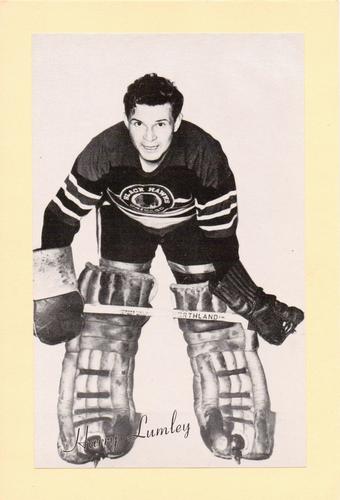
CHICAGO BLACKHAWKS: Cam Barker (200 GP, 17g, 63a); Steve Ludzik (413 GP, 46g, 92a); Rick Paterson (430 GP, 50g, 43a); Harry Lumley (134 GP, 29-85-18, 3.63 GAA)

Barker was a former 3rd overall pick with a dynamic junior career. Aside from one year, Barker’s tenure in Chicago got overshadowed by the likes of Brent Seabrook and Duncan Keith’s production. Ludzik set franchise records in juniors, but the offensive side didn’t come as easily for him in the pros. Ludzik was used in a more bottom six role with Chicago having plenty of top production already in their line-up. Paterson had one season of 14 goals, but he was another player where success offensively in lower leagues didn’t translate to the NHL. Lumley went from the Cup champions in Detroit to a sad-sack Chicago team in 1950, hitting the 40-loss mark in both seasons in Chicago. Despite being a Hall of Famer, Lumley’s time in Chicago was a forgettable mark on his resume. 

COLORADO AVALANCHE: Dan Hinote (353 GP, 27g, 38a), Rene Corbet (230 GP, 39g, 47a), Shjon Podein (239 GP, 34g, 37a), Mario Gosselin (192 GP, 79-82-12, 3.67 GAA, .871 Sv%)

Hinote had two solid years at Army before moving to major juniors and saw a regression. Hinote was able to carve out a role as a grinder and get his name on the Cup. Corbet was a better than point-per-game player coming into the NHL, however a deep line-up didn’t allow Corbet to shine as much as he did in his junior and minor league years. Podein had solid years in the NHL before coming to Colorado where the depth got the best of his ability and his adaptation to a bottom-six role allowed him to walk around in full-gear with the Cup after the 2001 win. Gosselin was in a back-up role for most his time, which suited him well. Gosselin’s lone year with starter minutes was his most disappointing year in his tenure. 
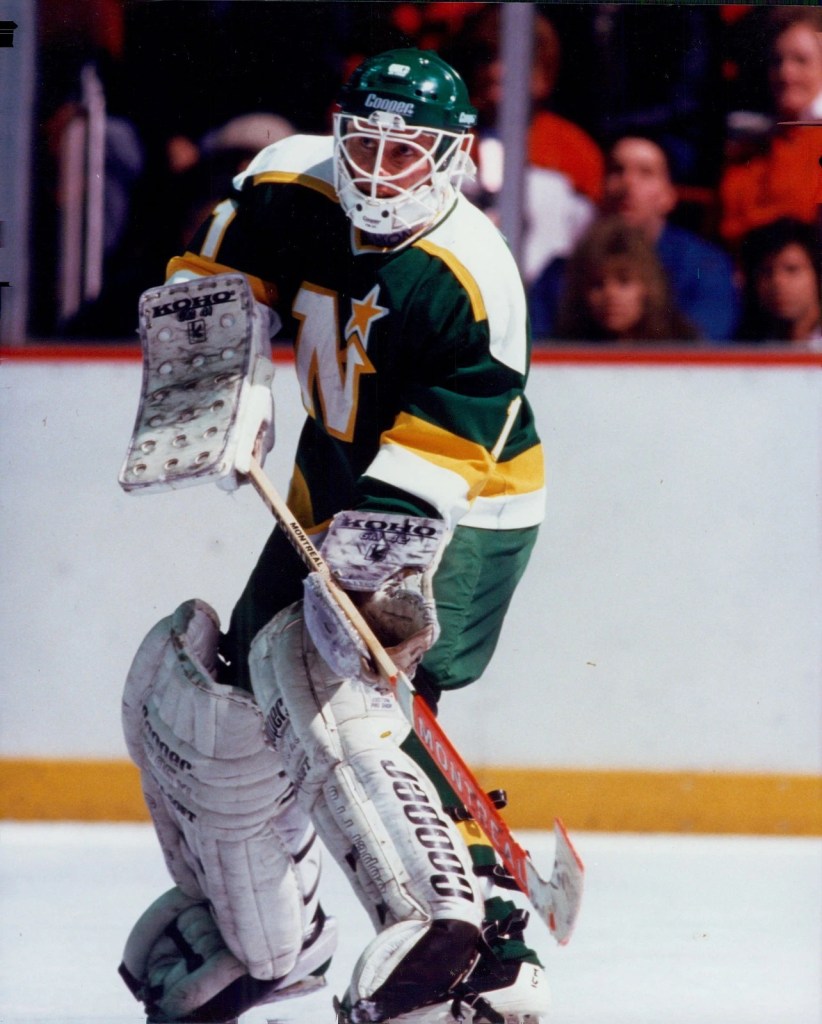
DALLAS STARS: Niko Kapanen (239 GP, 20g, 56a), Toby Petersen (243 GP, 17g, 23a), Brett Ritchie (241 GP, 33g, 21a); Kari Takko (131 GP, 33-67-14, 3,88 GAA,.879 Sv%)

Kapanen spent time in Finland before the jump to the NHL, but the point total didn’t come with. Kapanen got 14 of his 20 goals with Dallas in the post-lockout season. Petersen made a long trek through the minors before heading over to Dallas. With Dallas, Petersen got bottom-six time, which didn’t allow him to find much of an offensive punch. Ritchie had a bit of a physical game, but injuries would take its toll on him. Ritchie’s biggest season was his 16-goal campaign, which was also his career-high in games played in a season. Takko was a back-up supreme, but couldn’t seem to get the bounces to go his way. One of the memorable contributions was the Takko-Bell trade when he was dealt to Edmonton for Bruce Bell. 
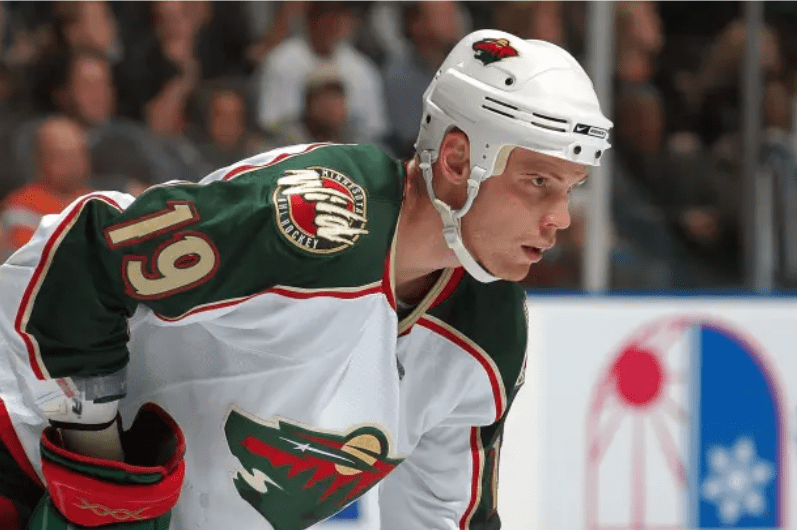
MINNESOTA WILD: Antti Laaksonen (323 GP, 55g, 63a), Stephane Veilleux (428 GP, 47g, 50a), Richard Park (217 GP, 37g, 37a), Josh Harding (151 GP, 60-59-11, 2.45 GAA, .918 Sv%)

Laaksonen was a consistent player for the first years of the Wild, but couldn’t replicate his output from college. Laaksonen was highly underrated in the grand scheme in a very defensive Wild line-up. Veilleux had a big year in his draft year, but through his NHL career, he couldn’t reach that peak. Veilleux bounced between the AHL and NHL post-lockout. Park was also part of the early teams who didn’t score all too much, but his consistency kept him as a viable bottom-six source. Harding is only here because his numbers were slightly less than Dwayne Roloson’s and Manny Fernandez won an individual stat award– that’s all. 

NASHVILLE PREDATORS: Adam Hall (234 GP, 43g, 42a), Nick Spaling (297 GP, 40g, 44a), Yannick Weber (223 GP, 6g, 18a), Mike Dunham (217 GP, 81-104-24, 2.74 GAA, .910 Sv%)

Hall had a consistent college career that moved onto the NHL ranks. Hall started to be a special teams threat in his last season in Nashville with 10 of his 14 goals coming on the power play. Spaling had a decent junior career, but it wasn’t until his last year in Nashville when he was moved to wing where he had an offensive breakout. Weber was in his last NHL years when he got to Nashville and was kind of there. Weber was in and out of the line-up in his four seasons with the Preds. Dunham was the first starter for the Preds and got shelled as a reward. Dunham’s 2000-01 season allowed his numbers not be as terrible as he had a 2.2.8 GAA and .923 save percentage. 

ST. LOUIS BLUES: Ralph Klassen (225 GP, 18g, 37a), Dmitri Jaskin (266 GP, 25g, 36a), Dave Lowry (311 GP, 53g, 51a), Vincent Riendeau (122 GP, 58-45-16, 3.34 GAA, .883 Sv%)

Klassen had a solid junior career, but couldn’t make it transfer in his years in the NHL. Klassen bounced in and out of the line-up through his Blues tenure. Jaskin came out of juniors looking like an offensive dynamo. However, Jaskin’s physical game would be his calling card in his six years with the Blues. Lowry’s highest single-season goals and points total came with the Blues, but it was under 20 goals and exactly 40 points. Lowry’s hockey IQ helped him keep a constant role in the NHL. Riendeau had a great 1990-91 season, but even still he never had a season under a 3.00 or above a .900 save percentage in his tenure with the Blues. 

UTAH “ARIZONA COYOTES” MAMMOTH: Mike Sullivan (256 GP, 13g, 20a), Lauri Korpikoski (401 GP, 62g, 83a), Radoslav Suchy (372 GP, 13g, 50a), Brian Boucher (96 GP, 28-45-18, 2.98 GAA, .898 Sv%)

Sullivan’s last stop was in Phoenix, where he played a bottom-six role. Sullivan only registered one season with double-digit points with the Coyotes. Korpikoski hit his career-high in points in his second Coyotes season, but declined in the NHL from there. Korpikoski was able to get back on track once he went back to Finland. Suchy was offensively talented in juniors and the AHL, but didn’t find that spark in the NHL. Suchy was able to transition to a more defensive role to round out his game. Boucher was in net for most of the harder times for the mid-00s Coyotes, but could not get the goal support needed. Boucher’s lone bright spot was his consecutive shutout record with five shutouts in a row in 2004. 

WINNIPEG JETS: Alexander Burmistrov (298 GP, 30g, 51a), Chris Thorburn (709 GP, 49g, 72a), JP Vigier (213 GP, 23g, 23a), Milan Hnilicka (117 GP, 29-65-13, 3.31 GAA, .901 Sv%)

Burmistrov never flourished as a top-ten pick with Atlanipeg or the rest of his time in North America. Burmistrov’s hockey IQ has gotten him a roster spot in Russia since leaving. Thorburn was a consistent scorer in junior, but his role jumping to the NHL changed. Thorburn did adapt, but never brought the scoring touch he had in the OHL. Vigier was an AHL stalwart who put up decent numbers, but couldn’t translate that into the NHL. Vigier found his touch again in Switzerland after his NHL time was up. Hnilicka took some time to get to the NHL, but his first full season was a respectable one in Atlanta. Unfortunately, Hnilicka’s second and third seasons left plenty to desire.
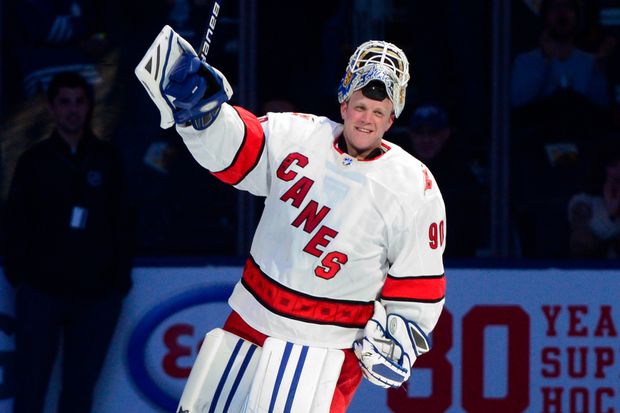
Despite Good Press, NHL Looking to Change EBUG Status

You know, people didn’t this irate when Scott Foster came into the game for the Blackhawks, stopped seven shots thrown at him by the Winnipeg Jets, and was named first star for the Blackhawks that night. I guess it’s because the Maple Leafs couldn’t create offense against their minor-league Zamboni driver that makes the talking heads North of the Border all up in arms.

Thanks to the performance David Ayres had, to which he got the win over the Maple Leafs with eight saves– it seems that it got people in Toronto all butt-hurt and is now apparently going to be a talking point at the next round of GM Meetings next week. I guess, since it happened to the Leafs on National TV; there’s an issue with who can become an emergency back-up.

Honestly, though, you have to think there needs to be some kind of parameters to the EBUG situation. To have a 42-year-old slotted as the emergency goalie seems a bit odd. Especially in Toronto when there’s more goalies per capita than any other place in the world (don’t fact check it– I didn’t).

But where do the qualifications come from?? Any goalie who is trying to make it is already out there trying to make it elsewhere and won’t necessarily be available. You almost have to default to former goalies who have hung them up with the exception of beer league and maybe get seen by a coach or someone and gets some practice in with the NHL squad. In the past, some back-ups have come from the Canadian college ranks; but those were when a goalie was injured before the game was even close to starting.

The talent of the EBUG is something that should be hit or miss because you’d never fathom it to happen in a million years. In the past three seasons, we’ve had two come into play and hold their own. And, just like the NHL, there’s a brash overreaction to it despite all the positive press it has given the league since this happened. Not only that, but they’ll ahev to work with the NHLPA to figure out the requirements, to figure out how they can vet these goalies, and what needs to be done so that this doesn’t happen– whether if it’s expanding the roster to three goalies or putting an age limit on it– they’ll make sure that this is the last time we have a fun story of a goalie coming out of the crowd to win the game.

Better Know An Affiliate: Chicago Blackhawks

AHL: Rockford IceHogs (35-31-4-6, 7th in Central, Did Not Qualify for Playoffs)
TEAM LINEAGE: Since 2007, the IceHogs have been serving their in-state parent as their primary affiliate, though the Blackhawks had a tendancy to use other leagues over the AHL for their primary affiliate. Aside from Rockford and previous to them, the Norfolk Admirals; the Hawks used teams in the IHL like the Indianapolis Ice and Saginaw Hawks, as well as teams in the CHL– including the Dallas Black Hawks and St. Louis Braves as their primary affiliates from the 1960s until 2000. They had spot AHL affiliations with the Portland Pirates (1998-99), Nova Scotia Oilers (1985-87), Springfield Indians (1982-84) and New Brunswick Hawks (1978-82). Before that, the Buffalo Bisons were their AHL affiliate from 1954 until 1966. With being an “Original Six” team, the Hawks had many amateur teams in the beginning, as well as teams from the WHL and USHL when they were pro leagues.
FREQUENT FLYER CANDIDATES: While a change of scenery could be a good thing, Alex Nylander may be on the shuttle plenty with his new squad, as he did get better in his second AHL season opposed to his first. Nylander will be in a fight with Dylan Sikura, who himself is in a make-or-break season– as he was a shuttler last season during the Hawks rough season of injury. Collin Delia is the obviously choice depending upon Corey Crawford’s health.

ECHL: Indy Fuel (35-32-2-3, 5th in Central, Did Not Qualify for Playoffs)
TEAM LINEAGE: While the Fuel have been the secondary affiliate for the Blackhawks for five seasons, the length of their secondary with the Toledo Walleye (2009-2014), the times before that were very one-and-done for the Hawks and secondary affiliates. The Fresno Falcons, Greenville Grrrowl, Pensacola Ice Pilots, Roanoke Express, Jackson Bandits, and Hampton Roads Admirals were their all their secondary affiliates from 1999 until 2009.
NOTABLE GRADUATES: Delia has been the standout graduate of this young franchise, making his presence known with the Hawks last season, while the only other notable would be Justin Holl– who started his career in Indy before leaving the Hawks organization to sign with the Toronto Maple Leafs.

2018-19 Season Preview….Kind Of: Western Conference Edition

nhl-western-conference-logo-png-transparent.png

Half-assed part 2, let’s go.

The Central Division is an interesting one. For the longest time, it was the Chicago Blackhawks’ playground, but now– it’s almost kind of wide open. The Winnipeg Jets have seemingly found their formula with Blake Wheeler, Patrik Laine, Mark Scheifele, and friends. Their march to the Western Conference finals could have been the coming out party they need. So long as Connor Hellebuyck can keep the good time rolling– maybe this is now a division that belongs to North of the Border for a couple of season.

For the Blackhawks– we’re in the downturn of the dynasty. Despite of Jonathan Toews and Patrick Kane being there and being in their prime ages– the fact their goaltending in Corey Crawford isn’t always healthy and the depth is suspect at best; the former Dynasty could be in the start of their stagnation moving ahead.

Hard to forget about the Nashville Predators, who are in all-in mode this year as much as they have been. This is pivotal year for the team, especially when they look at what to do with impending UFA Pekka Rinne and how they’ll juggle his time with Juuse Saros’ time in net. Aside from that, they have a defensive corp that one of, if not the tops in the league; their offense is full of top tier talent, and overall– this is a team that’s ready to go and make another big push for the Conference final again this year.

The rest of the division is suspect at best, starting the with Minnesota Wild– who seem to be more of the same. Bruce Boudreau could be on a short leash with new GM Paul Fenton, and with the team in place– I don’t know if that leash could get shorter. Sure, Devan Dubnyk is back, but he can only do so much. The offense is really hit and miss, the star players being in the line-up is hit and miss, and there’s plenty of question marks in the State of Hockey.

Add the St. Louis Blues to that mix, only because of Jake Allen. There’s no Carter Hutton to bail him out anymore and he’ll have to actually show he’s a top goalie in this league. He’ll have a lot of tools in front of him with Vlad Tarasenko, Ryan O’Reilly, Jaden Schwartz with Alex Pieterangelo and Colton Parayko on his defense…there’s no reason why Allen shouldn’t be successful in spite of himself and his own short-comings.

I don’t know what to think of the Colorado Avalanche and Dallas Stars. The Stars could be a little easier to explain and deal with, as Ben Bishop– if he’s healthy all season– could help them steal a few games here and there. The offense is steady with Tyler Seguin and Jamie Benn up there, the defense however, is the question. Stephen Johns is out to start the season, which means Marc Methot and John Klingberg are going to have to shoulder a lot of the load– which could lead to easy burn out. The Avalanche now have Philipp Grubauer as the potential replacement for Semyon Varlamov when he should get injured or have his stats drop off, the team was able to rally around Matt Duchene getting traded, and might have an underrated defense against the rest of the league. The offense is one line, which means they’ll need to find some kind of secondary scoring to actually be across the board successful and get back to the playoffs once again.


Will anyone discount the Vegas Golden Knights this year?? Most likely, yes. The whole “Bet you can’t do it again” crowd will be out, but with the additions of Max Pacioretty and Paul Stastny; the depth of offense is much better. While there will be doubters of M-A Fleury’s heroics and William Karlsson’s scoring prowess, the Knights are making sure they aren’t just a one-hit wonder.

Their toughest challenge will probably come from the San Jose Sharks, who have their best shot at getting into the Stanley Cup Finals with the addition of Erik Karlsson. The former Ottawa defenseman bolsters a blue line with Brent Burns and Marc-Edouard Vlasic, while Joe Thornton is back on the ice and probably much quicker without his beard anymore. Martin Jones has seen his win number decline over the past three seasons, but with an upgrade in front of him, you can bet he’ll have another 30+ win season.

With a healthy Jonathan Quick, the LA Kings were a solid team despite getting bounced in the first round again. Anze Kopitar was far and away the best player and may need to be so again to get the Kings back to the playoffs and maybe advance past the first match-up. That 70s Line will have to be a little be more prominent, though to be honest– losing Jeff Carter most of the season didn’t help things as much.

The Anaheim Ducks are going to have to get all they can out of their depth if they want to make the playoffs again. While John Gibson hasn’t been the best at keeping pucks out, the offense didn’t give him much to work with, as they had to lowest goals-for total of any playoff team last season. With Corey Perry out to start the season, as well; old man Getzlaf will have to rally the troops and hope they don’t get run over.

Of the Canadian teams in this division, the one with the most hope could be from Alberta. Whether it’s the Flames or the Oilers is yet to be seen. The Oilers need to figure out which team was the mirage– was it the team who made the playoffs in 2017 or the team that really stunk up the joint last season. Aside from Connor McDavid, there wasn’t much to write home about. However, the hard-on people have for Ty Rattie with McDavid is almost insane levels of silly– it’s almost a Sedins or Crosby situation with how people are infatuated with his play.

The Flames are an odd duck. They have the talent up front to get into the playoffs with Johnny Gaudreau, Sean Monahan, and to a lesser extend Sam Bennett. However, with Bill Peters now at the helm, who knows what can happen. If they’re going to sink to a Carolina level, then it’ll happen quick, but the additions of James Neal and Elias Lindholm up front could bring more attention, while Noah Hanifin could help Mark Giordano on the blue line. If only Mike Smith can get back to some kind of non-sieve form, then they could surprise people.

Not a surprise is the Vancouver Canucks, who really….I don’t know. They have some top-end young talent in Brock Boeser, Bo Horvat, and others, but the real key is waiting for offensive defenseman Quinn Hughes to come from Michigan to Vancouver. If the rebuild is going to happen– it will be around Boeser and Hughes, maybe even Thatcher Demko when he gets the go-ahead to be the Canucks starter. It’s a waiting game for this team.

That leaves us with Arizona. The trade for Alex Galchenyuk is going to help them a whole lot, it’s a matter of managing injuries. Antti Raanta going down early last year hurt and it seems like there’s not much for goalie depth just yet for the Coyotes who could come in and stop the bleeding. Michael Grabner will add speed and a forechecking threat, Clayton Keller continues to grow, and Mario Kempe could surprise people if given the chance. The Coyotes may even push for a wild card…if they can stay healthy.

TEPID TAKE: Hey, Look– Another Blackhawks Outdoor Game

DO8jkYlWkAA8LQd.jpg

For Christ’s sake, the Blackhawks and Bruins playing in an outdoor game again??

Alright, well– I guess. Sure, the iconic situation of it being playing at Notre Dame Stadium ticks off another box that the NHL wanted to do in order to have complete world domination of the iconic non-hockey venues to host a hockey game and yes– you almost have to have the Blackhawks because of the proximity, but good lord do we have to keep having the same teams play over and again??

I don’t think that the Winter Classic was designed to have all the NHL teams play in it because if it’s a premier event, the NHL wants to put teams in it who will have a big ratings and attendance. That said, you need to have some sort of sight of what they does for the ratings overall. It’s the same argument made for having the same teams play on NBCSN all the time– people get sick of seeing it and with a gimmick that’s already been beaten to death with teams who have played more than their fair share– this can’t be that great for business.

Face Off Hockey Show had Greg Wyshynski on the show this past week and we asked him the future of these kind of NHL events, to which he said he’d like to see more neutral site games being played between teams to bring more fans in that wouldn’t necessarily see these teams unless they had a trip to do so.

Maybe this is the first step to get more out into neutral site games, but in all honesty– the teams that are in it sour the whole thing. Less of Boston because the Bruins don’t seem to be in these games all too much, but they are overexposed in the national TV side because they do have a big fanbase– not something to hate on, but it’s annoying.

But people will watch, the NHL will very much hype it up, and it will be some kind of success when all is said and done in spite of the teams that are playing in it and the disdain many people have for them.