Caps By The Numbers: Five Unanswered Give Caps 2-0 Series Lead

2376.jpg

After a quick start thanks to a Tom Wilson tipped-goal 28 seconds in, the Caps fought through some adversity after the Lightning netted two power play goals from Brayden Point and Steve Stamkos. However, this Caps team didn’t give up and scored the last five goals of the game to notch a 6-2 victory and leave Tampa with a 2-0 series lead. The win was the seventh win on the road for the Caps this playoffs, tying a team record set in 1998. Along with Wilson, Devante Smith-Pelly, Lars Eller, Evgeny Kuznetsov, Alex Ovechkin, and Brett Connolly had goals. Eller, Kuznetsov, Ovechkin, Wilson, and John Carlson had multi-point games.

The Caps are in double-digits for wins this players, so it’s time to look at a former #10 in Caps history.

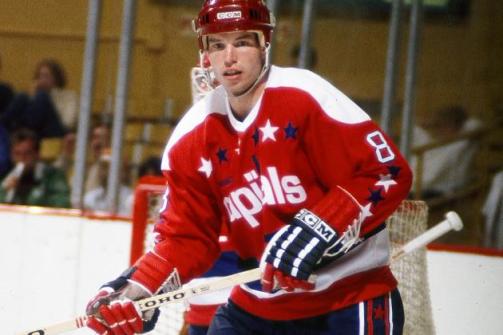
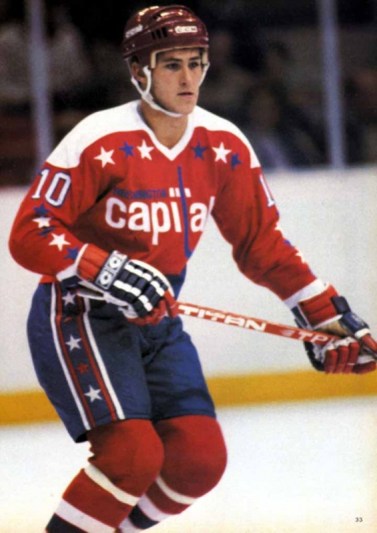
This entrant was a two-time member with the Capitals, but made his name more known when wearing #10. Bobby Carpenter garnered a lot of attention with his selection in the 1981 NHL Draft, being the first player to go into the NHL right out of high school when he took the ice for the Capitals. While he did have some clashes with his head coach Bryan Murray, the short time in his first stint was something the Caps needed from a young player in their line-up.

Right off the bat, Carpenter was able to get the offense going for the Capitals with two straight 30-goal seasons in 1981-82 and 1982-83. While he had a drop-off in his stats in his third season, the 1984-85 season was the real big break-out for Carpenter, as he led the team in goals with 53 and was only behind Mike Gartner in points (95). It was Carpenter’s highest output in goals and points. Carpenter was the first US-born player to put up 50 goals in a season.

However, the clash between him and coach Murray reached a boiling point during the 1986-87 season. Murray and the Capitals had communication issues, chief among them was Carpenter– who said that Murray panicked too much behind the bench and held him back from being a bigger part of Washington’s offense. Carpenter sat out waiting to be traded as the Caps struggled without him before getting dealt to the Rangers for Mike Ridley and Kelly Miller.

Carpenter re-sign with the Caps ahead of the 1992-93 season, but donned #11 after Miller took over the #10 role. On his second stint, Carpenter was only able to register 11 goals and 28 points over 68 games.

Caps By The Numbers: Quick Start Helps Caps Take Game One

21055

Though they were heavily put as the underdog in this series, the Caps got out to a quick start in Game One– scoring two goals in the first thanks to Michal Kempny and Alex Ovechkin, then two in the second from Jay Beagle and Lars Ellers. While they had four goals, they had to hang-on, as Tampa Bay had two goals in the third and were pressing late, but Braden Holtby was equal to the task for the Caps 4-2 win in Game One of the Eastern Conference Final. The Caps won again without Nicklas Backstrom and hope to keep a good pace going for Sunday’s game.

With a ninth win, we get to number nine of the Caps history chart.

While he didn’t pan out as a Flyers’ first round pick, Dainius Zubrus started to live up to expectation when he got to Washington…but not just on the ice. Formerly one of the poster boys for Easton Hockey, Zubrus couldn’t transition his game to the North American style when he first game over. Zubrus was brought to Washington in 2001 and took off as a bit of an offensive threat– at least to the Capitals side of things, as they were going through their rough times.

In his six seasons with the Capitals, he hit season-highs in points and goals, netting three straight 20-plus goal seasons towards the end of his run with the Caps, before his trade to Buffalo. As I mentioned, Zubrus was part of the teams that were going through the rough phase of contenders to tanking and having a difficult rebuild ahead of them. However, Zubrus was traded away before he could see the full bloom of the rebuild.

Yet, the most important part of Zubrus’ tenure with the Capitals was what he was able to help a new young star for the Capitals, doing something that may not have been done for him when he came into the league. When Alex Ovechkin came over to North America, Zubrus was not only a mentor to the young winger, but he played the role as translator, roommate, and someone to get Ovechkin comfortable with the game. Once Zubrus was traded, Ovechkin’s production in his sophomore season slowed down a bit. As we know, he’s gotten back on track– but Zubrus made a big impact for Ovechkin coming over and maybe allowed the Caps to have their franchise face develop quicker because of Zubrus’ off-ice help.

South-Beast Division Representing in Conference Finals

southeastdivision

Photo Source: Link

Of the four teams still left in the NHL Playoffs– three of them at some point played in the Southeast Division.

Let that sink in. Let the worst division in all of hockey; a division that angered so many because they got a top-seed when many times they were undeserving, a division you could say set off these new divisions because of how inferior it was to the others. That division accounts for 75% of the Final Four.

Of course, the Winnipeg Jets only played two seasons after moving from Atlanta because the NHL powers that be didn’t own a map that could have given a better option from the Central Division at the time to move to the Southeast– but whatever. The representation of this often horrid division is finally coming to light.

For the Capitals, they were seven-time Southeast Division champions, while the Lightning had only two division titles to their name– one of which led to a Stanley Cup in 2004. In the 14 seasons that the Southeast Division was in existence, eight times did more than one team get into the playoffs. The biggest margin of victory for a year in the Southeast was that 2003-04 season, where Tampa Bay had 106 points, which was 28 points better than the 2nd place Atlanta Thrashers.

Granted, with all the turnover in the league since the last time there were six divisions only four years ago, it’s hard to compare what would happen now since they’re all spread out in different divisions; but I’d like to believe that the cornerstones to these teams had major ties to the Southeast Era (or Error depending on who you ask). Alex Ovechkin, Dustin Byfuglien, Steven Stamkos– all of those guys were in the midst of the Southeastern heyday. The fact all three came out of their division is pretty fantastic, not only that– but we could see an all former-Southeast Division Stanley Cup Final if Winnipeg beats out Vegas to face one of their former foes.

For my money, however, I see it as a media member’s dream of Vegas beating Winnipeg in six games, while Tampa takes out Washington in seven to make it a very sunny, very warm Stanley Cup Final.

Caps By The Numbers: Caps Get Past the Penguins, Second Round

For the first time in 20 years, the Washington Capitals will go to the Conference Final with a 2-1 win in overtime from an Evgeny Kuznetsov winner to defeat the Penguins in six games. Kuznetsov got a semi-breakaway feed from Alex Ovechkin and went five-hole on Matt Murray for the game-winner. Alex Chiasson had the other goal on an assist from Aussie Nathan Walker. The Caps will now take on the Tampa Bay Lightning in the Eastern Conference Final.

With that eighth win– a famous number eight from the Caps yesteryear.

murphy

While Alex Ovechkin will always be synonymous with #8, there’s one other guy who is notable for that number, but not for the right reasons. Despite that, he’s a Hall of Famer, a four-time Cup winner, and had quite the resume, though it’s at time not enough for the Caps’ faithful. It’s Larry Murphy.

WHOOPWHOOPWHOOPWHOOPWHOOPWHOOPWHOOPWHOOPWHOOPWHOOPWHOOPWHOOPWHOOPWHOOPWHOOP

WHOOPWHOOPWHOOPWHOOPWHOOPWHOOPWHOOPWHOOPWHOOPWHOOPWHOOPWHOOPWHOOPWHOOPWHOOP

2165900-tumblr_llgmwmcpwt1qjyzc5o1_500

Seriously, though….it’s a number so nice, he wore it twice and that was Dmitri Khristich. For a guy who had two tours of duty with the Capitals, he was able to go ahead and get the #8 twice in his career. While he did wear #29 when he came up to the NHL in 1990-91, #8 is the one that people remember him most for.

While he played 40 games in 1990-91, Khristich came to form in his first full season in 1991-92, where the Ukranian forward potted 36 goals and 73 points, which put him second and fourth respectively in team scoring, while also providing a little bit of defensive touch to his game and create a little (very little) Selke buzz for best defensive forward. Despite Khristich was a better than point-per-game player (66 points in 64 games) in his second season. While leading the team in goals in 1993-94 with 29 goals on the season. However, Khristich only had nine goals in 42 playoff games with the Caps in his first tenure in DC.

After some time in LA, Boston, and Toronto, Khristich came back to the Caps in the middle of the 2000-01 season, while contributing solidly in his 43 games with 10 goals and 29 points when coming back, while his last season with the Caps and in the NHL was a dud with nine goals in 61 games before going to the Russian Superleague.

Though he did have some declining numbers, Khristich was one of the more popular #8s in the Caps history and is very well remembered for his tenured. Not only that, but he was sort of a mentor to some of the young European players– most notably with a young Peter Bondra and his family when Bondra was coming over. Khristich and his family helped the transition to a new life in hockey and make Bondra comfortable and we know what Bondra did for the Caps after that.

Caps By The Numbers: Four Unanswered in Third Lift Caps

yvon-labre-dljpg.jpeg

In what could be one of the most sloppily played defensive game, the Caps used Jakub Vrana bumping up to the first line to help propel them to four unanswered goals (including two empty netters) in the third and gave the Caps a 3-2 series lead. Evgeny Kuznetsov had the game-tying goal and two assists, but the rest star was Braden Holtby. Holtby kept the Caps in the game after a barrage of Penguins chances and shut the door on them in key moments to keep the Caps alive and ahead.

That’s win seven in the playoffs, which means we look at the ONLY #7.

In the 43 seasons the Capitals have operated, there has only been one player to wear #7 and it’s the man who has ties to the organization and area– that’s Yvon Labre. While he only played 334 of his 371 games with the Capitals, he kept himself involved with the team after his retirement in 1981.

Labre was picked from Pittsburgh in the Expansion Draft of 1974, while being fourth in scoring in the inaugural season with the Caps and top amongst defensemen. Labre was the first player to score a goal at home for the Caps and was captain from 1975-76 until 1977-78 before starting to see some injuries mount up on him and forced him into retirement at only 31 years old.

However, Labre was dedicated to the DC area, taking part in a number of community projects, while also staying with the team as a coach, scout, and community ambassador. His number 7 was the first to be retired by the team, as he continues his time around the community with the Capitals and around area hockey. The Yvon Labre Award is given to the high school senior in the Maryland Student Hockey League based on dedication, work ethic, skill, and leadership.

Labre is always going to be remembered by Caps fans, though it was probably more for his contributions off the ice, as little is remembered from his on-ice days for more.

Caps By The Numbers: Late Captain Heroics Give Caps Series Lead

Bild-1.jpg

It wasn’t pretty, but it was a typical Pens/Caps game…but with the Caps getting the better of the Western Pennsylvania foes with Alex Ovechkin tipping in his own rebound with 1:07 left in the game to give the Caps a 4-3 win and 2-1 series lead. Not without controversy, as Tom Wilson became more of a villain for the Penguins for a borderline hit on Zach Aston-Reese. However, on the upside– goals from the blueline was big with John Carlson and Matt Niskanen putting up goals for the Caps, while Chandler Stephenson had the other goal for the Caps. Nicklas Backstrom was a true playmaker with three helpers in the game.

Sixth win of the playoffs means it’s time for a famous– if not THE famous– #6 for the Caps.

When it come to the #6, there’s only one guy to look for and it’s Calle Johansson, who’s longevity leaves him at second all-time with most games played as a Capital at 983 games. Johansson also continued the sturdy defenseman role that was left when Rod Langway retired. Having spent two seasons learning from Langway, Johansson picked up the reigns to anchor the Caps defense for 15 years.

After being acquired from Buffalo in 1989, Johansson fit right into the everyday line-up and never looked back. While there was a drop-off, Johansson was good for between five to 10 goals a year and in the mid-30s in points. A major power play contributor and key in their transition game, Johansson hit the 40-point plateau four times, while being a key part in the Capitals’ only trips past the second round in 1990 and 1998.

Calle Jo was quite sturdy, as well, with a few hiccups here and there– the most notable coming in 2001-02 when he missed the bulk of the season with a rotator cuff injury. Johansson played one more season with the Capitals after the rotator cuff injury before he retired for a time, then came back to play eight games before retiring again. Johansson’s legacy is one of an under appreciated defenseman league-wide, but was a major contributor for the Caps from the blue line and could be one of the finest two-way defensemen of his era.

Caps By The Numbers: Luck on Caps Side in Game 2 Win

green_rick_topstory.jpg

It started with an Alex Ovechkin goal, it ended with a Nick Backstrom empty-netter, but in between– it was a battle. The Caps got up to a dreaded two-goal lead, but were able to hold off the on-slaught by the Penguins, including a controversial no-goal by Patric Hornqvist and a hit-to-the-head by Tom Wilson on Brian Dumoulin; but the luck seemed to give Caps a series tie as they go into Pittsburgh on Tuesday. With that fifth in of the playoffs– time to cover a famous #5 in Caps history.

Everyone knows about Rod Langway. He’s a Capitals’ legend and doesn’t need going over. But what about the guy that came before him?? Not just in position, but in number, as well. That’s where Rick Green comes in. Green was a part of the trade that brought Langway to DC, with Green going to Montreal– but he kept the #5 warm for the eventual Caps great.

Green was another first overall pick for the Capitals in 1976 and saw action immediately in the 1976-77 season, part of the lean years for the still new Capitals. Many wondered why he was picked over some proven scorers in that Draft, but then GM Max McNab thought a defenseman would help lessen the brunt of goals being scored on those lowly Caps. Green didn’t have an immediate impact and got plenty of hazing from the Landover faithful when he was around the ice. His minus-100 rating in his first three seasons probably didn’t help either.

Yet, he was still young and thrown into a role on an expansion club that saw the young rear-guard play close to 40 minutes a night, unheard of at the time for a younger defender. Green started to live up to the expectation, along with Richard Picard, to help the Caps get to their highest win total (27) in 1979-80, while the team only gave up 32 more goals than they put in. Green got the team’s top defenseman award and the team’s Unsung Hero award from the fans who used to boo him.

Green chipped in here and there offensively, as well, putting up 31 goals and 158 points in his 377 games with the Caps. But the move to trade him and Ryan Walter to Montreal in order to get Langway, Craig Laughlin, Brian Engblom, and Doug Jarvis was the first part of the “Save the Caps” movement so the team didn’t relocate. Green’s impact started with becoming better defensively and his impact worked well after he was gone by bringing in the Secretary of Defense that was Langway….and the long-time color commentator in Laughlin.

Takeaways and Looking at the Second Round

f98401ca923742a9f490c4d90b913f3e--stanley-cup-playoffs-sport-logos

The first round is over and it was….something. Here’s some takeaways from it:

-As much as I hate to say it, the Penguins look like they’re world beaters. Sure, they beat the Flyers who were beat-up themselves and not all that great when you look at their goaltending, but to put up 28 goals in six games is impressive regardless of how you look at it. For a team that’s played from top to bottom for two straight seasons, they look like they’re gonna make a bigger push to get to a third.

-Man, those Western Conference series were a bit of a snooze, huh?? Two sweeps, both in the Pacific and the only real big deal series maybe showed the defending Conference Champs showing some vulnerability against a definitively weaker opponent. That said, at least the also-rans are out of the way for the new crop of powerhouses to take control of the division for a bit.

-The question is does this powerhouse really include the Vegas Golden Knights or are they just a mirage. They’ve already overcome the expansion blues and really took the league by storm. The question is whether or not Marc-Andre Fleury can really take the reins of this team and prove his playoff mettle. While defensive teams often take over the playoffs, a little goal support like how they managed this season could really help their cause as this dream season continues.

-Andrei Vasilevskiy will hopefully enjoy this break. For a guy who was talking about how he’s been worn down the entire season by playing so much, this time off will help him get a little recharged and focus. Though, he did look solid in those last two games, only letting up two goals total in them. If Nikita Kucherov and Alex Killorn can keep the offense up, the Bolts could take advantage of a worn down Bruins team.

Now, with that stuff out of the way– what to look for in the second round.

-The Jets aren’t the Avalanche, so the Predators better not let up early goals like they have been. While Pekka Rinne and the squad have been solid, a team like the Jets and the offensive prowess they have will jump all over the Preds and not give the lead up so easily. You have to believe the best is yet to come for Patrik Laine, Mark Scheifele, and Blake Wheeler– and what better way to do it than now.

-While I’m a Caps fan and know what could come next, the fact they are going to start Game One without having to face Evgeni Malkin and Carl Hagelin is a good thing. Yet, the Caps are 8-2 in Game Ones against the Penguins and have gone 1-9 in those series by the end. Alex Ovechkin has been scoring and the depth on the Caps is solid– they just have to get the boulder from off their back (and between their ears) if they want to succeed.

-Despite big-upping Vasilevskiy earlier, the Bruins are a team that could very well grind out some wins. It seems no matter what– their depth is chipping in and taking some pressure off Brad Marchand and Patrice Bergeron. However, whether or not Tuukka Rask can withstand the barrage of firepower that Tampa has remains to be seen. You can expect the best out of Steven Stamkos this round, too.

-Someone get the pumpkin ready, because Vegas’s Cinderella season could be at it’s end. It’s nice to believe they can get to the Finals, but when you look at how this Sharks team is performing and how Martin Jones is looking back to form, it’s hard to say they’ll have a cakewalk like they did against LA. With Marcus Sorenson and Melker Karlsson leading the fresh group of Sharks, the Golden Knights could finally see their season end without a fairytale ending.

Caps By The Numbers: Caps Close Out Jackets

14B7BE2

With two goals, Alex Ovechkin once again help lead the way for their 6-3 victory over Columbus to win the series in six games. Braden Holtby had 35 saves in the winning effort, his and the Caps’ fourth straight. Chandler Stephenson potted a goal and assist for the Caps, as they move on to meet the Pittsburgh Penguins for a third straight year and 11th time overall. Before you get to where the Caps are going, gotta know where they’ve been– so time for #4 to go with the fourth win of the playoffs– Kevin Hatcher.

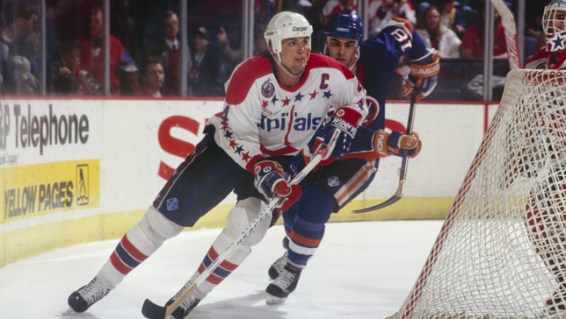
When it comes to the #4 spot, there hasn’t been many guys who made the mark that Kevin Hatcher did. Say what you will about him later on in his tenure, but the defenseman was crucial to production on the blue-line in the early-90s, as well as being a leader to his peers enough to get the captaincy for two years.

The former first round pick in 1984 for the Caps, Hatcher became a full-time blueliner in 1985-86 and kind of showed off his mixture of offensive talent and aggressive style of play in his own end. Hatcher saw his point-production increase through his first six seasons, peaking in his eighth season with the Caps in 1992-93, which saw Hatcher notch 34 goals and 79 points on the season. That goal total is still currently a Caps record for a season. Hatcher represented the Caps at the All-Star Game three times, while also holding the record for most goals by a defenseman in their career in Washington with 149.

While he did have his tenure marred by a contract holdout before the 1990-91 season, as well as his trade demand that saw him shipped to Dallas; Hatcher’s contributions on the scoresheet and as an imposing force in the line-up is what Caps fans should remember about the Detroit native who filled his role well during his 10 years with the Caps

Caps By The Numbers: Backstrom Buries Winner, Caps Up in Series

joly

Another game, another overtime, but this time– the Amazon Bulk Fortune Cookie was right in that #19 was a lucky number for the Caps. Nicklas Backstrom netted two goals, including the OT winner to put the Caps one win away from advancing out of the first round once again. And once again– we have a former Capital to look at for the win. This time– the #3 is a first for the Caps.

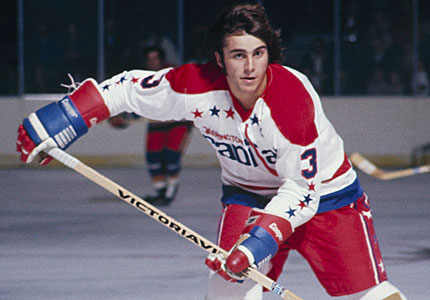
Yeah, it could have been Scott Stevens or Sylvain Cote– but we’re going with the original, we’re going with the first guy– Greg Joly. That’s right, the first ever Draft pick of the Washington Capitals was the first guy to don the #3 for the Capitals.

After an impressive junior career with the Regina Pats, one that saw him put up 21 goals and 92 points as a defenseman in his last season, as well as claiming a Memorial Cup; the Caps thought they had their first franchise player. However, the lights may have been too bright for a young player like Joly. He was never able to get back to the torrid pace he had in Juniors, only playing 98 games with the Caps and putting up a total of 33 points in those games. After two seasons, the Caps gave up on their first ever pick, trading him to Detroit for Bryan “Bugsy” Watson.

Now retired into a life of insurance, many Caps fans should remember someone like Joly. He was the hot product that the Caps thought they had lucked into. Yet, it also made a cornerstone for the future of the Caps– relying heavy on defense and very questionable drafting.